


- Expandable Double Deck Meal Storage Design: Provides two separate storage levels for organizing meal prep containers, snacks, fruit, and beverages without stacking everything together.
- Insulated Interior for Packed Lunches: Features a thermal insulation design intended to help maintain food temperatures during work commutes, outdoor activities, and everyday travel.
- Leakproof Construction for Everyday Food Transport: Designed to help contain minor spills and condensation, reducing the likelihood of moisture reaching surrounding personal belongings.
- Large Storage Format for Meal Preparation: Accommodates multiple food containers and lunch essentials, making it useful for workers who pack several meals or snacks.
- - Lightweight Black Tote for Work and Travel: Combines a portable carrying design with a neutral black exterior suitable for office environments, commuting, and outdoor activities.

This Expandable Lunch Bag Makes Carrying Multiple Prepared Meals Much Easier
The Expandable Double Deck Insulated Lunch Bag is designed for people who regularly carry prepared meals, snacks, and drinks to work or other activities. Its most useful feature is the combination of two separate storage compartments and an expandable design, allowing different food items to be organized without placing everything into one crowded space. For anyone searching for the best lunch bag for meal prep, this is a practical option because storage flexibility matters when carrying several containers throughout the day.
Unlike a basic lunch tote with one large compartment, this black insulated lunch bag uses a double-deck arrangement that separates food into two levels. The lower section can be used for larger meal prep containers, while the upper section is useful for lighter items such as fruit, bread, or packaged snacks. This expandable double deck meal prep storage design helps prevent delicate foods from being compressed beneath heavier containers.
One important advantage is that the bag can accommodate changing food requirements. Someone taking a single lunch to the office may not need the same storage space as a person preparing breakfast, lunch, and an afternoon snack for a long workday. The expandable construction provides additional flexibility without requiring a completely different lunch bag for each situation.
The black exterior also makes the bag suitable for different environments. It has a relatively understated appearance that can work with office clothing, casual outfits, and everyday travel accessories. For people who carry their lunch through public transportation or into professional workplaces, this can be more convenient than using a brightly colored cooler designed primarily for outdoor recreation.
The Separate Compartments Are Particularly Useful for Serious Meal Preparation
The double-deck design is the feature that makes this lunch bag particularly relevant to meal preparation. Preparing several meals in advance is convenient, but transporting them becomes more complicated when containers have different shapes, weights, and storage requirements. The two compartment insulated lunch bag design provides a way to organize these items without placing every container directly on top of another.
Consider someone who prepares grilled chicken, rice, vegetables, and fresh fruit for a full workday. A large rectangular meal container could occupy the lower compartment, while the upper section holds a smaller fruit container and packaged snacks. This arrangement helps protect softer foods from being crushed by heavier lunch containers.
Separating food can also make lunch preparation more efficient. Instead of removing several containers to reach something stored at the bottom, users can organize frequently accessed snacks in one section and their main meal in another. This is especially useful for people who eat at different times throughout the day.
For example, a healthcare worker completing a long shift might eat breakfast before starting work, have a short snack break during the morning, and take lunch later in the afternoon. Keeping the snacks separate from the main meal makes them easier to retrieve during limited breaks. A large insulated lunch bag for work shifts can be particularly convenient when access to a refrigerator or cafeteria is limited.
The expandable feature provides another practical advantage. Meal preparation does not always involve identical containers, and some days require additional food or beverages. Having extra storage space available allows users to adjust their packing arrangement according to their schedule.
Someone preparing for a regular office day might pack one lunch container, a piece of fruit, and a small snack. On a day involving an evening fitness session, the same person might need an additional meal, a protein-rich snack, and more water. The expandable storage capacity for prepared meals makes the bag more adaptable to these changing requirements.
However, users should check the internal dimensions before purchasing if they already own a particular meal prep container set. A bag may have generous overall capacity but still struggle to accommodate unusually wide containers. Measuring the longest and widest containers is more useful than relying exclusively on descriptions such as large or extra spacious.
The insulated construction is another important feature. Insulated lunch bags are designed to slow temperature changes by reducing heat transfer between the food and the surrounding environment. This can help maintain packed food temperatures during commuting, outdoor activities, and periods when refrigeration is unavailable.
For people preparing meals containing chicken, eggs, dairy products, or other perishable ingredients, temperature management is particularly important. Insulation alone does not actively refrigerate food, so chilled meals should be packed with suitable frozen ice packs. The insulated meal prep bag for cold food works best when the containers are already chilled before packing.
Imagine preparing several meals on Sunday evening for the following workdays. The containers should be refrigerated promptly and kept cold until they are needed. Packing a chilled meal directly from the refrigerator with an ice pack is more effective than placing warm food inside the insulated bag and expecting the insulation to cool it.
Food safety guidelines generally recommend keeping cold perishable foods at 4 degrees Celsius or below. Hot foods should be maintained at approximately 60 degrees Celsius or above when being held for service. Because a passive insulated bag cannot guarantee these temperatures, a thermometer can be useful when transporting temperature-sensitive meals for extended periods.
Another common mistake is assuming that a lunch bag can keep food safe indefinitely simply because it has thermal insulation. Actual performance depends on the initial food temperature, ice packs, ambient conditions, how often the bag is opened, and the insulation itself. The thermal insulated lunch cooler for meal prep should therefore be treated as part of a food storage system rather than a replacement for refrigeration.
The double-deck design can help with organizing different food types, but the compartments should not automatically be assumed to maintain independent temperatures. If both sections share a similar insulated structure, heat transfer may still occur between them. Users carrying hot and cold foods together should use appropriate separate containers and check that safe temperatures can be maintained.
The bag is also described as having leakproof construction, which is useful when transporting food containers and cold drinks. Condensation from ice packs, minor spills, and moisture from chilled containers can create problems inside ordinary fabric bags. A leakproof insulated lunch tote for commuting is intended to help contain this moisture and make everyday transport more manageable.
However, leakproof construction should not be confused with completely spillproof food storage. A poorly sealed soup container can still release liquid, particularly when the bag is tilted or placed sideways. Using containers with secure locking lids remains important, especially when transporting sauces, soups, or other liquid foods.
For example, someone carrying a pasta salad with dressing may prefer to store the dressing in a separate sealed container. This reduces the chance of leakage while also helping prevent the salad from becoming soggy before lunchtime. The bag provides an additional layer of protection, but properly sealed containers remain the first defense against spills.
Cleaning is another practical consideration. Even when food containers are sealed, small crumbs, condensation, and accidental spills can accumulate inside a lunch bag. The interior should be wiped regularly according to the manufacturer's care instructions and allowed to dry completely before being stored.
Leaving moisture inside an insulated bag can create unpleasant odors and encourage microbial growth. This is particularly relevant when carrying dairy products, cooked meals, or fresh fruit. The easy maintenance routine for insulated lunch bags should include checking seams, corners, and other areas where moisture can collect.
The lightweight tote format also makes this product relevant for everyday commuting. A person carrying a laptop bag, handbag, or backpack may not want an additional heavy cooler. A lunch bag designed for portability can make transporting prepared meals more convenient, although the total carrying weight still depends on the food containers and beverages packed inside.
Glass meal prep containers, for example, can become relatively heavy when several are packed together. Someone commuting on foot or using public transportation may prefer lightweight reusable plastic or stainless steel containers that are suitable for their food storage needs. The portable insulated lunch bag for office workers is most comfortable when the packed weight remains manageable.
Another useful application is outdoor travel. Picnics, road trips, and day outings often require a combination of prepared meals, snacks, and drinks. The double-deck layout can help separate fragile foods from heavier containers while providing a more organized packing arrangement.
Consider a weekend picnic where someone brings sandwiches, fresh berries, yogurt, and bottled drinks. The sandwiches and fruit could be arranged in the upper compartment, while heavier drinks and sealed containers occupy the lower section. This can help preserve the appearance of delicate foods and reduce the need to unpack everything at once.
The expandable design is particularly convenient for these occasional outings because the amount of food being carried may vary. A smaller everyday lunch can be packed without using all the available space, while additional storage can be opened when needed. This makes the expandable lunch cooler bag for outdoor travel more adaptable than a fixed-capacity lunchbox.
There are some limitations worth considering. A double-deck bag can become bulkier when fully expanded, which may be inconvenient in crowded trains, small office lockers, or compact refrigerators. Users should consider the available storage space at work before selecting a large lunch bag.
Another consideration is the shape of the compartments. Although separate storage levels are useful for organizing food, they may not accommodate every container arrangement equally well. People who use several large rectangular containers should check the bag's measurements carefully rather than assuming all meal prep boxes will fit.
The bag's insulation also has practical limits. Without independent temperature testing for this exact model, it would be unreasonable to promise a specific number of hours of safe cold or hot storage. Users should plan around actual food temperatures and use ice packs or refrigeration when necessary.
Why We Believe This Expandable Lunch Bag Deserves Our Number One Ranking
We placed the Expandable Double Deck Insulated Lunch Bag at number one among our seven selections because its design addresses several important challenges associated with transporting prepared meals. The combination of separate compartments, expandable storage, thermal insulation, and leak-resistant construction makes it particularly relevant for people who regularly pack multiple food containers. These features provide a practical balance between organization and everyday portability.
The main reason for its first-place position is the flexible double deck storage for meal preparation. Many basic lunch bags provide only one main compartment, requiring users to stack containers, snacks, and drinks together. Separating food into two levels helps improve organization and can reduce pressure on delicate items.
The expandable design is another important advantage. Meal prep requirements often change depending on work schedules, exercise routines, and travel plans. A bag that can accommodate additional food when needed provides more flexibility than a small lunchbox with fixed storage space.
Its insulated construction also contributes to its suitability for meal preparation. Prepared meals often contain ingredients that require careful temperature management, and an insulated bag can help slow temperature changes during transport. When combined with properly chilled containers and frozen ice packs, this insulated lunch bag for prepared meals can be a useful part of a safe food transportation routine.
The leakproof design is another practical feature, particularly for people who carry food alongside personal belongings. Although individual food containers must still be sealed correctly, an insulated liner designed to contain minor spills provides additional reassurance during commuting. This is especially useful when transporting meals with sauces, dressings, or chilled ingredients.
The black exterior and lightweight tote format also make the bag suitable for different settings. It can be used for office work, daily commuting, outdoor activities, and occasional travel without appearing overly specialized for one environment. This versatility is useful for people who want one lunch bag for several purposes.
There are disadvantages to consider, particularly the additional bulk created by the double-deck structure. People who only carry one small sandwich or a compact lunch container may not need this much storage. A smaller insulated lunchbox could be more convenient for those users.
The exact dimensions and insulation duration should also be checked before purchasing. Without verified temperature performance data, the bag should not be selected on the assumption that it can maintain safe food temperatures for an entire work shift without ice packs. Practical food safety precautions remain necessary regardless of the bag's insulation claims.
Nevertheless, the combination of expandable storage and separate compartments makes this design particularly appealing for people who prepare meals in advance. The organized meal prep lunch bag with expandable compartments provides a way to transport main meals, snacks, and beverages while keeping different food items more accessible.
Its greatest advantage is not simply carrying more food, but allowing that food to be packed more deliberately. Heavier containers can be separated from delicate snacks, while the expandable section provides additional room when daily requirements change. This makes the bag suitable for regular office lunches as well as longer outings.
Overall, we believe the Expandable Double Deck Insulated Lunch Bag deserves its number one position among the best lunch bag for meal prep options based on its practical storage design and intended everyday functionality. Although its exact capacity and temperature performance require further verification, the combination of two storage levels, expandable space, insulation, and a portable black tote design offers a strong set of features. For people who regularly transport prepared meals, snacks, and drinks to work or outdoor activities, this is a highly worthwhile lunch bag to consider.

- Expandable Storage for Different Meal Prep Needs: Provides adjustable packing space for carrying prepared lunches, additional snacks, beverages, and food containers during longer workdays.
- Double Deck Design for Better Food Organization: Offers separate storage levels to help organize main meals and smaller food items without placing everything in one compartment.
- Insulated Construction for Everyday Food Transportation: Designed to slow temperature changes when carrying chilled meals, snacks, and beverages during commutes or outdoor activities.
- Leakproof Design for More Convenient Meal Transport: Intended to help contain minor spills and condensation while protecting surrounding belongings from everyday food-related moisture.
- - Lightweight Lunch Tote for Work and Travel: Combines portable carrying convenience with expandable food storage for office lunches, meal preparation, commuting, and outdoor outings.
This Expandable Lunch Bag Offers the Storage Flexibility Meal Prep Really Needs
The Double Deck Expandable Insulated Lunch Bag is designed for people who regularly carry prepared meals, snacks, and beverages throughout the day. Its expandable construction and separate storage levels provide a practical alternative to conventional lunchboxes that offer only one main compartment. For anyone searching for the best lunch bag for meal prep, this design is particularly relevant because organizing several food containers can be just as important as having enough storage space.
The product combines an insulated interior with a double-deck arrangement intended to separate different food items during transportation. Instead of stacking everything together, users can organize larger containers and smaller snacks across two sections. This expandable double deck meal storage system can help prevent delicate foods from being compressed beneath heavier containers.
One important advantage is the flexibility of the expandable design. Someone carrying a single lunch may need considerably less space than a person packing breakfast, lunch, and afternoon snacks for a long work shift. An expandable compartment allows the packing arrangement to change according to the amount of food being transported.
The bag is also intended for everyday use at work, during commuting, and on outdoor outings. Its lightweight tote format is designed to make carrying prepared meals more convenient than using a bulky recreational cooler. However, the actual carrying comfort will depend on the weight of the food containers and the arrangement of the contents.
The Two Storage Levels Make Organizing Prepared Meals More Practical
The most useful feature of this lunch bag is its double-deck storage arrangement. Meal preparation often involves containers of different sizes, including rectangular lunchboxes, small dressing jars, fruit containers, and beverages. The two compartment insulated lunch bag design provides a way to organize these items instead of placing everything into one crowded space.
Consider someone preparing grilled chicken, rice, and vegetables for lunch while also packing yogurt and fresh berries for an afternoon snack. Placing the main meal in one section and the smaller items in another can help prevent the fruit from being crushed. It also makes individual containers easier to locate during short breaks.
Separate storage areas can be particularly useful for people who follow a regular meal prep routine. Preparing several meals in advance saves time during the working week, but transporting them requires careful attention to container placement and food safety. A lunch bag with organized compartments makes the packing process more manageable.
For example, a healthcare worker completing a long shift might need a main meal, a second smaller meal, and several snacks. Keeping frequently accessed items separate from larger containers means less unpacking during limited breaks. This organized meal prep lunch bag for work can be especially convenient when there is little time to search through personal belongings.
The expandable construction provides additional flexibility when daily food requirements change. Someone who usually carries one lunch container might occasionally need extra snacks for an evening fitness session or a longer workday. Being able to increase the available packing space can reduce the need for a second food bag.
However, expandable storage should not be confused with unlimited capacity. The exact internal dimensions of this model were not independently verified, so users should measure their existing food containers before purchasing. A bag can appear spacious while still being unsuitable for unusually wide or tall meal prep boxes.
The shape of the containers matters as much as their total volume. Rectangular containers often pack more efficiently when their dimensions match the compartment, while round containers may leave unused gaps. The flexible storage space for meal prep containers is most useful when the food containers can be arranged securely without forcing the zippers closed.
Another practical advantage is the ability to separate foods with different textures. Sandwiches, crackers, and baked goods can become damaged when placed beneath heavy glass containers. Keeping these items in a separate compartment can help preserve their appearance during transportation.
Imagine preparing a lunch containing pasta salad, sliced fruit, and a small sandwich. If everything is stacked in one compartment, the sandwich may become compressed when the bag is carried or placed on its side. A double-deck arrangement provides another packing option that can help reduce this problem.
The insulated construction is another important consideration for meal preparation. Insulation slows the transfer of heat between the food and the surrounding environment, helping packed meals resist temperature changes during transportation. The insulated lunch cooler for prepared meals is particularly relevant when carrying food that needs to remain chilled until lunchtime.
However, insulation does not actively refrigerate food. Cooked chicken, dairy products, eggs, and other perishable ingredients should be chilled before packing and transported with suitable frozen ice packs when refrigeration is unavailable. This is essential because an insulated bag cannot guarantee safe food temperatures by itself.
For cold food storage, a useful target is maintaining perishable ingredients at 4 degrees Celsius or below. When food remains above safe refrigeration temperatures for too long, harmful bacteria can multiply even if the meal still looks and smells normal. Users should follow applicable food safety guidance rather than relying on the bag's insulation claims alone.
Consider someone who prepares meals on Sunday evening for the following workdays. The cooked food should be cooled safely and refrigerated promptly, then transferred into the lunch bag shortly before leaving home. Adding frozen ice packs helps maintain a colder environment during the commute.
One common mistake is packing freshly cooked food while it is still warm and expecting the insulated bag to cool it. Insulation actually slows temperature changes, so warm food may remain in an unsafe temperature range if it is not handled correctly. The thermal insulation for safe meal transportation works best when combined with appropriate food preparation and storage practices.
The double-deck arrangement can also make it easier to organize ice packs alongside food containers. However, users should not assume that the two compartments maintain independent temperatures unless the manufacturer specifically confirms this feature. Cold and hot foods may require separate storage solutions depending on how long they will be transported.
The leakproof design is another practical feature. Meal prep containers sometimes produce condensation, and small amounts of moisture may collect inside insulated bags during transportation. A leakproof lunch tote for daily commuting is intended to help contain minor spills and reduce the likelihood of moisture reaching surrounding belongings.
However, a leakproof bag does not eliminate the need for properly sealed food containers. Soups, sauces, and salad dressings should be transported in containers with secure lids, particularly when the bag may be tilted during travel. The insulated lining should be treated as additional protection rather than the primary method of preventing spills.
For example, someone packing a salad with dressing could place the dressing in a separate sealed jar. This reduces the chance of leakage and also helps prevent the vegetables from becoming soggy before lunchtime. The bag's separate storage sections can make it easier to keep these items organized.
Cleaning is another important consideration when choosing a reusable lunch bag. Food crumbs, spilled sauces, and condensation can accumulate inside compartments over time. The regular cleaning routine for insulated lunch bags should include wiping accessible interior surfaces according to the manufacturer's instructions and allowing the bag to dry completely.
Leaving a damp lunch bag closed overnight can encourage unpleasant odors and microbial growth. This is particularly relevant when carrying dairy products, cooked meals, or fresh fruit. Opening the compartments after use and allowing adequate ventilation helps maintain a cleaner storage environment.
The bag's lightweight construction is another useful characteristic for everyday transportation. People commuting by train, bus, or on foot may already carry a laptop bag, backpack, or handbag. Adding a heavy lunch cooler can make the journey less comfortable, particularly when several meal containers are packed inside.
Container selection can make a noticeable difference to the total carrying weight. Glass meal prep containers are durable and convenient for reheating, but several filled containers can become heavy. The lightweight insulated lunch bag for commuting may be more comfortable when paired with containers that balance durability, food compatibility, and portability.
Another useful application is transporting food to outdoor activities. Picnics, road trips, and day outings often involve several snacks and beverages that need to remain organized. The expandable storage design can provide additional room when packing requirements are greater than those of an ordinary office lunch.
For example, someone preparing for a weekend picnic might pack sandwiches, fruit, yogurt, and bottled drinks. Separating heavier beverages from softer foods can help prevent damage during transportation. The double-deck layout provides a convenient way to organize these items before leaving home.
The expandable feature may be particularly useful when returning from an outing with additional packaged food or containers. However, users should avoid overpacking the bag because excessive pressure can strain the zippers and make the compartments difficult to close. The expandable lunch bag for work and travel is most practical when the contents fit comfortably within the available space.
There are some limitations worth considering. A double-deck lunch bag may occupy more space than a conventional compact lunchbox, especially when fully expanded. People with small office lockers or limited refrigerator space should check the bag's external dimensions before purchasing.
The separate compartments may also be less convenient for unusually large containers. A single-compartment cooler sometimes provides more flexibility for one oversized lunchbox, while a divided design is better suited to several smaller items. Choosing between these arrangements depends on the containers being used most frequently.
Another consideration is that the exact insulation duration of this model has not been independently verified. It would therefore be unreasonable to assume that the bag can keep food cold for an entire work shift without additional cooling. Ice packs, proper refrigeration, and food temperature checks remain important.
Why We Ranked This Expandable Lunch Bag Second Instead of First
We placed the Double Deck Expandable Insulated Lunch Bag at number two among our seven selections because its design offers several practical advantages for people who regularly transport prepared meals. The combination of expandable storage, separate compartments, insulation, and leak-resistant construction addresses common problems associated with carrying multiple food containers. These features make it particularly relevant for work lunches, meal preparation, and everyday travel.
The main reason it did not receive our number one ranking is that the available product information does not establish a clear functional advantage over the closely related expandable lunch bag ranked first. Both listings describe similar storage and insulation features, and the exact differences in capacity, construction, and temperature performance could not be independently confirmed. The second-place position therefore reflects our comparison order rather than evidence that this version performs worse.
One of its strongest advantages remains the double deck organization for multiple prepared meals. Separating main meals from snacks can improve accessibility and reduce the chance of delicate foods being compressed. This is particularly useful for workers who eat several times throughout the day.
The expandable design is another reason the bag deserves a high ranking. Daily food requirements can change depending on work schedules, exercise routines, and travel plans. A lunch bag that accommodates different packing arrangements provides more flexibility than a small fixed-capacity lunchbox.
Its insulated construction also supports practical food transportation. When combined with chilled containers and frozen ice packs, the bag can help slow temperature changes during commuting. However, its actual cooling performance depends on external conditions and should not be assumed to meet a specific duration without testing.
The leakproof design provides another useful feature for people carrying food alongside work equipment or personal belongings. Although food containers must still be sealed properly, a lining intended to contain minor moisture can make transportation more convenient. This insulated and leak-resistant meal prep storage is particularly relevant for daily commuting.
There are disadvantages to consider, especially the additional bulk created by the two storage levels. People who carry only a small sandwich or one compact container may prefer a simpler lunch bag. The expandable format is most useful when the extra space and organization are needed regularly.
Another limitation is the lack of independently verified dimensions and capacity specifications. Users should confirm that their existing meal prep containers fit before purchasing, particularly if they use large rectangular glass containers. This is more important than choosing a bag based solely on its advertised large-capacity description.
Nevertheless, the product offers a practical combination of features for people who want to carry several prepared meals in an organized way. The expandable insulated lunch tote for meal preparation provides storage flexibility while maintaining a portable format suitable for work and travel. Its separate compartments can make everyday packing and unpacking more manageable.
Overall, we believe the Double Deck Expandable Insulated Lunch Bag deserves its second-place ranking among the best lunch bag for meal prep options. Although its exact specifications and differences from our first-ranked selection require further confirmation, its expandable design, insulated construction, and organized storage layout offer meaningful everyday convenience. For people who regularly transport meal prep containers, snacks, and beverages, this remains a worthwhile lunch bag to consider.

- Heavy-Duty Tactical Oxford Fabric Construction: Features durable, water-resistant exterior material designed to withstand regular commuting, outdoor activities, and demanding workplace environments.
- Insulated Interior for Prepared Meals: Uses thermal insulation to help slow temperature changes when transporting chilled lunches, snacks, beverages, and other packed foods.
- Leak-Resistant Lining for Everyday Protection: Designed to help contain minor food spills and condensation while making interior cleaning more convenient.
- Adjustable Shoulder Strap for Comfortable Carrying: Provides a hands-free carrying option alongside traditional grab handles, making transportation easier during commutes and outdoor activities.
- - Tactical Exterior Storage and Organization Features: Includes utility-oriented exterior storage features for keeping small accessories, utensils, keys, and everyday essentials accessible.
This Tactical Lunch Bag Is Built for People Who Carry Meals Through Long Workdays
The HSHRISH Tactical Cooler Insulated Lunch Bag is designed for people who need a more durable alternative to ordinary fabric lunch totes. Its rugged Oxford fabric exterior, insulated storage area, and adjustable shoulder strap make it particularly relevant for workers who transport prepared meals through demanding daily routines. For anyone searching for the best lunch bag for meal prep, this model deserves consideration because durability and portability can matter just as much as storage capacity.
HSHRISH specializes in tactical-style lunch coolers intended for work, commuting, and outdoor activities. The design emphasizes practical construction rather than decorative styling, with a water-resistant exterior and storage features intended for regular handling. The heavy-duty tactical insulated lunch bag design is particularly appealing to construction workers, drivers, warehouse employees, and other people who may not have convenient access to a refrigerator throughout the day.
One of the strongest advantages is the use of Oxford fabric, a woven material commonly selected for bags because of its resistance to everyday abrasion. HSHRISH describes its tactical lunch bag range as using durable 900D Oxford construction, although the exact material specification should be confirmed for this particular model. A reinforced exterior can be useful when the bag is repeatedly placed inside vehicles, carried across worksites, or stored beside other equipment.
The bag also features a practical shoulder-carrying design, allowing users to transport meals without occupying both hands. This can be particularly convenient when carrying a laptop, tools, or other work equipment. The adjustable shoulder strap for daily commuting provides an alternative to holding the lunch bag by its handles throughout a journey.
The Insulation and Tactical Storage Features Make Everyday Meal Prep More Convenient
The insulated interior is one of the most important features of the HSHRISH lunch bag. Meal preparation often involves transporting cooked proteins, vegetables, dairy products, and other ingredients that require careful temperature management. The insulation is designed to slow heat transfer between the food and the surrounding environment, helping packed meals resist temperature changes during transportation.
HSHRISH uses insulating foam and protective interior liners across its tactical cooler range. These materials help create a thermal barrier while providing a surface that can be cleaned after ordinary use. The insulated lunch cooler for prepared meals is particularly useful when combined with properly chilled containers and frozen ice packs.
Consider a construction worker who leaves home at 6 AM and does not take lunch until noon. A prepared meal containing chicken, rice, and vegetables may spend several hours away from a refrigerator. Packing the chilled container with sufficient frozen ice packs helps reduce the risk of the food warming excessively during the morning.
However, an insulated bag does not actively refrigerate food. Perishable meals should generally be maintained at 4 degrees Celsius or below, and the bag's insulation alone cannot guarantee this temperature. The thermal food storage system for long shifts works best when users begin with properly chilled food and verify temperatures when necessary.
Some HSHRISH tactical lunch bags advertise temperature retention of approximately eight hours under specified conditions. That figure should not automatically be applied to every model or interpreted as a guarantee of safe food storage. Actual performance depends on ambient temperature, ice packs, food quantity, and how frequently the bag is opened.
One common mistake is placing freshly cooked food directly into an insulated lunch bag. Insulation slows temperature changes, which means warm food may remain warm instead of cooling quickly. Cooked meals should be cooled safely, refrigerated promptly, and packed cold when they are intended to be eaten later.
The bag's leak-resistant interior is another practical feature for people transporting several food containers. Condensation from ice packs, small spills, and moisture from chilled containers can accumulate during transportation. A leak-resistant insulated lunch bag for work is intended to help contain minor moisture and make cleanup more manageable.
For example, someone carrying a pasta salad with dressing might accidentally tilt the lunch bag while getting into a vehicle. A protective interior liner provides additional reassurance, but the dressing should still be stored in a securely sealed container. Leak-resistant construction should never be treated as a substitute for properly closed food containers.
The tactical exterior design is another characteristic that distinguishes HSHRISH from ordinary lunch totes. The brand uses utility-oriented features such as webbing and exterior storage pockets across its tactical range. These tactical lunch bag storage and organization features can be useful for carrying small accessories without placing them directly beside food containers.
Imagine a delivery driver who needs to keep a spoon, napkins, keys, and a small bottle of hand sanitizer accessible throughout the day. Exterior storage can make these items easier to retrieve without opening the insulated food compartment. This is particularly convenient during short breaks when unpacking the entire lunch bag would be unnecessary.
Tactical webbing can also provide attachment points for lightweight accessories, depending on the model. Carabiners, small pouches, and other compatible items may be attached to suitable loops. However, users should avoid attaching heavy objects that could strain the stitching or interfere with comfortable carrying.
The shoulder strap provides another practical benefit when transporting several meal prep containers. Carrying multiple containers can become uncomfortable, particularly when glass containers and beverages increase the overall weight. The hands-free shoulder carrying option for meal prep allows users to distribute the load differently from a conventional handheld lunchbox.
For example, someone commuting by public transportation may already carry a backpack containing a laptop and work supplies. A lunch bag with an adjustable shoulder strap can be carried separately without requiring constant attention. This arrangement may be more convenient when walking between transit stations or navigating crowded environments.
However, the total weight remains important. Glass meal prep containers can be relatively heavy, especially when several are packed together. Users who travel long distances on foot may prefer lightweight reusable containers that are suitable for their food and reheating requirements.
The HSHRISH design is also relevant for outdoor activities. Hiking, camping, fishing, and picnics often require food to be transported through environments where ordinary lunch totes may experience more wear. The rugged lunch cooler for outdoor meal preparation is intended to provide a more durable carrying solution for these situations.
Consider a weekend fishing trip where someone brings sandwiches, fruit, bottled water, and a prepared lunch. Keeping these items inside an insulated bag can help organize supplies while reducing exposure to direct sunlight. Frozen ice packs remain important when transporting perishable foods for extended periods.
The water-resistant exterior is particularly useful when the bag is exposed to light rain, damp surfaces, or accidental splashes. Oxford fabric with an appropriate protective coating can resist some moisture penetration. However, water resistance does not necessarily mean the bag can be submerged or left in heavy rain without water entering through zippers or seams.
Another advantage of the tactical construction is its suitability for repeated daily handling. Lunch bags are frequently placed on vehicle floors, office desks, workbenches, and outdoor surfaces. The durable Oxford fabric lunch cooler exterior is intended to withstand this type of regular use more effectively than delicate decorative fabrics.
Nevertheless, durability depends on more than the outer fabric. Zipper quality, stitching, strap attachment points, and interior lining construction all influence how well a lunch bag performs over time. Users should periodically inspect these areas, particularly when carrying heavy containers.
Cleaning is another important part of maintaining an insulated lunch bag. Food crumbs, condensation, and small spills can accumulate inside the storage compartment. The interior should be wiped according to the manufacturer's care instructions and allowed to dry completely before the bag is closed for storage.
Leaving moisture inside a sealed lunch bag can create unpleasant odors and encourage microbial growth. This is especially relevant when transporting cooked food, dairy products, or fresh fruit. The easy-clean insulated lining for daily lunches is most useful when combined with a consistent cleaning routine.
Meal prep organization also requires attention to container selection. Rectangular containers can often be arranged efficiently, while round containers may leave unused gaps. Measuring existing containers before purchasing helps avoid discovering that a lunch bag cannot accommodate a preferred lunchbox.
The exact internal capacity of this particular HSHRISH model has not been independently confirmed. Other products in the brand's range offer capacities around 12 to 16 liters, but those figures should not be assumed to apply to this listing. Users should verify the dimensions and capacity of the specific variant before purchasing.
There are also limitations associated with tactical-style lunch bags. Their reinforced construction and utility features may make them bulkier than compact office lunch totes. People who carry only one small meal container may find that a simpler bag occupies less space in a refrigerator or office locker.
The tactical appearance is another consideration. Some users may prefer a neutral, minimalist lunch tote for professional environments. Others may appreciate the rugged styling, particularly when the bag is used for both work and outdoor activities.
Why We Ranked the HSHRISH Tactical Lunch Bag Third Among Our Seven Choices
We placed the HSHRISH Tactical Cooler Insulated Lunch Bag at number three because it emphasizes durability, carrying convenience, and practical food transportation. Its Oxford fabric exterior, insulated construction, leak-resistant lining, and shoulder strap make it particularly relevant for people who carry prepared meals through demanding workdays. These features provide useful functionality beyond that of a basic fabric lunch tote.
The main reason it did not receive our number one ranking is its more specialized design. Our first-ranked Expandable Double Deck Insulated Lunch Bag emphasizes flexible storage and separate compartments for organizing multiple meal prep containers. That arrangement may be more convenient for people who regularly carry several meals, snacks, and beverages in one bag.
Our second-ranked expandable lunch bag also prioritizes adjustable storage space and food separation. HSHRISH takes a different approach by concentrating on heavy-duty construction for work and outdoor use. This makes it particularly appealing for workers who value a rugged exterior and convenient carrying options.
One of its strongest advantages is the tactical storage design. Exterior pockets and compatible webbing features can help organize small accessories without requiring users to open the insulated compartment repeatedly. This is useful for people who carry utensils, keys, napkins, and other everyday essentials alongside their lunch.
The adjustable shoulder strap also contributes to its practical value. Workers carrying tools, backpacks, or other equipment may appreciate being able to transport their lunch without using a dedicated hand. The comfortable carrying design for demanding workdays is especially relevant when commuting or moving between different work locations.
Its insulated interior remains an important feature for meal preparation. Prepared meals frequently contain perishable ingredients, and slowing temperature changes during transportation is useful. However, users should continue to rely on properly chilled food, ice packs, and appropriate storage practices rather than assuming insulation alone guarantees food safety.
The water-resistant Oxford exterior is another reason this bag deserves a high ranking. Regular exposure to damp surfaces, minor spills, and everyday abrasion can shorten the life of less durable lunch bags. A rugged construction provides a practical advantage for people who work outdoors or in physically demanding environments.
There are some disadvantages compared with more flexible meal prep organizers. Tactical-style bags may be bulkier, and the available information does not establish that this particular model offers the same expandable double-deck arrangement as our first two selections. People who prioritize separating several different meals may prefer a bag with clearly divided internal storage.
The exact capacity and temperature retention performance of this particular ASIN also require confirmation. Although HSHRISH markets several insulated tactical lunch bags with substantial storage and extended insulation claims, those specifications vary between models. Buyers should verify the specific listing before choosing it for long work shifts.
Nevertheless, the HSHRISH Tactical Cooler Insulated Lunch Bag offers a useful combination of durability and everyday convenience. Its rugged insulated lunch bag for meal prep design is particularly appealing to people who need a portable food storage solution for commuting, construction work, driving, camping, and other activities.
Overall, we believe the HSHRISH Tactical Cooler Insulated Lunch Bag deserves its third-place ranking among the best lunch bag for meal prep options. Although it may offer less flexible internal organization than our top two expandable selections, its heavy-duty exterior, insulated storage, leak-resistant design, and adjustable carrying options provide meaningful practical advantages. For workers and outdoor enthusiasts who want a durable lunch bag capable of supporting regular meal preparation, this is an excellent option worth considering.
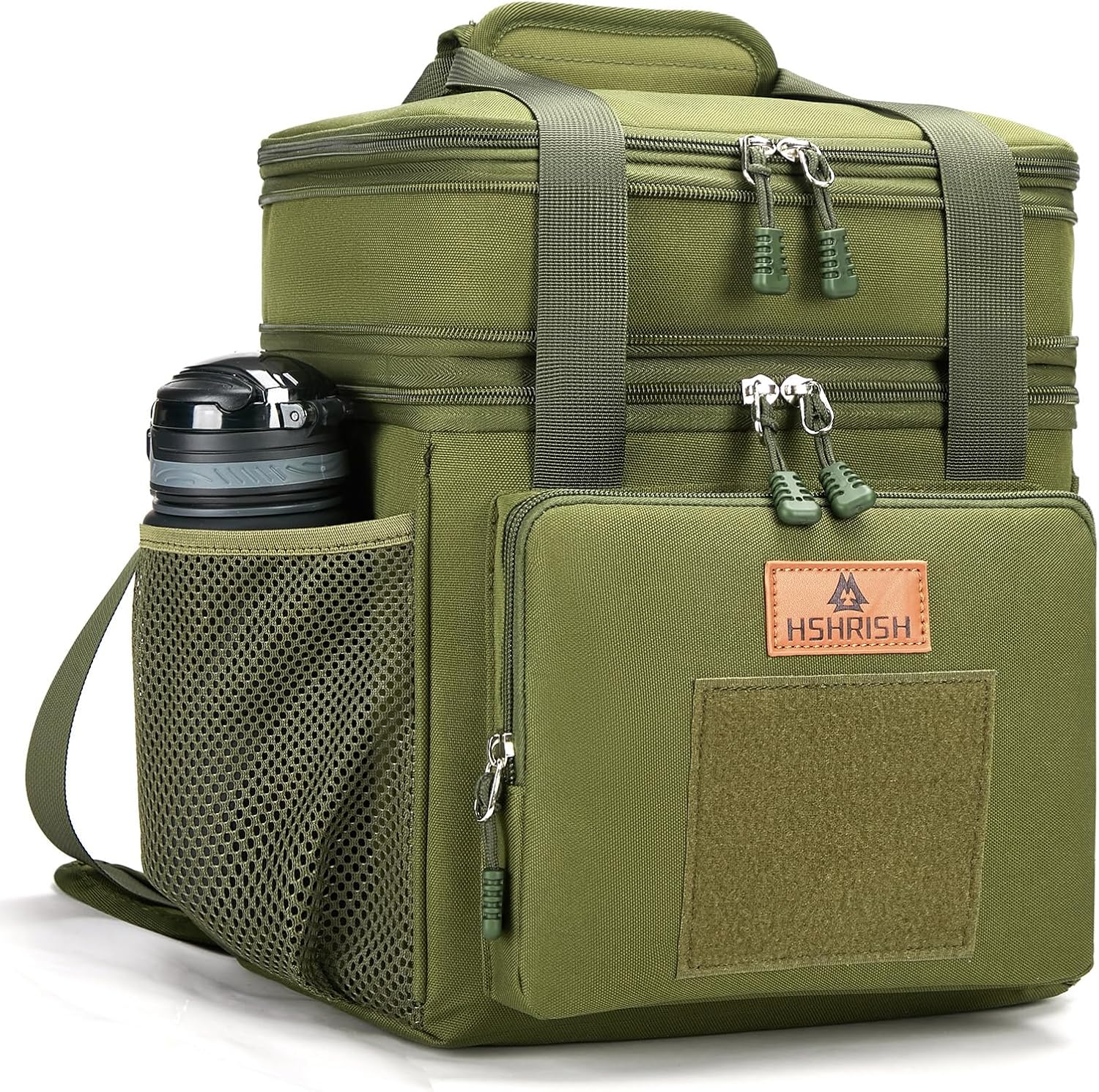
- Durable Tactical Exterior for Demanding Workdays: Features a rugged lunch cooler design intended for regular commuting, outdoor activities, and work environments where bags experience frequent handling.
- Insulated Food Compartment for Prepared Meals: Helps slow temperature changes when transporting refrigerated lunches, meal prep containers, snacks, and beverages with appropriate cooling packs.
- Leakproof Design for Everyday Food Transportation: Designed to help contain minor spills and condensation while providing a more practical storage environment for packed lunches.
- Convenient Shoulder Strap for Hands-Free Carrying: Offers a comfortable alternative to handheld transportation when carrying meals alongside backpacks, tools, or other work equipment.
- - Practical Tactical Styling for Work and Outdoor Activities: Combines a utility-focused appearance with portable food storage suitable for commuting, construction work, picnics, and day trips.
This Tactical Lunch Bag Is a Practical Choice for Long Workdays
The HSHRISH Tactical Insulated Lunch Bag is designed for people who need to carry prepared meals through regular commutes, demanding work shifts, and outdoor activities. Its rugged exterior, insulated food storage, and shoulder carrying option make it an alternative to lightweight lunch totes intended mainly for office use. For anyone searching for the best lunch bag for meal prep, this design is particularly relevant when durability and convenient transportation are important considerations.
One of the most noticeable characteristics is the tactical styling. HSHRISH uses utility-focused designs across its lunch cooler range, combining durable exterior materials with practical carrying features. The rugged tactical lunch bag for everyday work is especially appealing to drivers, construction workers, warehouse employees, and people who regularly transport food between different locations.
The bag is intended to accommodate prepared lunches, snacks, and beverages while helping reduce temperature changes during transportation. Unlike an ordinary fabric tote, an insulated lunch bag creates a barrier between the contents and the surrounding environment. This can be useful when carrying food from home to work, particularly when refrigeration is not immediately available.
The shoulder strap is another practical feature. Carrying a lunch bag by hand may be convenient for short distances, but it becomes less comfortable when someone is also transporting a backpack, laptop, or work equipment. Having an alternative carrying method can make everyday commuting more manageable.
The Insulation and Carrying Design Are What Make This Bag Useful
The insulated storage compartment is one of the most important features of the HSHRISH lunch bag. Meal preparation frequently involves cooked proteins, vegetables, rice, dairy products, and other ingredients that require appropriate temperature management. The insulated food compartment for prepared lunches helps slow heat transfer during transportation, although it does not actively refrigerate food.
Consider someone who prepares chicken, rice, and vegetables the evening before a work shift. The meal can be refrigerated overnight and transferred into the lunch bag shortly before leaving home. Adding a frozen ice pack helps maintain a colder environment during the commute and before the food can be placed in a refrigerator.
This is particularly important for workers who begin early in the morning. A delivery driver might leave home at 6 AM and not take lunch until noon, meaning the food could remain inside the bag for several hours. Proper cooling becomes essential when the meal contains perishable ingredients.
Cold perishable food should generally be maintained at 4 degrees Celsius or below. An insulated bag alone cannot guarantee this temperature, especially when exposed to warm weather or direct sunlight. The thermal lunch storage system for long shifts works best when combined with frozen ice packs, chilled containers, and appropriate food safety practices.
One common mistake is placing warm food directly into an insulated lunch bag and expecting it to cool naturally. Insulation slows temperature changes, so the food may remain warm for longer than intended. Cooked meals should be cooled safely and refrigerated before being packed for later consumption.
The bag's leakproof design is another useful feature for transporting prepared meals. Food containers sometimes release condensation, and small spills can occur when a bag is tilted during travel. A leak-resistant insulated lunch bag for commuting is intended to help contain minor moisture and make cleanup more manageable.
However, leakproof construction should not replace properly sealed food containers. Soups, sauces, salad dressings, and other liquids should be stored in containers with secure lids. This is especially important when the lunch bag may be placed sideways inside a vehicle or carried over the shoulder.
Imagine someone transporting pasta salad with a separate dressing container. Keeping the dressing sealed until lunchtime helps prevent the pasta from becoming soggy and reduces the possibility of liquid escaping during transportation. The insulated bag provides additional protection, but the food container remains the primary barrier against spills.
The tactical exterior also makes this bag relevant for people working in physically demanding environments. HSHRISH uses durable Oxford fabric across its tactical cooler range, a material commonly selected for bags because of its resistance to everyday abrasion. The durable tactical lunch cooler exterior is intended to withstand regular handling, although the exact fabric specification should be confirmed for this particular model.
For example, a construction worker may place a lunch bag inside a truck, carry it between work areas, and store it near other equipment. Repeated contact with rough surfaces can cause wear on lightweight fabric bags. A more robust exterior can be advantageous when the bag is used frequently in these conditions.
However, durability depends on more than the outer fabric. Zippers, stitching, carrying handles, and strap attachment points all contribute to the useful life of a lunch bag. Users should inspect these areas periodically, particularly when transporting several heavy containers.
The shoulder strap provides another advantage for workers who need to keep their hands available. Carrying a lunch bag alongside tools, a backpack, or personal belongings can become inconvenient during longer walks. The hands-free shoulder carrying option for meal prep provides an alternative to carrying everything by hand.
Consider a warehouse employee who travels by public transportation. The person may already carry work clothing, personal items, and a water bottle inside a backpack. A separate lunch bag with a shoulder strap can make it easier to transport prepared meals without placing food containers beside other belongings.
The total carrying weight still matters. Glass meal prep containers are convenient for storing and reheating food, but several filled containers can become relatively heavy. People who walk long distances may prefer lightweight reusable containers that meet their food storage requirements.
Another practical consideration is how food containers are arranged inside the insulated compartment. Rectangular meal prep boxes often pack efficiently when their dimensions match the bag's interior. Round containers may leave unused gaps, while unusually tall containers can interfere with zipper closure.
Before purchasing, users should compare their existing containers with the manufacturer's internal dimensions. The practical lunch storage for meal prep containers is only useful when the bag can accommodate the specific containers being used regularly. Overall capacity alone does not establish whether a particular lunchbox will fit.
For example, someone who prepares three meals in large rectangular glass containers may need a different storage arrangement from someone carrying one lunchbox, a sandwich, and several snacks. A compact tactical lunch bag may work well for the second person but provide insufficient room for the first. Checking measurements helps avoid purchasing a bag that is too small for the intended routine.
The bag is also suitable for activities beyond regular office lunches. Outdoor work, picnics, road trips, and day outings often require food to be carried away from refrigeration. The portable insulated cooler bag for outdoor activities can help organize meals and snacks while providing some protection against temperature changes.
Consider a weekend picnic where someone packs sandwiches, fresh fruit, yogurt, and bottled drinks. Keeping the food inside an insulated bag with suitable ice packs can help maintain colder temperatures during transportation. The bag should still be kept out of direct sunlight whenever possible.
One useful habit is to pack heavier containers at the bottom of the bag and lighter items above them. This reduces pressure on delicate foods and helps keep the load stable. Sandwiches, crackers, and soft fruit are less likely to become damaged when they are not supporting the weight of several filled containers.
Meal preparation also involves planning how frequently the bag will be opened. Repeatedly opening an insulated compartment allows warm outside air to enter, reducing its ability to maintain cold conditions. The insulated lunch storage for daily meal planning performs more effectively when food is packed deliberately and unnecessary opening is minimized.
Cleaning is another important part of everyday use. Condensation, food crumbs, and accidental spills can accumulate inside lunch bags over time. The interior should be cleaned according to the manufacturer's instructions and allowed to dry completely before the bag is stored.
Leaving moisture inside a closed insulated bag can create unpleasant odors and encourage microbial growth. This is particularly relevant when carrying cooked meals, dairy products, or fresh produce. A regular cleaning routine helps maintain a more hygienic environment for reusable food containers.
The tactical design may also appeal to people who prefer a utility-focused appearance. Unlike decorative lunch totes, tactical coolers generally emphasize practical materials and straightforward styling. This can make the bag suitable for both work and outdoor recreation without requiring separate carrying accessories.
However, the same design may be less appealing to someone who wants a compact, minimalist lunch bag for an office desk or small refrigerator. Tactical-style bags can occupy more space than basic lunchboxes, depending on their construction. Users should consider where the bag will be stored during the day.
Another limitation is that the exact capacity and temperature retention performance of this particular HSHRISH model could not be independently confirmed. Other products in the brand's range offer different capacities and insulation specifications, so those figures should not automatically be applied here. Buyers should verify the selected variant before relying on it for multiple meals or extended outdoor use.
Why We Ranked the HSHRISH Tactical Lunch Bag Fourth
We placed the HSHRISH Tactical Insulated Lunch Bag at number four among our seven selections because it offers a practical combination of rugged construction, insulated food storage, and convenient carrying features. These characteristics make it relevant for people who transport prepared meals through demanding work environments. However, its design is more specialized than the expandable meal prep organizers ranked above it.
Our first-ranked Expandable Double Deck Insulated Lunch Bag emphasizes adjustable storage and separate compartments for organizing multiple meals. That design may be more convenient for people who regularly carry several containers, snacks, and beverages. The HSHRISH model instead places greater emphasis on durable construction and convenient daily transportation.
Our second-ranked expandable lunch bag also focuses on flexible food organization. Its adjustable storage arrangement is particularly useful when meal preparation requirements change throughout the week. The tactical HSHRISH bag may be more appealing to users who prioritize exterior durability and a utility-focused carrying design.
The HSHRISH tactical lunch bag ranked third shares several characteristics with this selection. Both emphasize insulation, leak-resistant construction, and suitability for work or outdoor activities. Without verified specifications establishing a clear difference in capacity, insulation, or durability, the fourth-place position should not be interpreted as proof that this model performs worse.
One of the strongest reasons to consider this bag is its suitability for demanding work routines. Drivers, warehouse employees, and outdoor workers may appreciate a lunch cooler that is designed for frequent handling and convenient transportation. The rugged insulated lunch bag for work shifts addresses these practical requirements without relying on decorative features.
Its shoulder strap is another useful advantage. People carrying multiple belongings may find a separate shoulder-carrying option more convenient than a handheld lunchbox. This becomes particularly relevant when walking between parking areas, workplaces, and public transportation.
The insulated compartment also supports regular meal preparation. Packed lunches containing perishable ingredients require appropriate temperature management, and an insulated bag can help slow warming during transport. Nevertheless, food safety still depends on chilled containers, frozen ice packs, and suitable storage conditions.
The main disadvantage is the uncertainty surrounding this specific model's internal capacity and insulation duration. People who need to transport several large meal prep containers should confirm those measurements before purchasing. A bag that is comfortable to carry may still be unsuitable if its compartment cannot accommodate the intended food containers.
Another consideration is that tactical styling may not suit every environment. Some users may prefer a smaller, more discreet lunch tote for office use, while others may value the rugged appearance and utility-focused construction. The best choice depends on how the bag will be transported and stored.
Nevertheless, the HSHRISH Tactical Insulated Lunch Bag offers a useful combination of features for regular meal preparation. Its practical insulated food storage and shoulder carrying design makes it particularly relevant for people who travel between work locations or spend considerable time outdoors.
Overall, we believe the HSHRISH Tactical Insulated Lunch Bag deserves its fourth-place ranking among the best lunch bag for meal prep options. Although expandable double-deck models may offer greater flexibility for organizing several meals, this tactical cooler provides a practical alternative for people who value durability, portability, and insulated storage. For workers and outdoor enthusiasts who want a reusable lunch bag suited to everyday food transportation, this remains a worthwhile option to consider.

- Spacious 21-Liter Capacity for Meal Preparation: Holds up to 33 standard 330ml cans, providing useful storage space for prepared meals, beverages, snacks, and reusable food containers.
- Dual Insulated Compartments for Organized Food Storage: Separates different food items into two insulated sections, making it easier to organize main meals, snacks, and drinks.
- Thick 8mm Foam Insulation With PEVA Lining: Combines insulating foam and a reflective interior liner, with the manufacturer advertising cooling performance of up to 20 hours under suitable conditions.
- Leak-Resistant Interior With Water-Resistant Exterior: Features a heat-pressed PEVA liner and durable nylon fabric with a protective PU coating to help manage moisture and everyday wear.
- - Lightweight Backpack Design With Multiple Storage Pockets: Includes padded shoulder straps, a padded back panel, front and side pockets, and a built-in bottle opener for commuting and outdoor activities.
This Cooler Backpack Makes Carrying Several Prepared Meals Much More Convenient
The SPARTER SP-9856-48 Insulated Cooler Backpack is designed for people who need to transport prepared meals, snacks, and beverages without carrying a traditional handheld lunchbox. Its 21-liter capacity, dual insulated compartments, and padded shoulder straps make it particularly useful for work commutes, outdoor activities, and longer days away from home. For anyone searching for the best lunch bag for meal prep, this backpack offers a practical combination of storage capacity and hands-free transportation.
The backpack measures approximately 17 inches high, 10.5 inches wide, and 7.5 inches deep, with enough advertised space for 33 standard 330ml beverage cans. That capacity gives users room to organize several food containers, although the actual number of meal prep boxes will depend on their dimensions. The 21-liter insulated meal prep backpack is particularly appealing to people who carry more than one meal throughout the day.
One of its strongest advantages is the double-compartment design. Rather than placing everything into a single storage area, users can separate prepared meals from smaller snacks and other food items. This arrangement helps reduce overcrowding and makes it easier to retrieve food without unpacking the entire backpack.
The exterior uses durable nylon fabric with a water-resistant PU coating, while the interior combines insulating foam and a PEVA lining. SPARTER also includes padded shoulder straps, a padded back panel, exterior storage pockets, and a built-in bottle opener. These features make the backpack suitable for everyday commuting as well as occasional outdoor trips.
The Two Insulated Compartments Are Especially Useful for Meal Prep
The most practical feature of the SPARTER cooler backpack is its dual insulated storage system. Meal preparation often involves carrying several containers with different shapes, weights, and storage requirements. The two insulated compartments for prepared meals allow users to organize food more deliberately instead of stacking everything together.
Consider someone who prepares grilled chicken, rice, vegetables, yogurt, and fruit for a long workday. The main compartment can accommodate larger meal containers, while the additional insulated section provides space for smaller food items. This separation can help protect delicate snacks from being compressed beneath heavier containers.
The arrangement is particularly useful for workers who eat several times throughout the day. A person working a 12-hour shift might need lunch, dinner, and two smaller snacks, especially when purchasing food nearby is inconvenient. Keeping those items organized makes it easier to access individual meals during short breaks.
The backpack's 21-liter capacity is another important advantage. With a stated capacity equivalent to 33 standard beverage cans, it provides considerably more storage than many compact lunch totes. The large capacity lunch backpack for meal prep can be useful for people who regularly carry multiple food containers alongside beverages and cooling packs.
However, beverage capacity does not directly indicate how many rectangular lunch containers will fit. A wide glass container may occupy more usable space than several cans because of its shape. Measuring existing containers before purchasing is important, particularly when using large meal prep boxes.
For example, someone carrying three rectangular containers may need to arrange them vertically or horizontally depending on the compartment dimensions. Containers with secure, stackable lids can make packing more efficient. Leaving enough space for frozen ice packs is equally important when transporting perishable food.
The SPARTER backpack features 8mm foam insulation combined with a silver PEVA interior lining. The manufacturer advertises cooling performance of up to 20 hours, although actual results depend on the surrounding temperature, ice quantity, contents, and frequency of opening. The thick insulated cooler backpack for cold meals is intended to slow temperature changes rather than actively refrigerate food.
Imagine preparing several lunches on Sunday evening for the following workdays. Each meal should be cooled safely and refrigerated until it is needed, then packed into the backpack with appropriate frozen ice packs. Starting with cold food is important because insulation alone cannot reduce the temperature of a warm meal.
For food safety, cold perishable ingredients should generally remain at 4 degrees Celsius or below. Chicken, dairy products, eggs, and cooked rice require particular attention when transported without refrigeration. Even when a cooler manufacturer advertises extended temperature retention, that does not guarantee food-safe conditions for the entire period.
One common mistake is assuming that a bag containing ice packs will automatically keep every container sufficiently cold. The amount of ice, placement of containers, and outdoor temperature can all affect performance. Using a small food thermometer can help determine whether the insulated backpack for transporting refrigerated meals is maintaining appropriate temperatures.
The heat-pressed PEVA liner is another useful feature. SPARTER describes the interior as leakproof, which can help contain condensation and minor spills inside the insulated compartments. This is particularly convenient when carrying chilled containers or ice packs that may produce moisture during transportation.
However, the manufacturer specifically notes that the zipper is not leakproof. If the backpack is tipped over while liquid has accumulated inside, moisture may escape through the zipper area. The leak-resistant cooler lining for everyday commuting should therefore be treated as additional protection rather than a replacement for sealed food containers.
For example, someone carrying soup or salad dressing should use a container with a secure locking lid. Placing liquid containers upright and checking their seals before leaving home reduces the risk of spills. The backpack's lining provides another layer of protection if a small amount of moisture escapes.
The exterior construction also deserves attention. SPARTER uses high-density nylon with a protective PU coating designed to resist everyday abrasion and light moisture exposure. This makes the backpack suitable for commuting, outdoor recreation, and environments where a conventional fabric lunch tote might experience more wear.
Consider someone who regularly travels between work locations. The backpack may be placed on vehicle floors, carried through parking areas, or stored beside other equipment. The durable water-resistant nylon cooler backpack exterior is intended to handle this type of regular use, although it should not be treated as completely waterproof when submerged or exposed to prolonged heavy rain.
The padded shoulder straps and back panel are particularly useful when the backpack is fully packed. Carrying several prepared meals in glass containers can become uncomfortable, especially when additional drinks and ice packs are included. Distributing the load across both shoulders can be more convenient than carrying a heavy lunch tote in one hand.
For example, a commuter traveling by train may already need to carry a laptop, phone, and other personal belongings. A dedicated cooler backpack allows prepared meals to be transported without requiring a separate handheld bag. The padded backpack straps for comfortable food transportation are especially useful during longer walks between transit stations and workplaces.
However, the backpack's lightweight construction does not mean a fully loaded bag will remain light. The empty backpack weighs approximately 1.1 pounds, but several filled containers and beverages can increase the total weight considerably. Choosing lighter reusable containers may improve comfort when walking long distances.
The additional storage pockets provide another practical advantage. SPARTER includes a larger front pocket and two side pockets that can hold small accessories and everyday essentials. These areas are useful for organizing utensils, napkins, keys, and other items that do not need to occupy the main insulated compartments.
Imagine someone preparing lunch for a day at the office. A reusable fork, folded napkin, and small packet of tissues can be stored separately from the food containers. The multiple storage pockets for lunch accessories help keep these items accessible without requiring users to search through the entire backpack.
The built-in bottle opener is another accessory included with the backpack. Although it is not essential for meal preparation, it may be convenient during picnics, camping trips, or outdoor gatherings. Its inclusion reflects the product's broader purpose as both a lunch carrier and a recreational cooler.
Outdoor versatility is one of the backpack's stronger characteristics. The insulated compartments can be used for sandwiches, prepared meals, fruit, and beverages during hiking, camping, beach trips, or picnics. The portable cooler backpack for work and outdoor travel provides a practical alternative to carrying a rigid cooler over longer distances.
For example, someone preparing for a beach outing could pack sandwiches in one compartment and chilled beverages in another. Keeping food separated can make individual items easier to retrieve and reduce the need to unpack everything repeatedly. Frozen ice packs remain important when transporting perishable ingredients in warm weather.
The backpack's soft-sided construction also makes storage relatively convenient compared with a rigid cooler. It can be placed inside a vehicle or carried through crowded areas without requiring the same handling space as a hard-sided container. However, the tall design may be less suitable for compact office refrigerators or small lockers.
Cleaning is another important consideration. Condensation, food crumbs, and accidental spills can accumulate inside insulated compartments over time. The PEVA lining should be wiped according to the manufacturer's care instructions, and the backpack should be allowed to dry completely before storage.
Leaving a damp cooler closed for extended periods can create unpleasant odors and encourage microbial growth. This is particularly relevant when carrying cooked food, dairy products, or fresh produce. The easy-clean insulated lining for reusable meal storage is most useful when combined with regular cleaning and proper drying.
There are some limitations worth considering. The 21-liter capacity may be excessive for someone who only carries one small lunch container and a piece of fruit. A compact lunch tote could be more convenient for those users, particularly when refrigerator or locker space is limited.
The tall backpack format also requires attention when packing wide containers. Although the stated capacity is generous, unusually large rectangular lunchboxes may not fit efficiently. Checking the internal measurements and planning the arrangement of food containers is important before purchasing.
Another limitation is the zipper construction. While the heat-pressed lining is designed to contain moisture, the zipper itself is not leakproof. Users should avoid tipping the backpack when loose liquid or melted ice has accumulated inside.
Why We Ranked the SPARTER Cooler Backpack Fifth Among Our Seven Choices
We placed the SPARTER SP-9856-48 Insulated Cooler Backpack at number five because it offers excellent carrying convenience, substantial storage capacity, and practical insulation features. Its 21-liter interior, dual insulated compartments, and padded shoulder straps make it particularly useful for people who transport several meals throughout the day. However, its backpack format is less compact than some of the lunch bags ranked above it.
Our first-ranked Expandable Double Deck Insulated Lunch Bag emphasizes adjustable storage and organized meal container placement. That design may be more convenient for office workers who want a lunch bag that sits easily on a desk or inside a workplace refrigerator. The SPARTER backpack instead prioritizes hands-free carrying and large insulated storage capacity.
Our second-ranked expandable lunch bag also provides flexible storage for changing meal preparation requirements. SPARTER offers a more travel-oriented design, making it particularly appealing for people who walk longer distances or regularly participate in outdoor activities. The choice between these styles depends on whether portability or compact workplace storage matters more.
The HSHRISH tactical lunch bags ranked third and fourth emphasize rugged construction and utility-focused carrying features. SPARTER shares some of those advantages through its durable nylon exterior and padded straps, but uses a more conventional cooler backpack format. Its dual compartment backpack design for meal prep provides a useful alternative for people who prefer carrying food on both shoulders.
One of SPARTER's strongest advantages is its stated 33-can capacity. This provides useful space for prepared meals, beverages, and snacks, particularly when packing for longer shifts or outdoor activities. However, the capacity should be evaluated alongside the actual dimensions of the food containers being used.
The 8mm foam insulation and PEVA lining also contribute to its practical value. The manufacturer advertises cooling performance of up to 20 hours, which may appeal to people spending extended periods away from refrigeration. Nevertheless, this figure should not be interpreted as a guarantee that perishable food will remain safe without adequate ice packs and temperature monitoring.
The padded carrying system is another reason this backpack deserves consideration. Transporting several meals in a handheld cooler can become uncomfortable, especially when commuting or walking outdoors. The lightweight insulated backpack for daily meal preparation provides a more convenient carrying arrangement for these situations.
There are disadvantages compared with smaller lunch totes. The tall backpack design can occupy more space, and its capacity may be unnecessary for people who only pack one meal. The zipper is also not leakproof, requiring users to keep liquid containers properly sealed and avoid tipping the bag.
However, these limitations are reasonable for a product designed to transport larger quantities of food and beverages. Its exterior pockets, padded straps, and insulated compartments provide useful organization for both work and recreational activities. The backpack is particularly appealing to people who want one cooler for commuting, picnics, camping, and occasional travel.
Overall, we believe the SPARTER SP-9856-48 Insulated Cooler Backpack deserves its fifth-place ranking among the best lunch bag for meal prep options. Although compact expandable lunch totes may be more convenient for everyday office storage, SPARTER offers a strong combination of 21-liter capacity, dual insulated compartments, durable construction, and hands-free carrying comfort. For people who regularly transport multiple prepared meals or need a versatile cooler backpack for work and outdoor activities, this is an excellent option worth considering.

- Spacious 12-Liter Storage for Multiple Prepared Meals: Provides room for approximately two to three personal meals, with space for compatible food containers, snacks, and drinks.
- Heavy-Duty 900D Oxford Fabric Exterior: Uses rugged, wear-resistant fabric designed for regular commuting, construction sites, outdoor activities, and demanding work environments.
- Thick Insulation With Leak-Resistant Interior: Features approximately 6mm insulation and a protective lining intended to slow temperature changes and help contain minor spills.
- Tactical Webbing and Multiple Accessory Pockets: Includes exterior attachment straps and additional storage pockets for utensils, keys, napkins, and small everyday essentials.
- - Adjustable Shoulder Strap and Convenient Grab Handles: Offers flexible carrying options for transporting packed lunches alongside backpacks, work equipment, and personal belongings.
This 12-Liter Tactical Lunch Bag Is a Practical Choice for Long Work Shifts
The HSHRISH Tactical Large Lunch Box is designed for people who need a durable, insulated bag for carrying prepared meals to work or outdoor activities. With a 12-liter capacity, heavy-duty Oxford fabric construction, and multiple storage pockets, it provides a practical alternative to ordinary lightweight lunch totes. For anyone searching for the best lunch bag for meal prep, this model is particularly relevant when carrying several meals through demanding work environments.
The bag measures approximately 30 by 20 by 22 centimeters and provides enough advertised storage for two to three personal meals, depending on the containers being used. Its 900D Oxford fabric exterior is designed to resist everyday abrasion, while the insulated interior helps slow temperature changes during transportation. The 12-liter insulated meal prep storage capacity makes it suitable for workers who need more than a single sandwich or small lunch container.
One of the strongest advantages is its rugged tactical construction. Unlike decorative lunch totes intended mainly for office environments, this model emphasizes durable materials, practical pockets, and convenient carrying options. These features are particularly useful for construction workers, delivery drivers, warehouse employees, and people who regularly move between different work locations.
The bag also includes an adjustable shoulder strap and grab handles, allowing users to choose how they carry their meals. This flexibility matters when transporting food alongside backpacks, tools, or other personal belongings. A lunch bag that can be carried over the shoulder may be more convenient than one that requires a dedicated hand throughout the commute.
The Insulation and Tactical Storage Features Are Useful for Everyday Meal Prep
The HSHRISH lunch bag uses an insulated compartment intended to help maintain packed food temperatures during transportation. The product is described as having approximately 6mm insulation, which creates a barrier between the contents and the surrounding environment. This thick insulated lunch cooler for prepared meals is useful when transporting chilled food from home to work.
Consider a warehouse employee who leaves home at 6 AM and takes lunch several hours later. The worker might pack chicken, rice, vegetables, yogurt, and fruit for the day. Keeping these items inside an insulated bag with frozen ice packs can help slow warming until the food can be refrigerated or eaten.
The manufacturer advertises temperature retention of up to eight hours under suitable conditions. However, actual performance depends on the surrounding temperature, the amount of ice used, and how frequently the bag is opened. The insulated food storage for extended work shifts should therefore be used with appropriate cooling methods rather than treated as a replacement for refrigeration.
For food safety, cold perishable meals should generally be maintained at 4 degrees Celsius or below. Cooked meat, dairy products, eggs, and other temperature-sensitive foods require particular attention when being transported for several hours. An insulated bag cannot guarantee these temperatures without sufficient cooling.
One common mistake is placing freshly cooked food directly into an insulated lunch bag. Insulation slows temperature changes, which means warm food may remain warm instead of cooling quickly. Meals intended for later consumption should be cooled safely, refrigerated promptly, and packed cold with suitable ice packs.
The 12-liter storage capacity is another important feature. HSHRISH advertises enough room for approximately two to three personal meals, making it relevant for people who prepare several portions in advance. The large capacity lunch bag for meal preparation can accommodate a combination of compatible food containers, snacks, and beverages.
Imagine someone working a 12-hour shift who needs lunch, dinner, and an afternoon snack. A rectangular meal container could hold the main lunch, while smaller containers provide space for fruit, yogurt, or another prepared meal. Organizing these items before leaving home reduces the need to purchase additional food during the day.
However, the number of containers that fit depends on their dimensions. A 12-liter capacity does not mean every combination of meal prep boxes will fit comfortably. Users should measure their existing containers and compare them with the bag's internal dimensions before purchasing.
Rectangular containers can often be arranged more efficiently than round containers because they leave fewer unused gaps. Glass containers may also increase the total weight considerably, particularly when several meals are packed together. Choosing appropriately sized reusable containers can improve both storage efficiency and carrying comfort.
The bag's 900D Oxford fabric exterior is another practical advantage. This material is commonly used in utility bags because its dense woven construction can provide resistance to abrasion and everyday wear. The heavy-duty Oxford fabric lunch cooler construction is particularly relevant for people who regularly place their bags inside vehicles, on workbenches, or near other equipment.
For example, a construction worker may carry the lunch bag between a vehicle and different areas of a worksite. Repeated contact with rough surfaces can damage lightweight fabrics over time. A more robust exterior can be useful in these conditions, although long-term durability also depends on stitching, zippers, and strap attachment points.
The tactical webbing provides another useful feature. HSHRISH includes attachment straps that can accommodate small accessories such as carabiners, keys, or compatible pouches. This tactical webbing system for everyday accessories allows users to keep certain items accessible without placing them inside the insulated food compartment.
Consider a delivery driver who regularly carries keys, sunglasses, utensils, and small personal items. Keeping frequently used accessories in exterior storage areas can reduce the need to open the main lunch compartment. This is particularly convenient during short breaks when the driver needs to retrieve something quickly.
The bag also includes additional storage pockets intended for everyday organization. These can be useful for napkins, reusable utensils, small condiment packets, and other items that do not require refrigeration. Separating accessories from food containers helps keep the main insulated compartment less crowded.
For example, someone preparing a pasta lunch might carry a reusable fork, folded napkin, and sealed dressing container. Storing the fork and napkin in an exterior pocket makes them easier to find without removing the food. The multiple storage pockets for lunch accessories provide practical organization beyond the main cooler compartment.
The leak-resistant lining is another important consideration. Condensation from frozen ice packs and small food spills can create moisture inside insulated bags. A protective interior liner is intended to help contain this moisture and make routine cleaning more manageable.
However, leak-resistant construction should not be confused with completely spillproof storage. Soups, sauces, and dressings should still be transported in properly sealed containers, particularly when the bag may be tilted. The leak-resistant insulated interior for food transport provides additional protection but should not be relied upon to contain large amounts of loose liquid.
Imagine someone carrying a container of soup to work. If the lid is not secured correctly, the liquid may escape when the bag is moved or placed on its side. A tightly sealed container remains the most effective way to prevent this problem, regardless of the lunch bag's lining.
The adjustable shoulder strap is another feature that improves everyday usability. Carrying several filled food containers can become uncomfortable, especially when the total weight includes beverages and ice packs. The adjustable shoulder carrying system for meal prep provides an alternative to holding the lunch bag by its handles.
For example, someone commuting by train may already carry a backpack containing work equipment. A separate lunch bag with a shoulder strap can be easier to manage while walking through stations or crowded areas. This is particularly useful when the journey involves several transfers or longer walking distances.
The grab handles provide another carrying option for shorter trips. Someone moving the bag from a refrigerator to a desk may prefer using the handles rather than adjusting the shoulder strap. Having both options makes the bag adaptable to different situations.
The HSHRISH cooler is also suitable for outdoor activities such as camping, picnics, fishing, and day trips. Its rugged exterior and insulated compartment can help organize prepared meals and beverages away from home. The portable tactical lunch cooler for outdoor activities offers a practical alternative to carrying a rigid cooler for smaller outings.
Consider a weekend fishing trip where someone packs sandwiches, fruit, bottled water, and a prepared lunch. The bag can hold the food while its exterior pockets provide space for smaller accessories. Frozen ice packs remain necessary when transporting perishable ingredients for extended periods.
The tactical appearance may also appeal to people who prefer utility-focused accessories. The exterior attachment points and rugged construction give the bag a different appearance from conventional office lunch totes. However, this styling may be less appealing to users who prefer a minimalist or decorative design.
Cleaning is another important part of maintaining a reusable insulated lunch bag. Food crumbs, condensation, and minor spills can accumulate inside the compartment during regular use. The interior should be wiped according to the manufacturer's care instructions and allowed to dry completely before storage.
Leaving a damp lunch bag closed overnight can encourage unpleasant odors and microbial growth. This is particularly relevant when carrying dairy products, cooked meals, or fresh fruit. The easy maintenance routine for insulated lunch bags should include checking the lining, corners, and areas around the zipper for trapped moisture.
There are some limitations worth considering. The 12-liter capacity is useful for two or three personal meals, but it may be insufficient for people who regularly transport several large glass containers. A larger expandable lunch bag or cooler backpack could provide more flexibility for those users.
The bag also does not offer the same clearly divided double-deck arrangement as some larger meal prep organizers. Although exterior pockets provide useful accessory storage, the main compartment may require more careful packing when carrying several food containers. Users who prioritize separating meals into individual sections may prefer a different layout.
Another limitation is that the advertised eight-hour insulation duration is not a guarantee of safe food temperatures. The actual cooling performance depends on environmental conditions and packing methods. People working long shifts should use appropriate ice packs and check food temperatures rather than relying exclusively on the manufacturer's stated duration.
Why We Ranked the HSHRISH 12L Tactical Lunch Bag Sixth
We placed the HSHRISH Tactical Large Lunch Box at number six among our seven selections because it offers a strong combination of durable construction, insulated storage, and convenient carrying features. Its 12-liter capacity makes it suitable for transporting several prepared meals, while the tactical exterior provides practical organization for everyday accessories. However, its storage arrangement is less flexible than some of the higher-ranked meal prep bags.
Our first-ranked Expandable Double Deck Insulated Lunch Bag emphasizes adjustable storage and separate compartments for organizing different food items. That design may be more convenient for people who regularly carry several meal prep containers, snacks, and beverages. The HSHRISH model instead prioritizes rugged construction and practical workday portability.
Our second-ranked expandable lunch bag also provides additional storage flexibility. Its expandable arrangement can accommodate changing food requirements throughout the week, while the HSHRISH 12-liter model offers a more straightforward fixed-capacity design. This difference contributed to its lower position in our comparison.
The HSHRISH tactical lunch bags ranked third and fourth share several characteristics with this model, including insulated storage, utility-focused styling, and convenient carrying options. However, exact specifications vary across the brand's range, and a higher ranking should not be interpreted as proof of superior performance without direct testing. The sixth-place position reflects this model's comparatively straightforward storage format.
The SPARTER cooler backpack ranked fifth also offers substantially greater advertised capacity at 21 liters. Its dual insulated compartments and backpack carrying system may be more suitable for people who transport larger quantities of food. The HSHRISH 12-liter bag is more compact and may be easier to manage for ordinary work lunches.
One of the strongest reasons to consider the HSHRISH model is its durable 900D Oxford fabric exterior. Workers who regularly handle their lunch bags in demanding environments may appreciate a more robust construction. The tactical webbing and additional pockets also provide useful organization for small accessories.
The adjustable shoulder strap is another practical advantage. People carrying tools, backpacks, or other equipment may find it more convenient than a lunchbox that must be held continuously. The grab handles provide additional flexibility for shorter distances and everyday handling.
Its insulated interior also makes it relevant for regular meal preparation. When combined with chilled containers and frozen ice packs, the bag can help slow temperature changes during transportation. Nevertheless, appropriate food safety practices remain necessary, particularly when carrying perishable meals through long work shifts.
The main disadvantages are the fixed 12-liter capacity and less specialized internal food organization. People who prepare several large meals may need additional storage, while users who carry only one lunch container may find the bag larger than necessary. Choosing the appropriate size depends on the containers and food quantities being transported regularly.
However, these limitations do not make the bag unsuitable for everyday meal preparation. Its practical insulated lunch storage for demanding jobs provides a useful combination of portability, durability, and organized accessory storage. The tactical design is particularly relevant for workers who want a lunch bag capable of handling frequent daily use.
Overall, we believe the HSHRISH Tactical Large Lunch Box deserves its sixth-place ranking among the best lunch bag for meal prep options. Although larger expandable organizers and cooler backpacks offer greater storage flexibility, this 12-liter model provides a strong combination of insulated food storage, rugged Oxford fabric, tactical accessory features, and convenient carrying options. For people who want a durable lunch cooler for work shifts, commuting, and outdoor activities without carrying an oversized backpack, this is a worthwhile option to consider.

- Expandable Double-Deck Storage for Prepared Meals: Provides approximately 15 to 16 liters of advertised capacity with two insulated compartments for organizing meal prep containers, snacks, beverages, and additional food.
- Heavy-Duty 900D Oxford Fabric Construction: Features a rugged, water-resistant exterior designed for regular commuting, demanding workplaces, road trips, and outdoor activities.
- Thick Foam Insulation With Protective Interior Lining: Uses approximately 6mm insulating foam and a protective liner, with the manufacturer advertising temperature retention of up to eight hours under suitable conditions.
- Tactical MOLLE Webbing and Accessory Storage: Includes exterior attachment points and additional pockets for organizing utensils, keys, napkins, small accessories, and everyday essentials.
- - Adjustable Shoulder Strap and Reinforced Carrying Handles: Offers multiple carrying options for transporting prepared meals alongside work equipment, backpacks, and other personal belongings.
This Expandable Tactical Lunch Bag Gives You More Room Without Complicating Meal Prep
The HSHRISH HSHLB01 Expandable Tactical Insulated Lunch Bag is designed for people who need to carry several prepared meals, snacks, and beverages throughout the day. Its double-deck construction, expandable upper compartment, and rugged Oxford fabric exterior make it a practical alternative to ordinary lunch totes. For anyone searching for the best lunch bag for meal prep, this model offers an interesting combination of storage flexibility, insulation, and work-oriented durability.
The bag is advertised with approximately 15 to 16 liters of expandable storage, although published specifications vary between retailers. Its two insulated compartments allow users to organize food into separate sections rather than stacking everything together. The expandable double-deck meal prep storage design is particularly useful for workers who need to carry more than one meal during long shifts.
One of the strongest features is the heavy-duty 900D Oxford fabric exterior. This woven material is designed to resist everyday abrasion and moisture exposure, making it suitable for commuting, outdoor activities, and demanding workplaces. The tactical styling also includes exterior attachment points and accessory storage, providing additional organization beyond the main food compartments.
The bag includes an adjustable shoulder strap and carrying handles, allowing users to choose between handheld and shoulder transportation. This is useful when carrying meals alongside tools, backpacks, or other personal belongings. Its relatively compact cooler format may also be more convenient than a full-size cooler backpack for people who need to store their lunch beneath a desk or inside a workplace locker.
The Expandable Compartments and Insulation Are Where This Bag Becomes Useful
The most practical feature of the HSHRISH lunch bag is its expandable upper storage compartment. Meal preparation often involves carrying food containers of different sizes, including rectangular lunchboxes, fruit containers, dressing jars, and beverages. The flexible insulated storage for multiple prepared meals allows users to adjust their packing arrangement according to the amount of food needed.
Consider someone working a 12-hour shift who prepares chicken, rice, vegetables, yogurt, and fruit before leaving home. A larger container could occupy the main compartment, while the upper section holds lighter snacks and smaller food items. This arrangement helps prevent delicate foods from being compressed beneath heavier containers.
The expandable design becomes particularly useful when daily meal requirements change. Someone who normally carries one lunch might occasionally need an additional meal for overtime or an evening fitness session. Expanding the upper compartment provides additional storage without requiring a second lunch bag.
However, the advertised capacity should not be interpreted as a guarantee that every meal prep container will fit. Rectangular containers with wide lids may occupy more usable space than their volume suggests. The large expandable lunch bag for meal prep containers works best when users compare their existing containers with the manufacturer's internal measurements before purchasing.
The double-deck arrangement also makes food easier to organize. Instead of removing several containers to reach a small snack, users can keep frequently accessed items in the upper section. This is especially convenient for workers who have short breaks and limited time to unpack their meals.
Imagine a delivery driver who eats breakfast before starting work, takes a snack break during the morning, and eats lunch later in the afternoon. Keeping snacks separate from the main meal reduces unnecessary handling of the larger containers. The two insulated compartments for organized work lunches provide a practical way to manage these different eating times.
The bag's thermal construction is another important feature. HSHRISH describes the insulation as approximately 6mm thick, combined with a protective interior liner designed to reduce heat transfer. The manufacturer advertises temperature retention of up to eight hours under suitable conditions, although actual performance depends on the food temperature, ice packs, and surrounding environment.
For people transporting cooked chicken, dairy products, eggs, or other perishable ingredients, insulation can help slow warming during the commute. However, an insulated lunch bag does not actively refrigerate food. The thermal insulated lunch cooler for prepared food should be used with properly chilled containers and frozen ice packs whenever refrigeration is unavailable.
Cold perishable foods should generally remain at 4 degrees Celsius or below. A manufacturer advertising several hours of insulation does not necessarily mean food will remain within this safe temperature range for the entire period. Using a food thermometer is a practical way to check temperatures when transporting meals for extended periods.
One common mistake is packing freshly cooked food while it is still warm and expecting the insulated bag to cool it. Insulation slows temperature changes, so warm food may remain at an unsafe temperature for longer than intended. Prepared meals should be cooled safely, refrigerated promptly, and packed cold before transportation.
The separate compartments may also help users organize foods with different storage requirements. For example, a sandwich and packaged crackers could be placed in one section, while chilled yogurt and prepared chicken occupy another. However, the compartments should not be assumed to maintain completely independent temperatures without appropriate cooling arrangements.
The protective interior lining is another useful feature for everyday meal transportation. Condensation from frozen ice packs and minor spills can accumulate inside a cooler during regular use. The leak-resistant interior lining for packed lunches is intended to help contain small amounts of moisture and make cleaning more manageable.
However, leak-resistant construction should not replace properly sealed food containers. Soups, sauces, and salad dressings should be transported in containers with secure lids, especially when the bag may be tilted during travel. Even a well-designed liner cannot guarantee that liquid will remain contained if it reaches the zipper opening.
For example, someone packing pasta salad might keep the dressing in a separate sealed container until lunchtime. This reduces the chance of leakage and prevents the salad from becoming soggy. The insulated bag provides additional protection, but the food container remains the primary defense against spills.
The 900D Oxford fabric exterior is particularly relevant for people working in physically demanding environments. Lunch bags are frequently placed on vehicle floors, carried across worksites, or stored beside other equipment. The durable tactical lunch bag for demanding workplaces is designed to handle regular use more effectively than delicate decorative fabrics.
Consider a construction worker who carries lunch between a vehicle and different work areas. The bag may come into contact with rough surfaces several times each day. A robust exterior can help reduce wear, although long-term durability also depends on zipper quality, stitching, and strap attachment points.
The tactical MOLLE webbing provides another useful organizational feature. Exterior attachment points can accommodate compatible lightweight accessories, such as carabiners, keys, or small pouches. The tactical MOLLE attachment system for lunch accessories allows users to keep certain items accessible without opening the insulated food compartment.
For example, a worker might attach a small key holder while keeping napkins and utensils in an exterior pocket. This makes everyday accessories easier to retrieve during short breaks. However, heavy attachments should be avoided because excessive weight can strain the webbing or interfere with comfortable carrying.
The bag also includes an adjustable shoulder strap, which is useful when transporting several filled meal prep containers. Carrying multiple glass containers can become uncomfortable, particularly when beverages and ice packs increase the total weight. The adjustable shoulder carrying system for daily meals provides an alternative to holding the cooler continuously by its handles.
Imagine someone commuting by train while carrying a backpack containing work equipment. A separate lunch bag with a shoulder strap can be easier to manage when walking between platforms or navigating crowded stations. The grab handles remain useful for shorter distances, such as moving the bag from a refrigerator to a desk.
Another advantage is the bag's suitability for outdoor activities. Picnics, fishing trips, camping, and road travel often require prepared food to be transported away from refrigeration. The portable tactical cooler for work and outdoor travel provides a practical combination of insulated storage and durable construction.
Consider a weekend picnic where someone packs sandwiches, fruit, yogurt, and bottled drinks. The double-deck arrangement can help separate heavier beverages from softer food items. Frozen ice packs remain important for perishable ingredients, particularly during warm weather.
The water-resistant exterior can also be useful during light rain or accidental splashes. However, water-resistant fabric does not necessarily make the entire bag waterproof. Moisture may still enter through zippers, seams, or other openings during prolonged exposure to heavy rain.
Cleaning is another important consideration. Food crumbs, condensation, and accidental spills can accumulate inside the insulated compartments over time. The easy maintenance routine for reusable lunch coolers should include wiping the lining according to the manufacturer's instructions and allowing the bag to dry completely before storage.
Leaving a damp lunch bag closed overnight can encourage unpleasant odors and microbial growth. This is particularly relevant when carrying cooked meals, dairy products, or fresh produce. Opening the compartments after use and allowing adequate ventilation can help maintain a cleaner storage environment.
There are some limitations worth considering. The expandable double-deck structure can become bulky when fully loaded, especially when several food containers and beverages are packed together. People who only carry one small lunch may prefer a simpler, more compact insulated tote.
The tactical appearance may also be less suitable for users who prefer minimalist office accessories. While the rugged styling is practical for outdoor work, it may be unnecessary for someone who only carries lunch between home and a nearby office. Choosing the appropriate design depends on how the bag will be transported and stored.
Another limitation is the variation in published capacity and dimension specifications. Some listings describe approximately 15 liters, while others advertise a 16-liter expandable configuration. Buyers should verify the exact version being purchased rather than assuming every HSHRISH tactical lunch bag has identical measurements.
Why We Ranked the HSHRISH Expandable Tactical Lunch Bag Seventh
We placed the HSHRISH HSHLB01 Expandable Tactical Insulated Lunch Bag at number seven because it offers useful storage flexibility and rugged construction, but overlaps considerably with several higher-ranked products in our comparison. Its expandable compartments, insulated lining, and tactical exterior provide practical benefits for meal preparation. However, the available specifications do not establish a clear advantage over every competing model.
Our first-ranked Expandable Double Deck Insulated Lunch Bag focuses on organizing multiple prepared meals within a portable tote design. That approach may be particularly convenient for office workers who want separate compartments without a pronounced tactical appearance. The HSHRISH model instead emphasizes rugged tactical construction and expandable food storage.
Our second-ranked expandable lunch bag also offers flexible storage for changing meal requirements. Both designs can accommodate different food quantities, but the HSHRISH model adds utility-oriented features such as MOLLE webbing and accessory pockets. These additions may be useful for outdoor workers but less important for everyday office lunches.
The HSHRISH tactical lunch bags ranked third, fourth, and sixth share several characteristics with this selection. They emphasize durable materials, insulation, and practical carrying options, although capacity and compartment configurations vary. The seventh-place ranking should not be interpreted as proof of inferior construction or cooling performance without direct comparative testing.
The SPARTER cooler backpack ranked fifth also provides an alternative for people carrying larger quantities of food. Its advertised 21-liter capacity and backpack carrying system may be more convenient for long walks or outdoor activities. The HSHRISH bag offers a more compact shoulder-carrying format that may be easier to store in certain workplaces.
One of the strongest reasons to consider this model is its expandable double-deck organization for multiple meals. Separating snacks from larger containers can make food easier to retrieve and help prevent delicate items from being crushed. This is particularly useful for workers who eat several times throughout the day.
The 900D Oxford fabric construction is another positive feature. People who regularly carry their lunch through demanding environments may appreciate a durable exterior designed to resist everyday wear. The tactical webbing and exterior pockets also provide convenient storage for small accessories.
Its insulated construction remains important for transporting prepared meals. When combined with chilled containers and frozen ice packs, the bag can help slow temperature changes during commuting. However, the advertised eight-hour insulation period should not be treated as a guarantee of food-safe temperatures.
The main disadvantages are the potentially bulky expanded design and uncertainty surrounding the exact capacity of the selected configuration. Users who already own large meal prep containers should check the measurements carefully. The expandable insulated lunch bag for meal prep is most useful when its compartments match the food containers being transported regularly.
Nevertheless, the HSHRISH HSHLB01 offers a practical combination of features for everyday food transportation. Its separate compartments, rugged exterior, adjustable shoulder strap, and utility-focused storage make it relevant for commuting, outdoor work, and occasional recreational activities.
Overall, we believe the HSHRISH HSHLB01 Expandable Tactical Insulated Lunch Bag deserves its seventh-place position among the best lunch bag for meal prep options. Although other selections may offer more convenient carrying formats or different storage arrangements, this model combines expandable capacity, insulated compartments, durable Oxford fabric, and practical tactical accessories. For people who want a rugged lunch cooler capable of organizing several prepared meals during demanding workdays, it remains a worthwhile option to consider.