What to Do When You First Get a Fountain Pen? is a practical question for anyone who wants smoother, cleaner fountain pen journaling. This guide gives a clear answer, then explains how paper, ink, nib choice, and notebook design affect everyday writing.

Please follow these directions very carefully in order to successfully insert the ink cartridge and start the flow of ink.
Unscrew the piece of the nib that is affixed to the wood.
Put the empty ink cartridge into the area of the nib that is open, and then press down on it until you hear a click.
After you have inserted the cartridge, give it a few gentle squeezes, and then shake the pen nib while it is looking downwards. Continue doing this until a few drips of ink begin to run. You should now hear the sound of the pen beginning to write for you. At this level, you should perform a few test writings.
When you start writing after inserting a cartridge, the majority of the time you won't have any issues with the flow of ink and it will start very immediately.

The following are some pointers to keep in mind:
Make sure that an ink cartridge is properly inserted inside the main body of the pen. This will allow the ink's seal to be broken, which will allow the ink to flow freely. Put some pressure on the cartridge as you insert it into the nib unit.
If you hold the pen so that it is vertical and tap the nib on a scrap piece of paper, you can assist gravity in doing its job of pushing the ink down.
When you press the nib onto the paper, a capillary action causes the ink to flow because the two halves of the nib at the tip are separated. This allows the ink to flow more easily. If you hold the pen at the angle at which you would normally write and push down with more force than usual (only in one spot, without attempting to write), you should be able to see a small gap along the split in the nib of the pen. This will help start the flow of ink. Carry out this process a couple more times until you can see the ink dripping down the crack.
In order to get the flow of ink started, run the tip of the pen under some warm water (make sure it is done somewhere that the ink will not cause any damage and have some paper towel ready to wipe off the nib when the ink starts flowing.)

Frequently Asked Questions
What is the simple answer to “What to do when you first get a fountain pen"?
The best answer depends on your pen, ink, and paper combination, but fountain pen journaling is easiest when the paper is smooth, resists feathering, and handles ink without heavy bleed-through.
How do you make fountain pen easier?
Use fountain-pen-friendly paper, let wet ink dry before closing the notebook, and test new inks on a back page before writing long entries.
What kind of notebook works best with fountain pens?
Choose a notebook with smooth, ink-resistant paper, durable binding, and enough page weight for your preferred nib and ink flow.
Make fountain pen journaling smoother.
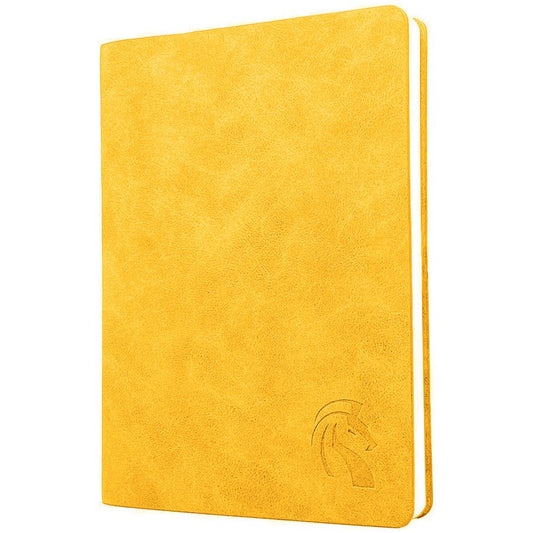
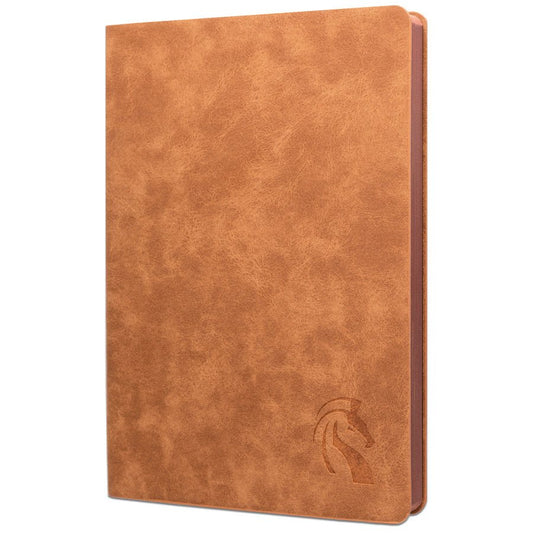
Explore LeStallion notebooks with smooth, fountain-pen-friendly paper for journaling, notes, and daily writing.
Related reading: Are fountain pens high maintenance? and Does ink dry in fountain pen?.