


- Gel-filled wrist rest provides cushioned support during extended computer use.
- Smooth mouse surface supports accurate and consistent cursor tracking.
- Ergonomic raised support helps maintain a more neutral wrist position.
- Non-slip base helps keep the mouse pad securely positioned.
- Compact all-in-one design combines mousing surface and wrist cushioning.

The gel support is simple, but it solves the main problem well
The 3M Gel Comfort Mouse Pad takes the number one position in our best mouse pad with wrist rest comparison because it combines a proper mouse surface with a cushioned gel support in one compact desktop accessory. There is no complicated adjustment system here. The main idea is simply to give the wrist and lower palm a softer place to rest during long periods at a computer.
That becomes useful when a mouse is used for several hours every day. Office work, spreadsheets, web browsing, design applications, editing, and general administrative tasks can involve thousands of small mouse movements during a normal working week.
The integrated gel section provides a raised, cushioned surface at the front of the pad. The gel support distributes contact pressure rather than leaving the wrist pressed directly against a hard wooden or laminate desk edge.
3M has designed the product as a combined mouse pad and wrist rest, so the support stays aligned with the mousing area. That is more convenient than using a separate wrist cushion that gradually moves away from the mouse during the day.
The wrist rest works best when you position the whole desk correctly
A wrist rest should not be treated as a substitute for sensible desk ergonomics. Chair height, keyboard position, mouse distance, desk height, and forearm position still determine how comfortably somebody works.
The mouse should generally be close enough that the user does not need to reach forward or outward every time the cursor moves. Keeping the mouse close reduces unnecessary reaching, which becomes more noticeable during long sessions.
This is where a compact mouse pad can help. It establishes a defined mousing area directly beside the keyboard rather than encouraging the mouse to gradually migrate farther across a large desk.
Imagine somebody working through a spreadsheet for four hours. Their right hand may move between the keyboard and mouse hundreds of times, so even a slightly awkward mouse position gets repeated over and over.
Place the pad close to the keyboard and position the wrist support where it feels natural. Do not force the wrist into an exaggerated upward angle simply because the gel cushion is raised.
The support should feel comfortable without making the hand bend sharply. A neutral wrist position is the goal, not maximum cushioning or the highest possible support.
It is also useful to understand when the wrist should actually contact the pad. During active mouse movement, many users are more comfortable allowing the hand and forearm to move naturally rather than planting the wrist heavily into one fixed position.
The cushioned section is especially useful during pauses between movements. You can relax the hand briefly without resting it against the hard desk surface.
This distinction matters because pressing the wrist heavily into any support for hours is not ideal. A soft pad changes the contact surface, but posture and movement still matter.
The gel filling is one reason this 3M model feels different from basic foam wrist rests. Gel can conform around the contact area while retaining enough structure to support the hand.
Gel cushioning provides a supportive surface without requiring a large, bulky pad. That makes it practical for home offices and smaller desks where a full-width desk mat would occupy unnecessary space.
The smooth mousing surface is the other half of the product. A wrist rest is not very useful if the mouse tracking area itself creates inconsistent movement.
A dedicated surface gives optical mice a predictable area for tracking. It also protects the desktop from the repeated contact and movement associated with everyday mouse use.
For normal office work, the available mousing area should be sufficient for moderate cursor movements. Users who play competitive games at extremely low mouse sensitivity may prefer a much larger pad because they physically move the mouse farther across the desk.
Mouse sensitivity changes the space you need. A high-DPI office setup uses relatively small physical movements, while low-sensitivity gaming can require broad arm sweeps that exceed a compact ergonomic pad.
Why we believe this 3M deserves the number one position
The non-slip base is an easy feature to overlook until a mouse pad does not have one. A wrist-rest pad receives pressure every time the hand settles onto the front cushion, so movement across the desk can become irritating.
A stable base helps keep the wrist support and mousing area in the same position. This is especially useful on smooth laminate, finished wood, and similar office surfaces.
Clean the desk before positioning the pad. A clean surface improves grip underneath, because dust and small debris can reduce contact between the non-slip material and the desktop.
The compact size is another reason the design works well for office use. It gives the mouse a dedicated tracking surface without covering the complete desk.
This leaves room for notebooks, documents, a phone, keyboard, and other equipment. Someone working on a smaller home-office desk may prefer that over a giant extended mouse mat.
The tradeoff is obvious. A compact pad provides less horizontal movement than an oversized gaming surface, so this is better suited to conventional office and productivity use than extremely low-sensitivity gaming.
Cleaning deserves some attention too. Wrist rests collect skin oils and dust because the hand repeatedly contacts the same area throughout the day.
Regular cleaning keeps the surface comfortable and prevents grime from gradually building around the wrist support. Follow the manufacturer's cleaning guidance and avoid soaking or using aggressive chemicals that could damage the covering or gel structure.
The mouse surface should also remain free from debris. Small particles underneath the mouse can affect glide and may eventually mark the pad or mouse feet.
Give the surface a quick wipe when cleaning the desk. It takes very little time and keeps the mousing area more consistent.
Another common mistake is positioning the pad too far from the body. A beautifully arranged desk can still be uncomfortable if the mouse requires the shoulder to reach forward throughout the day.
Move the pad closer instead. Ergonomic accessories need correct placement, and no amount of gel cushioning compensates for a mouse sitting in an awkward location.
The keyboard and mouse should also make sense together. If the keyboard is centered but the mouse is pushed far outward by a huge keyboard with a number pad, some users may find a more compact keyboard layout improves mouse positioning.
That is not a problem the mouse pad itself can solve, but it affects how useful the wrist rest feels. Ergonomics usually comes from several small setup choices working together rather than one accessory doing everything.
Take short movement breaks during long computer sessions too. Even a comfortable mouse pad does not eliminate the value of changing posture and moving the hands and arms periodically.
The black design is practical for a work environment because it blends easily with common keyboards, mice, monitors, and office furniture. It does not require the rest of the workstation to follow a particular visual style.
The all-in-one design keeps things simple. Instead of buying a mouse pad and separate wrist cushion, the two components remain permanently aligned as one unit.
This also makes the product easy to move between workstations. Someone working from home several days a week can relocate the pad without having to reposition multiple small accessories every time.
The gel wrist rest is the feature that pushes this model beyond a basic mouse pad. For somebody who regularly notices uncomfortable contact between the wrist and a hard desk edge, the difference can be immediate.
It is still important not to make medical claims about what a wrist rest can prevent. Comfort accessories can improve the working surface and encourage a better setup, but persistent wrist, hand, or arm pain should not simply be ignored because a gel pad has been added.
So why do we believe the 3M Gel Comfort Mouse Pad deserves the number one ranking out of seven? It covers the core requirements cleanly: a cushioned gel wrist support, dedicated mouse tracking surface, stable base, compact footprint, and a design suitable for long everyday office sessions.
There are larger pads for gamers and more elaborate ergonomic products for specialized setups. But for the primary keyword here, the goal is finding a strong mouse pad with an integrated wrist rest, and this 3M keeps the design focused on exactly that job.
Place it close to the keyboard, adjust the chair and desk so the wrist remains comfortable, keep the mouse sensitivity appropriate for the available surface area, and clean the contact areas periodically. Used as part of a sensible workstation, the 3M provides a strong balance of comfort and practicality, which is why it takes our top position.

- Cushioned wrist support adds comfort during extended computer sessions.
- Smooth tracking surface supports precise everyday mouse movements.
- Ergonomic raised design supports more comfortable wrist positioning.
- Non-slip backing helps prevent movement across smooth desktops.
- Two-pack format provides convenient pads for multiple workstations.
The two-pack makes this especially practical when you work at more than one desk
The Amazon Basics Computer Mouse Pad with Wrist Support takes the number two position in our best mouse pad with wrist rest comparison because it keeps the design straightforward while giving you two complete pads in the pack. For someone with a home office and another workstation, or two computers in the same household, that immediately makes the package more useful.
The raised wrist support is the main ergonomic feature. It provides a cushioned contact area in front of the mouse surface so the wrist does not have to rest directly against a hard wooden, glass, or laminate desktop during long computer sessions.
This is particularly noticeable during repetitive office work. The cushioned support softens desk contact while the dedicated mouse surface gives the hand a defined area for everyday cursor movement.
The second pad can be used at another workstation rather than moving the same mouse pad around. That makes sense for hybrid workers who maintain separate setups, or households where two people regularly use desktop computers.
The wrist support helps most when the mouse is already in the right position
A wrist rest cannot correct a mouse that is sitting too far away. If you need to reach forward or extend the elbow outward every time the cursor moves, the entire mousing position should be reconsidered first.
Place the mouse pad close to the keyboard where the hand can move between typing and mousing without a large change in shoulder position. Keeping the mouse close reduces unnecessary reaching, especially during repetitive tasks.
Imagine working through several hundred spreadsheet rows. The hand may move between keyboard shortcuts and the mouse constantly, so a slightly awkward mouse location gets repeated hundreds of times during one session.
The raised support gives the lower palm and wrist area a softer place to settle between movements. The goal is not to press the wrist heavily into the cushion throughout every mouse movement.
A better approach is allowing the hand and forearm to move naturally while using the support during pauses. The wrist should remain comfortably positioned rather than being bent sharply upward because the cushion is too far underneath the hand.
Chair height affects this too. If the chair sits far below the desk, the forearm may approach the mouse at an awkward angle regardless of how comfortable the wrist pad feels.
Adjust the chair and desk arrangement first, then position the mouse pad. Small changes can make a larger difference than simply adding more cushioning.
The smooth tracking area is another important feature because this still needs to function properly as a mouse pad. A comfortable wrist support paired with an inconsistent mousing surface would not be particularly useful.
A dedicated surface gives optical mice a predictable area for movement. Consistent tracking matters during precise cursor work, whether that means selecting spreadsheet cells, adjusting design controls, editing documents, or working through web applications.
The compact mousing area is generally better suited to productivity use than extremely low-sensitivity gaming. Office users often move the mouse relatively short physical distances because cursor sensitivity is configured higher.
A competitive gamer using very low sensitivity may need broad arm movements that exceed the available surface. In that situation, a large gaming pad with a separate wrist support may make more sense.
This is worth checking before buying any compact ergonomic mouse pad. Your mouse sensitivity determines required surface area, and the correct size depends on how the mouse is actually used.
The non-slip backing also matters because the raised wrist area receives pressure every time the hand settles onto it. Without enough grip underneath, the entire pad could gradually move away from its intended position.
Clean the desk before placing the pad down. Dust and small particles between the backing and desktop can reduce grip and may cause the pad to shift more easily.
Why this Amazon Basics pad finishes second instead of taking first place
The two-pack format is one of the strongest practical reasons to choose this option. You can keep one beside a desktop PC and another with a secondary workstation rather than repeatedly moving the same accessory.
For a shared office, each user can also have a separate pad. Two pads add useful setup flexibility, particularly when the household already has multiple mice and computers.
Another possibility is keeping the second pad as a replacement. Mouse pads and wrist rests receive constant physical contact, so having another identical unit available can be useful after extended use.
The wrist support itself needs periodic cleaning. Skin oils, dust, and normal desk debris gradually accumulate on any surface that remains in contact with the hand for hours.
Follow the manufacturer's cleaning guidance rather than soaking the product or using aggressive chemicals. Regular cleaning keeps the contact surface comfortable and helps prevent dirt from building around the wrist support.
The mouse area should be kept clean as well. Small particles underneath the mouse can affect glide and may eventually mark the mouse feet or pad surface.
A quick wipe during normal desk cleaning is usually easier than waiting until the surface is visibly dirty. Also lift the pad occasionally and clean underneath it.
Desk placement deserves more thought than simply putting the mouse pad wherever there is empty space. The pad should be positioned according to your normal hand and arm position.
If a full-size keyboard pushes the mouse unusually far to the side, consider whether the overall workstation layout can be improved. A narrower keyboard can sometimes allow the mouse to sit closer to the user's centerline.
The whole workstation affects wrist comfort, so the mouse pad should be considered one component of the setup rather than a complete ergonomic solution by itself.
Monitor position can influence the mouse arrangement too. If the monitor is offset to one side, users sometimes unconsciously rotate their body and place the mouse farther away to follow the screen.
Center the primary working area sensibly, then position the keyboard and mouse around that. The wrist support becomes more useful when everything else is already reasonably aligned.
Movement breaks are still important during long sessions. A cushioned support can make the contact area more comfortable, but it does not eliminate the value of moving the hands, shoulders, and arms periodically.
Do not assume discomfort should simply be worked through because an ergonomic accessory is present. Persistent wrist, hand, or arm pain deserves appropriate attention rather than relying on a mouse pad to solve an underlying issue.
The compact footprint is useful on smaller desks. The pad provides support without dominating the desk, leaving room for notebooks, documents, a phone, speakers, and other equipment.
This is particularly helpful in a home office where the same desk may also be used for study, paperwork, or other activities. A giant extended desk mat is not always necessary.
The downside is that the compact format naturally provides less mouse travel. Users who regularly make large sweeping movements may feel restricted compared with an oversized mouse surface.
This is one of the areas where personal preference matters. Someone using a high-DPI wireless office mouse may never come close to reaching the edges during normal work.
The simple appearance is another advantage for office use. It does not demand a gaming-style workstation or a particular desk aesthetic, so it can sit beside a conventional keyboard and business laptop without looking out of place.
The design stays focused on everyday usability. There are no unnecessary lighting systems, charging electronics, or other additions that complicate what is essentially a mouse pad and cushioned wrist support.
So why does the Amazon Basics model take number two rather than our top position? Our number one 3M Gel Comfort Mouse Pad gives us a particularly strong dedicated gel wrist-rest design from a brand with a long history in ergonomic office accessories.
The 3M's integrated gel support and focused single-pad design gave it a slight advantage when we considered the primary purpose of this category. It is very specifically designed around providing a cushioned mouse and wrist surface for daily computer use.
The Amazon Basics option counters with value and convenience. The two-pack is a meaningful practical advantage if you need to equip more than one workstation or simply want an identical spare available.
That is why we believe the Amazon Basics Computer Mouse Pad with Wrist Support deserves the number two ranking out of seven. It provides the important fundamentals: cushioned wrist support, a dedicated tracking surface, non-slip stability, a compact office-friendly footprint, and two pads in the package.
Place the pad close to the keyboard, adjust the workstation so the wrist remains naturally positioned, keep the surface clean, and make sure the available mousing area suits your mouse sensitivity. For everyday office, study, and home computer use, this Amazon Basics set offers an excellent balance of comfort, simplicity, and practical value.
- Easy Glide design lets the wrist support move with your hand.
- Ergonomic wrist support encourages more natural movement while mousing.
- Smooth tracking surface supports accurate everyday cursor control.
- Compact design fits comfortably into smaller office workspaces.
- Moving wrist support reduces the need for fixed wrist positioning.
The moving wrist support is what makes this Fellowes genuinely different
The Fellowes Easy Glide takes the number three position in our best mouse pad with wrist rest comparison because it approaches wrist support differently from the usual fixed cushion. Instead of expecting the hand to move while the wrist rest remains stationary, the Easy Glide design allows the support to travel with the wrist across the mousing area.
That sounds like a small change, but it affects how the product feels during actual computer work. With a conventional gel pad, the wrist may leave the cushioned section whenever the mouse moves toward the outer edges of the available surface.
The Fellowes design is intended to keep support closer to the hand as it moves. The wrist support follows your movement, which makes sense during spreadsheets, design work, web browsing, document editing, and other tasks involving repeated cursor movement.
It also avoids creating one fixed pressure point for the entire session. The hand can move around the work area while the support travels with it rather than constantly pulling away from a stationary cushion.
It feels different from a normal gel pad, and that is really the point
A conventional mouse pad with wrist rest normally has a raised cushion built permanently into its lower edge. That works well when mouse movement is fairly small, but larger movements can cause the hand to slide away from the supported position.
The Easy Glide system changes that relationship. The support moves across the mousing area rather than requiring the wrist to remain in one narrow location.
Imagine somebody working through a large spreadsheet. They may repeatedly move the mouse horizontally between columns, select ranges, scroll through data, then return to the keyboard for shortcuts.
A fixed wrist rest supports the hand when it is near the bottom center of the pad. Move farther sideways and that support may no longer sit underneath the same part of the wrist.
With the Fellowes approach, the support can move with those motions. This gives the product a more dynamic feel than the fixed gel cushions used by our first and second-ranked choices.
That does not mean the wrist should be pressed heavily into the support throughout every movement. Natural hand movement still matters, and the support should provide comfortable contact rather than locking the wrist into one position.
Desk setup remains important too. An ergonomic mouse pad cannot correct a mouse positioned too far away from the body.
Place the pad close to the keyboard where the mouse can be reached without repeatedly stretching the shoulder forward. The forearm should be able to approach the mouse naturally rather than reaching across a large section of unused desk.
This becomes particularly noticeable during long working sessions. A small awkward reach repeated hundreds of times can become much more annoying than it initially feels during the first five minutes.
Mouse placement should reduce unnecessary reaching. If the pad is positioned correctly, the moving wrist support can then do the job it was designed to do.
Chair height affects the setup as well. Sitting too low relative to the desk can force the wrist and forearm into an awkward upward angle regardless of what kind of wrist support is being used.
Adjust the chair first, then place the mouse and keyboard. Do not use the wrist rest to compensate for a desk arrangement that is obviously uncomfortable.
The mouse surface itself still matters. Accurate cursor tracking requires a reasonably consistent surface, particularly during detailed productivity work where small movements need to translate predictably on screen.
A dedicated mouse pad also avoids some of the inconsistencies found on glossy or heavily textured desks. Consistent tracking helps precise cursor movement, whether the task involves selecting text, editing images, moving spreadsheet cells, or working through web applications.
The available surface area should be considered against mouse sensitivity. Someone using a relatively high DPI office mouse may need very little physical movement to cross a large monitor.
A user running very low sensitivity may need much larger sweeps. That is particularly common in gaming, where an oversized desk mat can provide substantially more movement space.
The Fellowes is therefore better suited to office and productivity use than extreme low-sensitivity gaming. Its focus is wrist support and controlled desktop movement rather than providing an enormous competitive gaming surface.
Why the Easy Glide earns third place rather than taking our top position
The moving support is the product's biggest advantage, but it is also the reason the experience will be more preference-dependent. Some users like a wrist cushion that remains completely stationary because they know exactly where the hand will settle every time.
The Fellowes deliberately does something different. The sliding design favors movement over fixed support, so there can be a short adjustment period if you have spent years using a conventional mouse pad.
Give the mechanism enough clear desk space to operate properly. Debris around the movement area can interfere with the smooth feeling that makes the Easy Glide concept useful.
Keep both the pad and desk reasonably clean. Dust, crumbs, and other small particles can affect mouse glide and any moving surfaces that remain in contact with the desktop.
Regular cleaning is particularly worthwhile with wrist-support products because the hand contacts the same general area for hours. Skin oils and ordinary desk dust gradually accumulate even when the product does not visibly look dirty.
Clean contact surfaces stay more comfortable. Follow Fellowes' care instructions rather than soaking the product or using aggressive chemicals that may damage its materials.
The compact footprint is another advantage for office desks. You get an ergonomic support system without covering the complete work surface with an extended mouse mat.
That leaves room for notebooks, documents, a phone, speakers, or other equipment. This is particularly useful on smaller home-office desks where every section of the surface already has a purpose.
The tradeoff is available mouse travel. A huge desk mat naturally provides more movement area, so users who make very large physical mouse movements need to consider that before choosing a compact ergonomic design.
Mouse sensitivity changes what size works best. Before deciding that a compact pad feels restrictive, check whether the cursor sensitivity itself is unusually low for ordinary office work.
The Easy Glide concept can be especially useful for users working across larger displays. A 32-inch monitor or ultrawide screen can involve frequent horizontal cursor movement depending on the configured sensitivity and workflow.
For example, a video editor may move repeatedly between a timeline, media panel, and controls. A financial user may work across wide spreadsheets where cursor movement happens continuously between distant columns.
The moving support gives the wrist somewhere cushioned to remain during those changes in mouse position. It is a more active design than simply placing a gel bump at the bottom of the pad.
There is still a limit to what an ergonomic accessory should be expected to do. A wrist rest is not medical treatment, and persistent hand, wrist, or arm discomfort should not simply be ignored because a supportive mouse pad has been added.
Movement breaks remain sensible during long computer sessions. Change posture occasionally, move the hands and shoulders, and avoid remaining completely fixed at the desk for hours.
The keyboard arrangement can affect the mouse position too. A large full-size keyboard with a number pad pushes the mouse farther outward than a compact keyboard.
If the shoulder feels unnecessarily extended during mousing, look at the complete setup rather than only the pad. Moving the keyboard and mouse closer together may produce a bigger improvement than changing wrist rests repeatedly.
Ergonomics comes from the complete workstation, including chair height, desk height, keyboard position, monitor placement, mouse sensitivity, and how often the user changes posture.
So why does the Fellowes Easy Glide finish behind our first two choices? Our number one 3M model provides a very straightforward integrated gel wrist rest that works well for users wanting traditional cushioned support.
The Amazon Basics option in second place also provides a familiar fixed-support design while offering the practical advantage of two pads in the package. Both are easier to understand immediately because they behave like conventional mouse pads with raised wrist rests.
The Fellowes is more specialized. Its moving support is the differentiating feature, and users who appreciate that movement may actually prefer it over either of our higher-ranked products.
But the design is less conventional, which makes it slightly more dependent on individual working style. Someone who barely moves the mouse physically may gain less from a sliding wrist support than someone constantly moving across the pad.
That is why we believe the Fellowes Easy Glide deserves the number three ranking out of seven. It provides a genuinely useful alternative to fixed wrist cushions by allowing the support to move with the hand, while still giving the mouse a dedicated tracking surface for everyday computer work.
Position it close to the keyboard, adjust the workstation so the forearm approaches the mouse comfortably, keep the movement area clean, and use a mouse sensitivity appropriate for the available surface. For office users who dislike losing wrist support whenever the mouse moves sideways, the Easy Glide offers a clever practical solution and remains one of the strongest options in this category.

- Raised wrist support cushions the hand during extended mouse use.
- Ergonomic shape provides additional support around the lower palm.
- Smooth mouse surface supports controlled everyday cursor movement.
- Non-slip base helps keep the pad stable during work.
- Compact design fits easily beside standard office keyboards.
The wider hand support is what makes this more interesting than a basic mouse pad
The LLLSSS Mouse Pad with Wrist and Hand Support takes the number four position in our best mouse pad with wrist rest comparison because it focuses heavily on cushioning the lower hand and wrist while maintaining a dedicated surface for everyday mouse movement. The raised support creates a defined resting area at the front of the pad, which can be useful during long computer sessions.
This is particularly relevant for office workers who spend hours switching between typing and mouse input. The hand may return to the same resting position hundreds of times during spreadsheets, document editing, research, design work, or general web use.
The cushioned section gives that contact point a softer surface than the edge of a hard desk. The raised support reduces hard desk contact, especially during the small pauses between mouse movements.
The design is compact enough to sit beside a standard keyboard without taking over the entire desktop. That makes it practical for smaller workstations where an oversized desk mat would interfere with notebooks, documents, speakers, or other equipment.
The support works better when you let the hand move naturally
One mistake with wrist-rest mouse pads is treating the raised cushion as somewhere the wrist must remain planted throughout every movement. That can make mousing feel restrictive and may encourage users to pivot the entire hand from one fixed point.
A better approach is to use the cushioned section as support while allowing the hand and forearm to move when necessary. The wrist should not feel locked in place simply because a raised support is available.
This becomes particularly important when moving the cursor across a large monitor. If the mouse sensitivity is relatively low, the physical mouse may need to travel much farther across the pad.
Someone working with a high-DPI office mouse may use only a small part of the available surface. A designer or gamer using lower sensitivity can need considerably more room for the same on-screen movement.
That means mouse sensitivity should be considered when choosing any compact pad. Available surface area needs to match movement, otherwise the mouse may repeatedly reach the edge during normal use.
For conventional office work, the compact size should be more manageable. Tasks such as selecting text, moving between browser tabs, navigating spreadsheets, and clicking interface controls generally do not require the sweeping movements associated with low-sensitivity gaming.
The smooth tracking surface is useful here. A dedicated mouse surface provides a more predictable texture than many desks, particularly glossy, uneven, or heavily patterned surfaces.
That can make cursor movement feel more consistent. It also means the mouse feet repeatedly contact the pad rather than sliding directly across the desktop finish.
Consistent tracking matters during detailed work, especially when small cursor movements are being used to select spreadsheet cells, edit images, or manipulate controls in software.
The raised hand support should be positioned close enough that the user does not need to reach forward. If the entire mouse pad sits too far away, the cushioning cannot fix the underlying shoulder and arm position.
Move the pad closer to the keyboard and body. The mouse should be accessible without repeatedly stretching the arm across the desk.
Imagine an employee processing invoices for several hours. They may alternate constantly between entering values on the keyboard and clicking fields with the mouse.
Shorter keyboard-to-mouse movement can help make that repeated transition feel less awkward. A compact pad is useful because it can usually sit directly beside the keyboard instead of requiring a large dedicated area.
Keyboard width also affects the position. A full-size keyboard with a number pad naturally pushes the mouse farther outward than a compact keyboard.
For users who rarely need a number pad, a narrower keyboard can sometimes bring the mouse closer to the body's centerline. That is not a feature of the LLLSSS pad itself, but it changes how effectively an ergonomic mouse setup works.
Chair height matters as well. If the chair is much too low relative to the desk, the wrist may bend upward when using the mouse regardless of how soft the support feels.
Desk setup matters as much as cushioning. Adjust the chair and mouse position first, then use the wrist support to improve the contact surface rather than asking it to compensate for an awkward workstation.
Why this LLLSSS takes fourth place in our comparison
The non-slip base is an important practical feature because wrist-rest pads receive more downward and sideways pressure than ordinary flat mouse pads. Every time the hand settles onto the raised section, the pad has another opportunity to shift across the desk.
A stable backing helps keep the mouse surface and support in the same position. This is particularly useful on smooth desks where lightweight accessories can move easily.
Clean the desktop before placing the pad down. A clean desk helps the base grip, while dust and small particles underneath can reduce friction and create slight movement.
It is worth cleaning underneath the pad periodically too. Small particles can accumulate around the edges even when the top surface looks reasonably clean.
The wrist and hand support needs regular cleaning because it receives direct skin contact. Natural skin oils, dust, and ordinary desk debris can gradually build up on the surface during daily use.
Follow the manufacturer's cleaning guidance rather than soaking the pad. Aggressive cleaners may affect the fabric, cushioning material, or non-slip backing.
Routine cleaning keeps the support more comfortable and also keeps the mouse tracking area free from particles that can interfere with smooth movement.
Do not forget the mouse itself. Dust around the sensor and debris on the mouse feet can affect how the device feels even when the pad is completely clean.
The compact format is useful for home offices and work desks, but it does create an obvious limitation. There is less physical mouse travel than on a large extended desk mat.
For productivity work, this may never become a problem. For low-sensitivity gaming or certain creative workflows, the user may prefer a larger surface with a separate wrist support.
Compact size is useful but less flexible when very large mouse movements are required. This is one reason the product does not move higher in our ranking.
The hand support is also a matter of preference. Some users prefer a lower wrist rest that barely raises the hand, while others like a more noticeable cushion underneath the lower palm.
If the support feels too high, do not force yourself to adapt by bending the wrist. The height of an ergonomic accessory should work with your natural hand position rather than changing it in an uncomfortable direction.
The same applies to firmness. A very soft cushion and a firmer supportive surface can feel completely different even when their external dimensions are similar.
Our number one 3M pad earns its higher position because its integrated gel support provides a particularly straightforward balance between cushioning and everyday office usability. It also comes from a brand with a long presence in ergonomic office accessories.
The Amazon Basics model in second provides a more traditional cushioned design while adding the value of a two-pack. That is useful for users with separate home and office workstations.
The Fellowes Easy Glide in third does something more distinctive. Its wrist support moves with the hand, which can maintain support as the mouse travels across the working area.
The LLLSSS is more conventional by comparison. It provides a raised ergonomic hand and wrist area with a standard mouse surface, which works well but does not introduce as strong a differentiating feature as the products above it.
That does not make it ineffective. In fact, a conventional fixed support may be preferable for someone who wants the wrist rest to remain in exactly the same place every time the hand returns from the keyboard.
The key is positioning it correctly. Put the pad beside the keyboard rather than several inches forward, then adjust mouse sensitivity so normal cursor movement fits comfortably within the available surface.
Correct placement makes the support more useful. If the mouse sits too far from the body, no amount of padding will make repeated reaching feel ideal.
Movement breaks are still worth taking during long sessions. A cushioned mouse pad can improve the contact surface, but it does not remove the need to change posture and move the hands, arms, and shoulders periodically.
Persistent wrist or hand discomfort should not simply be ignored because an ergonomic accessory has been added. A mouse pad can improve comfort, but it is not a substitute for appropriate professional advice when pain continues.
So why do we believe the LLLSSS Mouse Pad with Wrist and Hand Support deserves the number four ranking out of seven? It provides the essential features we want from this category: a cushioned raised support, dedicated mouse tracking surface, non-slip backing, and a compact footprint suitable for everyday desk use.
It falls behind our top three because those products provide stronger brand-established ergonomic designs, additional value, or a more distinctive support mechanism. The LLLSSS is a simpler option, but sometimes that is exactly what a workstation needs.
Place it close to the keyboard, keep the wrist naturally positioned rather than pressing heavily into the cushion, clean the surface periodically, and make sure your mouse sensitivity matches the available area. For office, study, and home computer work, the LLLSSS remains a practical comfort-focused option and a solid fourth-place choice.
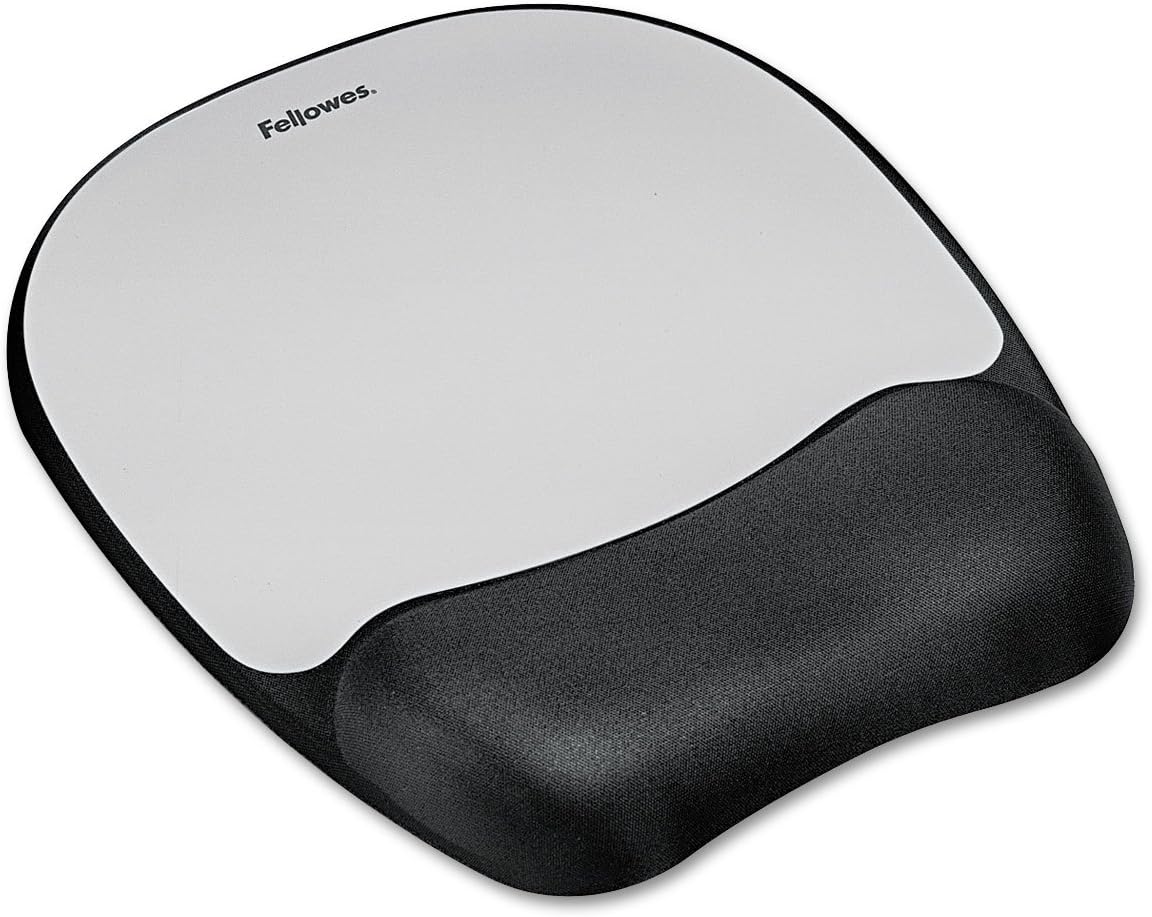
- Memory foam wrist support cushions the hand during computer use.
- Soft foam conforms gradually around the user's wrist position.
- Smooth mousing surface supports controlled everyday cursor tracking.
- Non-skid backing helps keep the pad stable on desks.
- Silver design provides a clean professional home-office appearance.
The memory foam feels different from gel, and some users will prefer exactly that
The Fellowes 9175801 Memory Foam Mouse Pad takes the number five position in our best mouse pad with wrist rest comparison because it uses memory foam rather than the gel cushioning found in several competing ergonomic pads. That changes the feel quite a bit. Instead of a more resilient gel support, the foam gradually compresses around the wrist and lower palm during use.
For somebody working at a computer for several hours each day, that softer contact area can be useful. The wrist is no longer settling directly onto a hard desk edge whenever the hand pauses between mouse movements.
The support is integrated into the mouse pad rather than supplied as a separate accessory. The memory foam stays aligned with the mouse, so there is no separate wrist cushion gradually moving away from the mousing area during the working day.
The design is compact and fairly conventional. That makes it easy to place beside a standard office keyboard without reorganizing the complete desk around a huge extended mouse mat.
Memory foam works best when you are not pressing the wrist into it all day
Memory foam responds to pressure by compressing around the contact area. That can create a softer resting point than a bare wooden, glass, or laminate desk surface.
The important word is resting. A wrist support should not encourage somebody to plant the wrist heavily into one location and pivot the entire hand around that point for eight hours.
The support should cushion rather than immobilize. During active mouse movement, allow the hand and forearm to move naturally instead of forcing every motion through a fixed wrist position.
This becomes more relevant when cursor movement is frequent. Someone processing spreadsheets, editing documents, browsing large databases, or working with design software may make thousands of small mouse movements throughout a working week.
The wrist support can provide a comfortable contact area during pauses between those movements. When the mouse needs to travel farther, the hand should still be free to move rather than being anchored to the foam.
Mouse pad placement matters just as much as cushioning. If the pad is positioned too far forward or too far to the side, the user still has to reach awkwardly every time the mouse is needed.
Keep the mouse close to the keyboard, especially when switching repeatedly between typing and cursor input. Shorter hand movements can make repetitive computer work feel more natural.
A full-size keyboard can affect this because the number pad pushes the mouse farther outward. If you rarely use the number pad and constantly feel that the mouse is too far away, the keyboard layout may be part of the problem.
Chair height matters too. Sitting too low relative to the desktop can force the hand upward at the wrist even when the mouse pad itself is comfortable.
Adjust the chair and general desk arrangement first. Then position the Fellowes pad where the wrist can approach the support naturally.
Good ergonomics involves the complete workstation, including chair height, keyboard position, mouse distance, monitor location, and how frequently the user changes posture.
The memory foam should be considered one useful component of that setup. It improves the surface underneath the wrist, but it cannot correct an awkward desk arrangement by itself.
The dedicated mouse surface is equally important. Optical mice generally work best when they have a consistent tracking area rather than moving across an unpredictable glossy or heavily patterned desktop.
A proper mouse pad also creates a repeatable amount of friction under the mouse feet. This can make cursor movement feel more controlled during everyday office work.
A consistent surface helps precise cursor control, particularly when selecting spreadsheet cells, editing documents, adjusting graphics, or navigating detailed software interfaces.
The amount of physical mouse movement depends heavily on sensitivity. A high-DPI office mouse may travel only a small distance to move the cursor across the complete monitor.
Low-sensitivity gaming is different. Players can make large sweeping movements that require much more surface area than a compact ergonomic mouse pad provides.
This Fellowes is therefore better suited to office, study, and conventional computer use than extreme low-sensitivity gaming. That is not really a flaw. It is simply a matter of matching the pad to the workload.
Why this Fellowes finishes fifth despite the comfortable foam support
The non-skid base is useful because the front cushion receives pressure whenever the hand settles onto it. A pad that gradually slides across the desk would require constant repositioning and undermine the ergonomic benefit.
Place it on a clean, dry desktop. A stable pad keeps the support consistent, which means the wrist returns to approximately the same comfortable area each time the hand moves back from the keyboard.
Dust underneath the base can reduce grip. Lift the pad occasionally and wipe the desktop rather than cleaning only the visible upper surface.
The memory foam area needs cleaning too. Skin oils, dust, and normal desk debris gradually accumulate because the wrist and lower hand repeatedly contact the same section.
Follow Fellowes' recommended cleaning method and avoid saturating the foam. Memory foam products generally should not be treated like a simple fabric desk mat that can be soaked without consequence.
Regular cleaning keeps the contact area fresher and helps prevent dirt from building around the raised support. The mouse surface should also remain free from crumbs and small particles that could affect glide.
The silver finish gives the product a different appearance from the typical all-black ergonomic mouse pad. It can work well with lighter keyboards, aluminum laptops, silver monitors, and contemporary office furniture.
Appearance is obviously secondary to comfort and tracking, but desk accessories remain visible for hours every day. A neutral silver finish can integrate into an office without looking overly gaming-focused.
The compact footprint is another advantage. It provides a dedicated mousing area and wrist cushion without covering most of the desktop.
Compact sizing works well on smaller desks, especially where documents, notebooks, phones, speakers, and other office equipment already compete for surface area.
The downside is limited mouse travel compared with a large desk mat. Users who naturally make broad movements may reach the edges more often.
Before deciding that the pad is too small, check the mouse sensitivity. Increasing cursor sensitivity slightly can reduce the amount of physical travel required for ordinary productivity tasks.
Do not increase it so much that accurate cursor placement becomes difficult, though. The correct sensitivity is the one that allows comfortable movement while maintaining control.
The memory foam itself is also preference-dependent. Foam and gel do not feel the same, and there is no universal reason everybody should prefer one material.
Memory foam tends to compress around the contact area, while gel support often feels more resilient. Someone who likes a softer cushion may prefer the Fellowes even if another product ranks higher overall.
Our number one 3M model uses an integrated gel support that provides a strong combination of cushioning and everyday office practicality. That straightforward gel design gave it an advantage in our overall comparison.
The Amazon Basics model in second provides familiar cushioned support while including two pads in the package. That gives users an easy way to equip two workstations or keep an identical spare.
The Fellowes Easy Glide in third introduces a moving support mechanism. The Easy Glide support follows hand movement, which makes it particularly interesting for users who dislike moving away from a fixed cushion while mousing.
Our fourth-ranked LLLSSS provides a broader hand-support style with a conventional fixed design. The Fellowes 9175801 comes just behind those products because its main distinguishing feature is the memory foam material rather than a fundamentally different support system.
That does not make the foam unimportant. For users who specifically prefer the softer compression of memory foam, this product may feel better than several models ranked above it.
The pad should still be positioned correctly. Place it beside the keyboard rather than several inches forward, and make sure the forearm can approach the mouse without unnecessary reaching.
Correct placement matters more than extra padding. A thick cushion cannot compensate for a mouse that is positioned so far away that the shoulder is constantly extended.
Movement breaks remain useful during long work sessions too. Change hand and arm position periodically instead of staying completely fixed at the desk for hours.
A wrist-rest mouse pad is a comfort accessory rather than medical treatment. Persistent pain, numbness, weakness, or other concerning symptoms should not simply be ignored because the workstation now has memory foam support.
So why do we believe the Fellowes 9175801 deserves the number five ranking out of seven? It provides a comfortable memory foam wrist support, dedicated mouse tracking area, non-skid stability, compact dimensions, and a professional-looking silver finish.
It finishes behind the first four products because they provide stronger overall combinations of gel support, package value, moving wrist support, or broader ergonomic cushioning. But the ranking does not erase the Fellowes model's biggest strength.
If you prefer memory foam over gel, this Fellowes offers a comfortable alternative that remains simple enough for everyday office use. Position it close to the keyboard, keep the wrist relaxed rather than pressing heavily into the foam, maintain a suitable mouse sensitivity, and clean the contact surface regularly for the best long-term experience.

- Integrated wrist support cushions the hand during extended computer work.
- Gel-style support provides a softer surface beneath the wrist.
- Dedicated mouse surface supports smooth everyday cursor movement.
- Non-slip underside helps maintain stable positioning during regular use.
- Compact footprint fits easily beside most standard office keyboards.
This Sandberg keeps the design basic, and for office work that can be enough
The Sandberg Mouse Pad with Wrist Rest takes the number six position in our best mouse pad with wrist rest comparison because it follows a simple ergonomic formula. You get a dedicated mouse surface with a raised cushioned section at the front, giving the wrist a softer contact point than the hard edge of a typical office desk.
There is not much unnecessary complexity here. The pad is intended for everyday computer work where the mouse stays beside the keyboard and the user wants some additional support during longer sessions.
The integrated design is useful because the wrist rest remains aligned with the mousing area. The support stays directly below the hand instead of relying on a separate cushion that can gradually move around the desk.
For normal office use, that can be more practical than buying several separate ergonomic accessories. Place the pad beside the keyboard, position the mouse on the tracking surface, and the support is already in the correct general area.
The cushion helps most when the mouse is positioned close enough to begin with
A wrist-rest mouse pad cannot correct a poorly arranged workstation by itself. If the mouse is sitting far away from the body, the shoulder and arm still have to reach toward it every time the cursor needs to move.
Bring the mouse pad close to the keyboard. A shorter reach makes repeated mousing easier, particularly when moving back and forth between typing and cursor input throughout the working day.
Consider someone entering information into a database for several hours. They may type a value, reach for the mouse, click another field, return to the keyboard, and repeat the sequence hundreds of times.
A small amount of unnecessary reaching becomes much more noticeable when it is repeated that often. Moving the pad several centimeters closer can sometimes improve the setup more than adding a thicker cushion.
The wrist support then provides a softer place for the lower hand to settle during pauses. It should feel supportive without forcing the wrist upward at an uncomfortable angle.
The wrist should remain naturally positioned, rather than bending sharply because the front cushion is being used as a permanent anchor point.
During active mouse movement, allow the hand and forearm to move. Pressing the wrist heavily into one location and pivoting every mouse movement from that point can feel restrictive.
The support is particularly useful during short pauses. When reading a page, waiting for software, or switching attention back to the keyboard, the hand can settle onto a cushioned area rather than directly against the desktop.
Chair height affects this relationship too. If the chair sits too low compared with the desk, the forearm may approach the mouse from below and force the wrist into an awkward angle.
Adjust the chair before deciding whether the wrist rest feels right. Desk ergonomics starts with overall positioning, not simply the softness of the mouse pad.
The keyboard can influence mouse placement as well. A full-size keyboard with a number pad pushes the mouse farther to the side than a compact keyboard.
For somebody who rarely uses the number pad, a smaller keyboard can allow the mouse and Sandberg pad to sit closer to the body's centerline. That can reduce the amount of outward shoulder movement required during the day.
The dedicated tracking surface gives the mouse a consistent area to move across. This can be preferable to glossy desks, textured wood, glass, or other surfaces where optical tracking and glide may feel less predictable.
A consistent mouse surface improves control, particularly when selecting small interface elements, working through spreadsheets, editing documents, or performing other tasks requiring precise cursor placement.
Mouse sensitivity determines how much physical surface area you actually need. A higher-DPI office mouse may move the cursor across an entire monitor after travelling only a short distance on the pad.
A low-sensitivity gaming setup is completely different. Large sweeping movements can quickly reach the edges of a compact ergonomic mouse pad.
For that reason, this Sandberg is better suited to conventional productivity and office use than competitive low-sensitivity gaming. A gamer needing large arm movements would probably be better served by a larger desk mat and separate wrist support.
Why the Sandberg finishes sixth in our seven-product comparison
The compact footprint is useful for smaller desks. It gives the mouse a defined working area without covering most of the surface with fabric or rubber.
That leaves room for documents, notebooks, a phone, speakers, and other office equipment. Compact sizing works well in home offices, particularly when the same desk has to handle both computer work and paperwork.
The tradeoff is movement space. If your cursor sensitivity is low or you naturally move the mouse with broad arm movements, the pad may feel more restrictive than an extended surface.
Check your normal mouse movement before deciding what size you need. If you rarely move the mouse more than a few centimeters in any direction, a huge gaming pad may simply occupy space without providing much practical benefit.
Stability matters because a wrist-rest pad receives pressure at its front edge. If the underside does not grip the desk properly, the pad can gradually shift as the hand moves.
A stable base keeps the support aligned with the user's normal hand position. Clean the desk before placing the pad down so dust and small particles do not reduce grip underneath.
Lift the pad occasionally and clean below it too. Debris can work its way underneath during normal desk use even when the visible top surface remains reasonably clean.
The wrist area needs regular attention because it receives direct skin contact. Oils from the skin, dust, and ordinary office debris can gradually collect on the support.
Follow Sandberg's cleaning guidance rather than soaking the product or using aggressive cleaning chemicals. Different cushioning and surface materials react differently to excessive moisture.
Routine cleaning keeps the pad more comfortable and also prevents small particles from interfering with mouse glide.
Clean the mouse feet at the same time. Dirt caught underneath the mouse can create a scratchy feeling even when the pad itself is completely clean.
The simple design is also one of the reasons this product ranks sixth. It does the basic job, but several products above it offer stronger differentiating features.
Our number one 3M model uses a focused gel-support design that provides a strong balance of cushioning, stability, and everyday office usability. It is a straightforward product, but the overall execution puts it at the top of our comparison.
The Amazon Basics model in second adds the practical benefit of a two-pack. That makes it useful for households with two workstations or hybrid workers who want the same setup in different locations.
The Fellowes Easy Glide in third provides a more unusual solution. Its support can move with the wrist, which helps maintain cushioning as the mouse travels across the working area.
The LLLSSS and Fellowes memory foam models also provide their own variations on wrist support. One emphasizes broader hand cushioning, while the other uses memory foam for users who prefer a softer compressing material.
The Sandberg is more conventional. It gives you the familiar combination of mouse pad, raised wrist cushion, and stable base without a particularly specialized mechanism.
That can actually be an advantage if you do not want anything unusual. A simple fixed wrist rest is predictable, and there is almost no learning curve when moving from an ordinary mouse pad.
The hand returns to the same support position every time. For users with relatively small mouse movements, that fixed design can work perfectly well.
The important thing is not to assume more cushioning automatically means better ergonomics. The support should complement the natural position of the hand rather than forcing it into a different angle.
If the wrist feels too high, reposition the pad and review the chair and desk height. Do not simply tolerate an awkward angle because the product is described as ergonomic.
Comfort should be evaluated during real work, not just during the first minute after placing a hand on the cushion. Use the pad through a normal session and pay attention to how the wrist, forearm, and shoulder are positioned.
Movement breaks remain useful as well. Even a comfortable workstation benefits from periodically changing posture and moving the hands, arms, and shoulders.
A mouse pad with wrist support is a comfort accessory, not a medical treatment. Persistent pain, numbness, weakness, or other concerning symptoms should not simply be ignored because the desk now has a cushioned mouse pad.
So why do we believe the Sandberg Mouse Pad with Wrist Rest deserves the number six ranking out of seven? It covers the fundamentals properly with integrated wrist cushioning, a dedicated tracking surface, compact dimensions, and stable everyday desktop use.
It falls behind the products above because they provide stronger material choices, added value, or more distinctive ergonomic support systems. The Sandberg is less specialized, but it remains practical for ordinary computer use.
Place it close to the keyboard, adjust the chair so the forearm approaches the mouse comfortably, keep the wrist relaxed rather than pressing heavily into the cushion, and use a sensitivity level that fits the available mousing area. For someone who wants a simple traditional wrist-rest mouse pad without extra complexity, the Sandberg remains a sensible option despite its number six position.

- Leatherette wrist rest provides a smooth cushioned support surface.
- Precise mousing surface supports accurate everyday optical mouse tracking.
- Integrated wrist support keeps cushioning aligned with mouse movement area.
- Compact footprint fits comfortably beside standard office keyboards.
- Professional dark finish works naturally with business workstation setups.
The leatherette wrist support gives this 3M a very different feel from fabric pads
The 3M Precise Mouse Pad with Leatherette Wrist Rest takes the number seven position in our best mouse pad with wrist rest comparison, but there is still a clear reason somebody might choose it. Its smooth leatherette-covered wrist support feels different from the fabric and exposed soft-touch surfaces commonly used on ergonomic mouse pads, giving the product a more traditional professional-office appearance.
The design combines a dedicated mouse tracking area with an integrated raised support. That keeps the wrist cushion in a predictable position instead of requiring a separate wrist rest that can gradually move away from the mouse during the working day.
The raised section provides a softer contact point for the lower hand during pauses between mouse movements. The integrated support stays consistently positioned, which can be useful when the mouse itself remains in a relatively compact working area.
This is particularly suitable for ordinary productivity work. Email, spreadsheets, document editing, accounting software, research, and general web browsing typically involve smaller mouse movements than low-sensitivity competitive gaming.
The smooth wrist surface is useful, but placement still matters more than padding
A cushioned mouse pad can improve the contact surface underneath the wrist, but it cannot correct a mouse that is sitting in the wrong place. If the pad is too far forward, the user still has to reach toward it throughout the day.
Position the mouse close to the keyboard and within comfortable reach. Shorter reaching makes repeated mouse use easier, especially when the hand constantly switches between typing and cursor control.
Consider someone processing financial records. They may type a number, move to the mouse, select another field, return to the keyboard, and repeat that pattern hundreds of times.
If the mouse sits unnecessarily far to the right, every one of those transitions includes extra arm movement. Moving the pad closer can therefore make a noticeable difference during a long session.
A full-size keyboard can contribute to this problem. The number pad extends the keyboard farther to the right and naturally pushes the mouse away from the body's centerline.
If the number pad is essential, work around it by keeping the keyboard positioned sensibly. If it is rarely used, a more compact keyboard can sometimes improve the overall mouse position.
The entire workstation affects wrist position, including chair height, desk height, keyboard width, mouse location, and monitor placement. The wrist rest should complement those elements rather than being expected to correct all of them.
The leatherette surface gives the wrist support a smoother finish than many fabric-covered pads. Some users may prefer that because the hand can shift slightly without rubbing against a coarse textile surface.
It can also give the pad a cleaner business-oriented appearance. A black leatherette-style accessory blends easily with common office mice, keyboards, monitors, and dark desktop equipment.
Surface preference is personal, though. Leatherette and fabric feel noticeably different, especially during warm weather or very long computer sessions.
Some users prefer a soft woven surface against the skin, while others like the smoother feel of leatherette. There is no universal answer, so the material should be considered alongside the cushioning itself.
The mouse tracking area is equally important. A dedicated surface provides a more consistent environment for an optical mouse than certain glossy, transparent, or heavily textured desktops.
This can help cursor movement feel more predictable. It also protects the desk surface from the repeated sliding produced by the mouse feet during everyday work.
Consistent tracking matters for detailed cursor work, including spreadsheet selection, photo adjustments, document formatting, and small interface controls.
Mouse sensitivity affects how well the compact surface works. A relatively high-DPI office mouse requires much less physical travel than a low-sensitivity gaming setup.
If you regularly make broad mouse movements across a large desk, this style of compact ergonomic pad may feel restrictive. A larger desk mat with a separate wrist support would provide more movement area.
For normal office use, that may never become an issue. Many productivity users move the mouse only a few centimeters to travel across a full monitor.
Why this 3M finishes seventh despite being a practical office design
The integrated wrist rest is most useful as a resting surface rather than somewhere to press the wrist heavily throughout every mouse movement. The hand and forearm should still be able to move naturally.
Planting the wrist firmly against one location can encourage the user to pivot every movement around that fixed point. The support should cushion without restricting movement, which is a useful distinction with any ergonomic mouse pad.
During short pauses, the lower hand can settle onto the raised section. When the mouse needs to travel farther, allow the arm and hand to participate in the movement.
Chair height matters here too. If the chair sits far below the desk, the hand may approach the mouse from an uncomfortable upward angle.
Adjust the chair so the mouse and keyboard are comfortably accessible. Then position the pad where the wrist support naturally meets the hand rather than forcing the wrist to bend to reach it.
Correct positioning should come before cushioning. A perfectly padded wrist rest still feels wrong if the entire arm is reaching upward or outward throughout the working day.
The leatherette area should be cleaned periodically because it receives direct skin contact. Natural oils, dust, and ordinary desk debris gradually accumulate on any wrist support.
Follow 3M's cleaning recommendations and avoid aggressive products that could damage the covering. Wipe the mouse surface as well so debris does not interfere with smooth mouse movement.
The underside and desktop should receive occasional cleaning too. Small particles underneath a mouse pad can reduce stability or create uneven contact against the desk.
A clean pad stays more predictable in use, both for mouse movement and wrist positioning. This is a simple maintenance step but easy to ignore when the accessory remains permanently on the desk.
The compact dimensions are an advantage in a small home office. The pad provides a dedicated mouse and wrist area without covering the entire desktop.
This leaves more space for notebooks, paperwork, a phone, speakers, and other office equipment. Someone working from a small apartment desk may prefer that over an oversized gaming mat.
The tradeoff is obvious. Less surface area means less room for broad mouse movements, which makes the product more suited to conventional office sensitivity settings.
Take occasional movement breaks during extended computer sessions as well. Padding does not replace regular movement, and changing hand, arm, and shoulder position periodically remains sensible during long periods at a desk.
A mouse pad should also not be treated as medical treatment. Persistent pain, numbness, weakness, or other concerning symptoms deserve appropriate attention rather than simply adding more padding to the workstation.
So why does this 3M product sit at number seven when another 3M model took our number one position? The biggest difference is how strongly each product fits the overall combination of cushioning, conventional comfort, and broad everyday appeal we wanted for this comparison.
Our number one 3M Gel Comfort Mouse Pad provides a more traditional gel-based ergonomic support that we believe works particularly well for long everyday computer sessions. Its cushioning approach gives it broader appeal for users specifically searching for a wrist-rest mouse pad.
The Amazon Basics model in second also adds the practical benefit of a two-pack. That makes it convenient for two workstations or for keeping an identical spare.
The Fellowes Easy Glide provides a moving wrist-support system, while the Fellowes memory foam model offers a softer compressing material. Those products provide clearer distinguishing features within this particular seven-product group.
The 3M Precise Leatherette model is more traditional. Its key difference is the smooth leatherette wrist-rest surface rather than a radically different support mechanism.
That is not necessarily a disadvantage for the right user. Someone who dislikes fabric contact and prefers a smoother office-style surface may actually find this model more comfortable than several products ranked above it.
The simple design can also be useful in professional environments. It does not have oversized dimensions, bright graphics, or a gaming-oriented appearance.
Its strength is straightforward office usability. You get a dedicated mouse surface and an integrated cushioned support in one compact accessory.
The number seven ranking therefore reflects the strength and variety of the other products rather than suggesting this pad has no practical value. It simply offers fewer standout features when all seven models are compared directly.
That is why we believe the 3M Precise Leatherette Mouse Pad deserves the number seven ranking out of seven. It provides reliable everyday fundamentals, but the products above it offer gel cushioning, memory foam, moving wrist supports, broader hand support, or stronger package value.
For someone who specifically wants a compact mouse pad with a smooth leatherette-style wrist surface, however, this 3M remains a sensible choice. Position it close to the keyboard, keep the wrist naturally aligned, maintain an appropriate mouse sensitivity, clean the contact surface regularly, and it can provide comfortable everyday desk support without adding unnecessary complexity.