


- Six Generously Sized Rolls for Multiple Painting Projects: Includes six green painter's tape rolls, providing a substantial supply for repeated masking, paper positioning, and painting preparation.
- Wide 48mm Tape for Secure Paper Edge Coverage: Offers a broad masking strip that can help hold watercolor paper against a suitable backing board while leaving a defined border.
- Long 55-Meter Rolls for Extended Creative Projects: Provides approximately 180 feet of tape per roll, making it practical for repeated painting sessions and larger masking applications.
- Multi-Surface Design for Versatile Painting Preparation: Intended for general surface masking and edge protection, with watercolor paper compatibility requiring testing before use.
- - Green Masking Tape for Easily Visible Painting Borders: Creates a clearly visible masking boundary that can help artists organize their painting area and position their paper.

This Wide Green Painter's Tape Is a Practical Choice for Watercolor Paper Preparation
The TAPEBEAR Green Multi-Surface Painter's Tape is a six-roll masking tape set designed for painting preparation, surface protection, and creating defined edges. Each roll measures 48mm wide and 55 meters long, giving the package a combined tape length of 330 meters. For artists researching the best tape for watercolor paper, its generous width and substantial quantity make it an interesting option for securing sheets to a drawing board and preparing painting borders.
The 48mm width is particularly useful when attaching watercolor paper to a rigid backing surface. Artists can position part of the tape along the paper's edge while allowing the remaining section to adhere to the board. The wide green masking tape for watercolor paper provides enough coverage for creating visible borders and holding paper in position during painting.
However, this product is marketed as general multi-surface painter's tape rather than a specialist archival watercolor tape. Its adhesion strength and compatibility with delicate watercolor paper have not been independently established. Artists should test it on a spare piece of the same paper before applying it to an important painting.
The six-roll package is another practical advantage. Artists who regularly prepare watercolor sheets, practice color washes, or create multiple small paintings may use considerable amounts of masking tape. Having six rolls available reduces the need to purchase additional supplies during a series of projects.
The 48mm Width Gives You Plenty of Room to Secure Paper and Create Clean Borders
One of the strongest features of the TAPEBEAR Green Painter's Tape is its 48mm width. Narrow masking tape can be useful for small borders, but wider tape provides more surface area for securing paper to a backing board. The wide painter's tape for securing watercolor sheets is particularly useful when working with larger paper formats.
Consider someone preparing an A4 watercolor sheet measuring 210 by 297mm. They want to keep the paper positioned on a drawing board while painting a landscape with several transparent washes. A 48mm strip allows them to place part of the tape over the paper edge and the remainder onto the board.
The exact overlap should depend on the desired border width and the tape's adhesion. For example, covering approximately 10mm of the paper edge would leave roughly 38mm available to contact the backing board. This provides a relatively wide attachment area, although it does not guarantee that the tape will hold securely when the paper becomes wet.
The proper watercolor paper masking technique for clean borders begins with a dry, clean sheet and a stable backing surface. The board should be free from dust, paint residue, and loose particles that could interfere with adhesion. Applying tape over a contaminated surface can cause sections to lift during painting.
For example, someone using a drawing board covered with dried watercolor pigment may notice that the tape does not adhere evenly. Small particles can interrupt contact between the adhesive and the surface. Cleaning and drying the board before application can improve the consistency of the attachment.
Another important consideration is the type of watercolor paper. Cold-pressed paper has a textured surface, while hot-pressed paper is generally smoother. The masking tape adhesion on textured watercolor paper can vary because the adhesive may contact less surface area on heavily textured sheets.
Consider someone using rough 300gsm watercolor paper. The raised surface texture may prevent ordinary painter's tape from adhering evenly along the entire edge. Watercolor paint can then move beneath small gaps, producing an irregular border.
Applying gentle, even pressure along the tape edge may improve contact. However, pressing excessively hard can increase the risk of damaging paper fibers during removal. The objective is to achieve adequate adhesion without unnecessarily forcing the adhesive into the paper surface.
The tape's green color is another practical feature. It creates a visible boundary around the painting area, making it easier to distinguish the protected border from the working surface. The high-visibility green masking tape for painting borders can be useful when working on white or cream watercolor paper.
For example, someone painting a landscape with a pale sky may find it difficult to identify the edge of the paper when using white masking tape. Green tape provides stronger visual contrast. This can help the artist maintain a consistent painting boundary.
The wide format is also useful when preparing multiple paintings on one sheet. An artist might divide a larger watercolor page into four rectangular sections for practicing different color combinations. Tape can be placed between the sections to establish visible boundaries.
For example, someone practicing watercolor skies could create four separate painting areas. One section might contain a wet-on-wet wash, another a graduated wash, and the remaining sections different color combinations. The watercolor masking tape for divided painting exercises helps organize these studies on a single sheet.
However, the 48mm width may be excessive for narrow internal divisions. Artists who want thin white borders may need to cut the tape into narrower strips or use a separate narrow masking tape. Cutting should be done carefully to avoid damaging the backing surface or creating uneven edges.
The 55-meter roll length is another significant advantage. Each roll contains approximately 180 feet of tape, providing enough material for repeated painting preparation. Across six rolls, the package supplies approximately 330 meters of masking tape.
The six-roll masking tape supply for watercolor projects is particularly useful for artists who work on several paintings each week. It provides enough tape for preparing practice sheets, attaching paper to boards, and protecting surrounding surfaces. The actual number of projects depends on the size of each sheet and the amount of tape used.
For example, an A4 sheet has a perimeter of approximately 1.014 meters. If an artist uses roughly that length to mask all four edges, a single 55-meter roll could theoretically provide enough tape for approximately 54 sheets before accounting for overlap, trimming, and waste. This is an illustrative calculation rather than a guaranteed number of projects.
Artists should also consider how masking tape interacts with water. Watercolor painting frequently involves wet washes, repeated brush movements, and periods of drying. The watercolor paper edge protection during wet painting depends on the tape remaining attached while moisture affects the paper.
Consider someone painting a large wet-on-wet sky. Water spreads across the paper surface and may reach the taped border. If the tape adhesive is not suitable for prolonged moisture exposure, sections may lift or allow pigment to move underneath.
Painter's tape can help define an edge, but it should not be assumed to create a waterproof seal. Watercolor paper texture, paint dilution, adhesive formulation, and application pressure all influence the result. Testing the tape with a small wash is more reliable than assuming every green painter's tape behaves identically.
Another important issue is paper buckling. Watercolor paper expands when it absorbs moisture, and thinner sheets can develop noticeable waves during wet painting. The watercolor paper buckling prevention with masking tape has practical limitations because ordinary tape cannot always prevent expansion across the entire sheet.
For example, someone using lightweight 190gsm watercolor paper may notice significant buckling after applying several wet washes. Even if the tape holds the edges securely, the center of the sheet can still rise and form uneven areas. Heavier paper or a proper stretching method may provide better results.
Paper weighing 300gsm is commonly used for watercolor painting because it generally tolerates moisture better than lighter sheets. However, even 300gsm paper can buckle during very wet techniques. The amount of water, paper composition, and drying conditions all influence the final result.
Traditional watercolor paper stretching involves thoroughly wetting suitable paper and securing it to a rigid board while it dries. This process is different from simply attaching dry paper with painter's tape. The proper stretching method for watercolor painting paper may require specialist gummed paper tape or another suitable attachment system.
Gummed watercolor tape typically uses a water-activated adhesive and is designed for securing stretched paper. Ordinary pressure-sensitive painter's tape uses a different attachment method. The TAPEBEAR product should not automatically be considered a replacement for traditional stretching tape.
For example, someone preparing a large watercolor painting with repeated wet washes may need stronger and more consistent edge attachment than ordinary painter's tape provides. Using the wrong tape can allow the paper to move or detach during drying. Choosing the attachment method according to the painting technique is important.
The tape's multi-surface designation is another useful characteristic, although it requires careful interpretation. General painter's tape is commonly designed for masking walls, trim, glass, and other painting surfaces. The multi-surface masking tape for creative painting preparation may also be useful for protecting a drawing board or surrounding work area.
For example, an artist working at a shared desk may want to protect the edges of a drawing board from accidental paint marks. Masking tape can create temporary boundaries around the working area. This application is different from attaching the tape directly to delicate watercolor paper.
Artists should be particularly careful with handmade paper, soft cotton watercolor paper, and surfaces that have already been painted. These materials may be more vulnerable to fiber lifting or surface damage. The safe masking tape removal from delicate watercolor paper should always be tested before use on a finished painting.
Consider someone completing a detailed botanical illustration. They remove the tape after the painting dries, expecting a clean white border. If the adhesive grips the paper fibers too strongly, sections of the surface may tear away during removal.
This type of damage can be difficult to repair without affecting the finished artwork. Using a lower-tack artist's tape may be preferable when the paper is particularly delicate. The TAPEBEAR Green Painter's Tape has not been independently verified as a low-tack archival product.
Removal technique is another important factor. Tape should generally be peeled slowly rather than pulled sharply upward. The gentle tape removal technique for watercolor paintings can help reduce sudden stress on the paper surface.
For example, an artist can begin at one corner and gradually peel the tape back at a low angle while supporting the paper. If resistance becomes noticeable, stopping immediately is safer than continuing to pull. Some artists use gentle warmth to soften certain adhesives, but heat can also affect paper and artwork, so it should not be treated as a universally safe solution.
Drying time matters as well. Removing tape while the paper is still damp can increase the risk of tearing because wet paper fibers may be weaker. Waiting until the painting and paper have dried completely is generally a safer approach.
The correct timing for removing watercolor masking tape also depends on the adhesive formulation. Some painter's tapes are designed for relatively short application periods, while others advertise longer clean-removal windows. The exact removal window for this TAPEBEAR product has not been verified.
Artists should therefore avoid leaving the tape attached for extended periods without checking the manufacturer's instructions. Adhesive behavior can change with time, temperature, humidity, and exposure to sunlight. These factors may influence how easily the tape can be removed.
Another useful application is preparing watercolor practice sheets. Beginners often repeat the same exercise several times to compare results. The green painter's tape for organized watercolor practice sessions can help create separate painting areas and maintain consistent boundaries.
For example, someone learning graduated washes might prepare several small rectangles on a larger sheet. Each rectangle can be used to practice moving from a darker pigment concentration to a lighter wash. The tape helps define the exercise area, although clean edges depend on adhesion and paper texture.
The tape can also be useful for protecting parts of a drawing board during painting. When working with diluted pigments, accidental splashes may reach surrounding surfaces. Temporary masking can reduce the amount of cleanup required afterward.
However, the adhesive should be tested on painted, varnished, or delicate boards before use. Some surfaces may be damaged by removal, particularly if their finish is poorly bonded. The temporary masking protection for watercolor painting workspaces should be applied only to compatible surfaces.
The six-roll package may also appeal to art teachers and workshop organizers. Preparing multiple watercolor stations often requires substantial quantities of tape. Having several rolls available allows participants to prepare their own painting surfaces without sharing one roll continuously.
For example, a class of 12 students might each prepare several practice sheets during a workshop. The combined 330-meter supply provides a substantial amount of masking material. However, the instructor should test the tape on the selected watercolor paper before distributing it for direct paper application.
There are limitations worth considering. The 48mm width may be excessive for small paintings, and the tape is not specifically marketed as archival watercolor masking tape. Its adhesion strength, paper compatibility, and clean-removal performance on delicate watercolor sheets remain unverified.
The large package quantity may also be unnecessary for occasional hobbyists. Someone who paints only a few small watercolors each month may not need six full rolls. A smaller quantity of specialist low-tack artist's tape could be more appropriate for delicate paper.
Why We Believe TAPEBEAR Deserves Our Number One Ranking
We placed the TAPEBEAR Green Multi-Surface Painter's Tape at number one among our seven selections because its six-roll quantity, 48mm width, and 55-meter roll length provide substantial versatility for painting preparation. These specifications make it particularly appealing for artists who regularly secure paper to boards, prepare practice sheets, and create temporary masking boundaries. The ranking emphasizes quantity and general utility, rather than verified superiority on delicate watercolor paper.
The first reason for its top position is the generous six-roll supply for repeated watercolor projects. Each roll provides 55 meters of tape, creating a combined package length of 330 meters. This can be useful for frequent painting sessions, art classes, and larger creative projects.
The 48mm width is another advantage. Wider tape provides enough material to cover a paper edge while maintaining contact with a backing board. The wide masking tape for watercolor paper positioning can be particularly useful when preparing larger sheets.
The green color also improves visibility. Artists can identify the masking boundary against white or cream watercolor paper without relying on subtle color differences. This is useful when positioning paper and preparing separate painting sections.
Another advantage is the product's general multi-surface purpose. The tape can be considered for masking suitable drawing boards, protecting surrounding surfaces, and preparing temporary painting boundaries. These applications make it useful beyond watercolor paper alone.
However, there are important limitations. The product is primarily a general painter's tape, and its adhesive has not been independently tested for delicate watercolor paper. Artists using expensive cotton paper or finished artwork should perform a compatibility test before applying it directly.
The tape should also not be confused with traditional gummed watercolor stretching tape. Ordinary pressure-sensitive painter's tape may not provide sufficient attachment for heavily saturated paper during stretching. The correct tape selection for watercolor paper stretching depends on the intended painting technique.
The 48mm width may also be excessive for small paintings or narrow decorative borders. Artists who want thin masking lines may prefer a narrower tape. The large six-roll package may be more than occasional hobbyists require.
Despite these considerations, the product offers practical advantages for artists who regularly prepare painting surfaces. Its substantial length, visible green color, and wide format provide flexibility for repeated masking tasks. The versatile painter's tape for watercolor preparation is particularly useful when applied to compatible surfaces.
We also appreciate that the package contains several rolls rather than one large roll. This allows artists to keep tape in different work areas or distribute rolls during workshops. It can also reduce interruptions when several people are preparing painting surfaces at the same time.
Its first-place ranking should therefore be understood as a recommendation based on practical supply and versatility, not a claim that it is the safest adhesive for every watercolor paper. For delicate finished artwork, a verified low-tack artist's tape may be the more appropriate choice.
Overall, we believe the TAPEBEAR 6-Roll Green Multi-Surface Painter's Tape deserves its number one ranking within this comparison for artists who prioritize generous tape quantity, wide masking coverage, and flexible painting preparation. Its 48mm width, 55-meter roll length, and six-roll package make it particularly useful for preparing watercolor workspaces, positioning paper, and organizing repeated painting exercises. With appropriate surface testing and careful removal, it remains a practical option worth considering for watercolor artists who need a substantial supply of masking tape.

- Potential Support for Securing Watercolor Paper Edges: Suitable masking tape can help position loose watercolor sheets against a rigid backing board during painting preparation.
- Useful for Creating Defined Watercolor Painting Borders: Properly applied artist-compatible tape can establish visible boundaries and help produce cleaner edges around finished artwork.
- Practical for Organizing Multiple Watercolor Practice Sections: Masking strips can divide larger paper sheets into smaller painting areas for comparing washes, gradients, and color mixtures.
- Helpful for Temporary Paper Positioning During Painting: Appropriate adhesive tape can reduce unwanted paper movement while artists work with brushes and diluted watercolor pigments.
- - Potentially Convenient for Repeated Art Studio Preparation: A compatible removable tape can simplify setting up watercolor exercises, sketchbook studies, and small painting projects.
This Watercolor Masking Tape Is Worth Considering, but the Adhesive Matters More Than the Appearance
The masking tape listed under Amazon product identifier B086QSTL5J occupies our second position in this comparison of the best tape for watercolor paper. For watercolor artists, the main reason to use masking tape is to secure paper to a painting board, establish defined borders, and separate painting exercises. However, the exact brand and technical specifications of this particular listing could not be verified, so its suitability for delicate watercolor paper remains an important consideration.
Choosing watercolor masking tape requires more attention than simply selecting a roll that adheres firmly. Watercolor paper has a textured surface that can be damaged when aggressive adhesives are removed. The correct masking tape for delicate watercolor paper should provide enough temporary adhesion for painting while allowing careful removal without lifting the paper fibers.
One of the most important considerations is whether the tape uses a low-tack pressure-sensitive adhesive or a stronger permanent adhesive. Low-tack artist tape is generally more appropriate for temporary watercolor masking, although compatibility still varies between paper brands. Since the adhesive formulation of this particular product is unverified, testing it on a spare sheet is necessary before using it on finished artwork.
Another consideration is the difference between ordinary masking and watercolor paper stretching. Masking tape can help position a dry sheet and define its painting area, but it does not necessarily prevent buckling during heavy washes. Artists who regularly saturate their paper may need a dedicated stretching method rather than relying on ordinary pressure-sensitive tape.
Getting Clean Watercolor Borders Depends on How You Apply and Remove the Tape
One of the most common reasons artists use masking tape is to create a clean white border around a watercolor painting. The tape covers the outer edges of the sheet while the central area remains available for painting. The watercolor paper masking technique for clean borders can provide a more consistent presentation when the adhesive and paper are compatible.
Consider someone painting a landscape on an A4 sheet measuring 210 by 297mm. They want to leave a white border approximately 10mm wide around the finished composition. Applying suitable masking tape along all four edges can help establish this boundary before painting begins.
However, the tape must adhere evenly along the paper surface. Small gaps can allow diluted watercolor pigment to move underneath the adhesive, producing irregular edges. This is particularly noticeable when painting dark washes near the border.
The proper tape application for watercolor painting edges begins with clean, dry paper and a stable backing board. Dust, loose paper fibers, and dried paint residue can interfere with adhesion. Preparing the surface before applying tape can improve consistency.
For example, someone using a drawing board covered with old watercolor pigment may notice that the tape lifts in certain areas. Cleaning the board and allowing it to dry completely can reduce this problem. The paper should also be positioned carefully before the tape is pressed into place.
Paper texture is another important factor. Hot-pressed watercolor paper generally has a smoother surface than cold-pressed or rough watercolor paper. The masking tape adhesion on textured watercolor sheets may be less consistent because the adhesive cannot always contact every part of the surface.
Imagine someone working on rough 300gsm watercolor paper. The raised texture may create tiny gaps beneath the tape, allowing wet pigment to travel underneath. A tape that produces clean edges on smooth paper may behave differently on heavily textured sheets.
Applying gentle, even pressure along the masking edge can improve contact. However, excessive pressure may increase the risk of paper damage when the tape is removed. The objective is to establish sufficient adhesion without forcing the adhesive unnecessarily into the paper fibers.
Another practical consideration is paper weight. Watercolor paper commonly comes in weights such as 190gsm, 300gsm, and 640gsm. Heavier paper generally resists buckling better than lightweight sheets, although its behavior still depends on water application and paper construction.
The watercolor paper buckling prevention during wet washes cannot be guaranteed by ordinary masking tape. When paper absorbs water, its fibers expand, and the sheet may develop waves. Securing the edges can reduce movement, but the center may still buckle.
For example, someone using 190gsm watercolor paper may notice significant rippling after applying a large wet-on-wet wash. Even if the masking tape remains attached, the paper can expand between the secured edges. Using heavier paper or a suitable stretching method may provide better results.
Traditional watercolor stretching involves wetting suitable paper and securing it to a rigid board while it dries. Gummed watercolor tape is commonly used for this process because its adhesive is activated by water. This differs from ordinary pressure-sensitive masking tape.
The difference between watercolor stretching tape and masking tape matters when preparing heavily saturated paintings. Gummed tape can create a strong bond during stretching, but it may be difficult to remove cleanly from the paper afterward. Removable artist tape is generally intended for temporary masking rather than permanent stretching attachment.
Artists should therefore choose tape according to the painting technique. A small botanical illustration with limited water application may require only temporary edge masking. A large landscape involving repeated wet washes may benefit from a different preparation method.
Another useful application is dividing watercolor paper into separate practice sections. Beginners often need to repeat the same exercise several times to understand pigment behavior. The masking tape technique for watercolor practice exercises can help organize these studies on a single sheet.
Consider someone learning graduated watercolor washes. They could divide a larger sheet into four rectangular sections and practice different pigment concentrations in each area. The masked boundaries help keep the exercises visually separated.
For example, the first section might contain a blue graduated wash, while the second explores a green mixture. The remaining sections could be used for wet-on-wet and wet-on-dry techniques. This arrangement makes it easier to compare the results after the paper dries.
Masking tape can also be useful for geometric watercolor compositions. Artists may use straight masking strips to establish rectangular shapes, architectural details, or decorative borders. The precise masking technique for geometric watercolor artwork requires careful alignment and consistent adhesion.
However, not every tape produces equally sharp edges. Adhesive strength, paper texture, pigment dilution, and application technique all influence the result. Since the specifications of this Amazon product remain unverified, its actual edge-sealing performance cannot be guaranteed.
Another important issue is the effect of water on adhesive. Watercolor painting frequently involves diluted pigment, wet brushes, and repeated washes. Some pressure-sensitive adhesives can weaken when exposed to moisture, while others remain attached more securely.
The water resistance requirements for watercolor masking tape should be evaluated before beginning a large painting. A small test involving a wet wash along the taped edge can reveal whether pigment moves underneath or the tape begins lifting. This is more reliable than assuming that ordinary painter's tape is waterproof.
For example, someone painting a dark mountain silhouette near a masked border may notice pigment spreading beneath the tape. The resulting edge can appear irregular after removal. Testing the tape beforehand helps identify this risk before it affects a finished painting.
Paper surface damage is another serious concern. Watercolor paper often contains cotton or cellulose fibers that can lift when aggressive adhesive is removed. The safe masking tape removal from watercolor paper is therefore just as important as the initial application.
Consider someone completing a detailed floral painting on expensive cotton watercolor paper. After several hours of work, they remove the tape and accidentally tear part of the paper surface. The damage may be difficult to repair without affecting the finished artwork.
To reduce this risk, artists should test the tape on a spare piece of the same paper. Apply a short strip, leave it attached for a representative period, and remove it carefully. Inspect the surface for fiber lifting, adhesive residue, and changes in texture.
The low-angle tape removal method for watercolor paintings involves peeling the tape slowly back over itself rather than pulling it sharply upward. Supporting the paper during removal can help reduce sudden stress on the surface. The painting should generally be allowed to dry completely before the tape is removed.
Wet paper fibers can be more vulnerable to tearing. Removing tape while the sheet is still damp may increase the risk of surface damage. Waiting until the paper is thoroughly dry provides a more controlled removal process.
However, drying alone does not guarantee safe removal. Some adhesives become more difficult to remove after extended application periods. The exact clean-removal window for this product has not been verified, so artists should not assume it can remain attached for several days without consequences.
Temperature and humidity can also influence adhesive behavior. A tape stored in a hot environment may perform differently from one kept in a cool, dry studio. The proper storage conditions for artist masking tape can help maintain more predictable adhesive performance.
Another consideration is whether the tape leaves residue. Adhesive residue can attract dust, interfere with future artwork handling, or affect the appearance of the finished border. This is particularly undesirable when preparing paintings for framing or gifting.
For example, someone creating a watercolor painting intended for a frame may want a completely clean white margin. If adhesive residue remains after removal, the border may no longer have the intended appearance. Using a verified removable artist tape can reduce this risk.
The residue-free masking requirements for finished watercolor artwork are especially important for artists selling original paintings. Buyers may expect the paper surface to remain undamaged and free from adhesive contamination. For archival artwork, selecting products with documented conservation properties is preferable.
Another practical issue is masking tape width. Narrow tape is often useful for small watercolor studies and thin borders, while wider tape provides more coverage for securing paper to a board. The ideal width depends on the paper size and desired border.
For example, a small postcard-sized watercolor may only require a narrow masking strip. A larger A3 painting may benefit from additional attachment area along the edges. The correct masking tape width for watercolor paper should be chosen according to the project rather than assuming wider tape is always better.
The exact width of the product identified by ASIN B086QSTL5J could not be confirmed. Buyers should inspect the listing before deciding whether it is suitable for narrow borders or larger painting sheets. This specification can materially affect its usefulness.
Another useful application is temporarily securing reference materials around a painting workspace. Artists sometimes need to attach color studies, composition sketches, or reference sheets to a board. A suitable removable tape can help organize these materials during a painting session.
However, direct application to finished artwork should be approached cautiously. Even tape advertised as removable can damage certain paper surfaces. The temporary artwork positioning with gentle adhesive tape should be limited to compatible materials.
There are limitations worth considering with this particular product. Its brand, roll dimensions, adhesive strength, and paper compatibility have not been independently confirmed. These missing specifications prevent a reliable assessment of its performance compared with specialist watercolor masking tapes.
For artists working with expensive cotton paper, archival artwork, or heavily saturated watercolor techniques, a product with verified low-tack or watercolor-specific performance may be preferable. General masking tape can be useful for preparation, but its suitability depends on the actual adhesive and paper combination.
Why We Placed This Watercolor Masking Tape Second in Our Comparison
We assigned the product identified by ASIN B086QSTL5J the number two position among our seven selections for best tape for watercolor paper. However, this placement should be treated as provisional because the exact product specifications could not be independently verified. A reliable performance ranking would require confirmation of its adhesive type, dimensions, removal characteristics, and behavior on watercolor paper.
Our first-ranked TAPEBEAR Green Multi-Surface Painter's Tape has a clearly identified package configuration of six rolls, each measuring 48mm wide and 55 meters long. This provides a documented total of 330 meters of tape. The verified tape dimensions and package quantity make it easier to assess that product's value for repeated painting preparation.
By comparison, the roll quantity and dimensions of this second-ranked product remain unknown. We therefore cannot claim that it provides more material, better coverage, or stronger adhesion than TAPEBEAR. These details should be checked before making a purchasing decision.
Another important comparison factor is suitability for delicate watercolor paper. General painter's tape is not necessarily designed for soft cotton paper or finished watercolor artwork. The watercolor paper compatibility and clean removal performance should receive greater consideration than color, packaging, or general-purpose adhesion claims.
For example, an artist preparing inexpensive practice sheets may prioritize convenience and tape quantity. Someone preparing an original painting for sale may place greater importance on low-tack adhesion and minimal paper damage. The best choice depends on how the tape will be used.
The second-place position also reflects the importance of choosing the correct masking method. Tape used to create a white border does not necessarily need the same adhesive strength as tape used for stretching wet watercolor paper. Understanding this distinction helps prevent avoidable problems during painting.
One potential advantage of a suitable removable masking tape is its ability to support clean painting borders. Artists can define the working area before applying pigment and remove the tape after the paper dries. The clean border masking method for watercolor artwork is useful for landscapes, botanical studies, and geometric compositions.
Another potential benefit is temporary paper positioning. Keeping a sheet from sliding across a drawing board can make brushwork more controlled. However, the tape must provide sufficient adhesion without damaging the paper when removed.
There are also disadvantages to consider. Unknown adhesive strength creates uncertainty about paper tearing, while unverified moisture resistance makes it difficult to predict performance during wet washes. These limitations are particularly relevant to artists using expensive watercolor paper.
The importance of testing masking tape before painting cannot be overstated. A small trial on spare paper can reveal problems with adhesion, residue, and surface damage. This simple preparation step may prevent damage to a finished painting.
We would also recommend checking whether the manufacturer specifies a clean-removal period. Some tapes are intended for short-term use, while others advertise longer application windows. Leaving an unsuitable adhesive attached for too long can make removal more difficult.
For artists who primarily work on small practice paintings, a suitable removable tape can be convenient. It helps establish boundaries, organize exercises, and position paper during painting. These are practical reasons to consider the product once its specifications have been confirmed.
For artists who frequently stretch watercolor paper, a specialist gummed tape or another appropriate stretching system may be more suitable. Ordinary masking tape cannot be assumed to provide the same holding performance during prolonged moisture exposure.
Overall, this Amazon-listed tape remains a candidate for the number two position in our best tape for watercolor paper comparison, but its exact suitability cannot be established without further product verification. Its potential usefulness lies in temporary masking, paper positioning, and creating defined painting borders when the adhesive is compatible with the chosen paper. For watercolor artists willing to confirm the specifications and perform a small compatibility test, it may still be a practical option for everyday painting preparation.

- Five Generous Rolls for Repeated Watercolor Painting Preparation: Includes five rolls containing 55 yards each, providing substantial masking material for multiple painting sessions, art classes, and creative projects.
- Practical 36mm Width for Watercolor Paper Borders: Offers a moderately wide masking strip that can cover paper edges while leaving sufficient tape to attach compatible sheets to a drawing board.
- Clean-Removal Adhesive Designed for Multiple Surfaces: Advertised to adhere to paper, glass, tile, wood, and walls while allowing removal without unwanted adhesive residue under suitable conditions.
- Hand-Tearable Crepe Paper Backing for Convenient Application: Features flexible paper construction that can be torn manually, labeled with writing instruments, and positioned during painting preparation.
- - Visible Green Color for Organized Painting Boundaries: Provides clear visual contrast against white watercolor paper, helping artists identify masked edges and separate different painting exercises.
This BOMEI PACK Green Masking Tape Offers a Useful Balance of Width, Quantity, and Everyday Painting Convenience
The BOMEI PACK Green Masking Tape is a five-roll set designed for general painting, surface masking, labeling, and creative projects. Each roll measures 36mm wide and 55 yards long, providing a combined 275 yards of tape. For artists searching for the best tape for watercolor paper, its manageable width, hand-tearable construction, and advertised clean-removal adhesive make it an interesting option for preparing painting surfaces.
The 36mm width is particularly useful for artists who want to secure watercolor paper to a rigid drawing board while leaving a defined border. It provides more coverage than narrow decorative tape without occupying as much space as wider 48mm painter's tape. The green masking tape for watercolor paper preparation offers a practical format for small and medium-sized paintings.
BOMEI PACK describes the tape as having a crepe-paper backing that can be torn by hand. The manufacturer also advertises an adhesive designed for clean removal from various surfaces, including paper, wood, glass, tile, and walls. However, the product is general-purpose painter's tape rather than a verified specialist watercolor tape, so its performance on delicate watercolor paper should be tested before use.
The five-roll package is another useful feature. Artists who regularly prepare painting boards, practice watercolor washes, or divide larger sheets into smaller exercises can consume masking tape relatively quickly. Having 275 yards available provides a substantial supply for repeated projects without requiring frequent replacement purchases.
The 36mm Width and Hand-Tearable Backing Make Watercolor Preparation More Convenient
One of the strongest features of the BOMEI PACK Green Masking Tape is its 36mm width. This measurement is equivalent to approximately 1.42 inches, providing enough material to cover a paper edge while attaching the remaining tape to a backing board. The medium-width masking tape for watercolor painting borders is particularly useful when working with A4 and similar paper sizes.
Consider someone preparing an A4 watercolor sheet measuring 210 by 297mm. They want to create a clean white border approximately 10mm wide around a landscape painting. Applying the tape so that 10mm covers the paper leaves approximately 26mm available for attachment to the drawing board.
This arrangement can provide a useful balance between border width and board contact. However, actual holding performance depends on the adhesive, paper texture, and backing surface. The tape should be tested before using it to secure an important painting.
The proper masking tape application for watercolor paper begins with a clean, dry sheet and a stable drawing board. Dust, loose fibers, and dried paint residue can prevent the adhesive from contacting the surface evenly. Preparing the board before application can improve the consistency of the masking boundary.
For example, someone reusing a wooden painting board may notice that tape lifts around areas covered with dried pigment. Cleaning the board and allowing it to dry completely can help improve adhesion. The paper should also be positioned carefully before the tape is applied.
The green color is another practical advantage. White or cream masking tape can be difficult to distinguish from watercolor paper, especially under bright studio lighting. The high-visibility green tape for watercolor painting edges creates a noticeable boundary around the working area.
Imagine someone painting a pale blue sky with several transparent washes. The green tape makes it easier to identify where the painting should stop, particularly when the surrounding paper is white. This can help maintain a consistent border throughout the painting process.
The 36mm width is also useful for dividing watercolor paper into separate practice areas. Beginners often repeat the same technique several times to understand how pigment behaves under different conditions. Masking strips can establish boundaries between these exercises.
For example, someone learning watercolor gradients could divide a larger sheet into four rectangular sections. One section might contain a blue graduated wash, another a green wash, and the remaining sections different pigment concentrations. The watercolor masking tape for organized painting exercises helps separate these studies visually.
However, the tape should not be assumed to create a completely waterproof seal. Watercolor paper texture, adhesive contact, and the amount of water applied can influence whether pigment moves underneath the edge. Testing a small painted section is useful before preparing an entire sheet.
The crepe-paper backing is another important characteristic. BOMEI PACK describes the material as hand-tearable and resistant to unwanted splitting during application. This makes it convenient for artists who prefer preparing their painting surfaces without scissors.
Consider someone working at a small desk with watercolor brushes, paint containers, and several sheets of paper. Having to locate scissors every time a strip of tape is needed can interrupt preparation. The hand-tearable crepe paper masking tape design allows short strips to be separated directly from the roll.
However, hand-torn edges may not always be perfectly straight. For artwork requiring precise geometric boundaries, cutting the tape with scissors or a suitable cutting tool may provide more consistent results. This is particularly relevant when preparing architectural watercolor compositions.
The tape's writable surface is another practical feature. Artists can label temporary masking strips with dates, color names, or project information. The writable green masking tape for art studio organization is useful when preparing several watercolor studies during one session.
For example, someone experimenting with different watercolor pigments might label each section with a color mixture. A short strip of tape can identify the pigments used without writing directly on the artwork. This makes it easier to compare the results after the paper dries.
The 55-yard length of each roll also deserves attention. One roll contains approximately 50.3 meters of tape, while the complete five-roll package provides approximately 251.5 meters. This is a substantial quantity for ordinary watercolor painting preparation.
The five-roll masking tape supply for repeated watercolor projects is particularly useful for artists who paint frequently. It provides enough material for securing practice sheets, preparing borders, and protecting compatible work surfaces. The number of projects depends on paper dimensions and how much tape is used.
For example, an A4 sheet has a perimeter of approximately 1.014 meters. If an artist uses roughly that amount to mask all four edges, one 55-yard roll could theoretically cover approximately 49 sheets before accounting for overlap and waste. The complete package could provide enough tape for approximately 248 such sheets under the same simplified calculation.
Actual consumption will vary because corners overlap, strips may be discarded, and some projects require additional masking. Nevertheless, the total length makes the package practical for artists who prepare several painting surfaces each week.
Another important consideration is adhesive strength. BOMEI PACK advertises clean removal and residue-free performance on suitable surfaces. The removable masking tape adhesive for painting preparation is intended to provide temporary attachment rather than permanent bonding.
However, clean removal from walls or glass does not guarantee clean removal from watercolor paper. Paper fibers can be more vulnerable to adhesive damage, particularly on soft cotton sheets or heavily textured surfaces. Testing the tape on the exact paper being used is important.
Consider someone painting on expensive 100 percent cotton watercolor paper. After completing several detailed washes, they remove the tape and discover that part of the paper surface has lifted. This type of damage can be difficult to repair without affecting the finished artwork.
The safe masking tape removal from delicate watercolor paper requires careful handling. Artists should allow the painting to dry completely before removing the tape. Peeling slowly at a low angle while supporting the paper can reduce sudden stress on the surface.
For example, someone removing tape from a finished landscape can begin at one corner and gradually fold the strip back over itself. Pulling sharply upward can place unnecessary force on the paper fibers. If resistance becomes noticeable, stopping is safer than continuing to pull.
The manufacturer does not provide a verified watercolor-specific removal window for this product. Some painter's tapes are designed for short application periods, while others can remain attached longer. Without a confirmed specification, artists should avoid leaving the tape on delicate paper for extended periods.
Paper texture also affects adhesive performance. Hot-pressed watercolor paper generally has a smoother surface, while cold-pressed and rough papers contain more pronounced texture. The masking tape performance on textured watercolor paper may vary because the adhesive cannot always contact every raised and recessed area.
For example, someone using rough 300gsm watercolor paper may notice that diluted pigment moves beneath small gaps in the tape. This can produce irregular borders after removal. Applying gentle pressure along the masking edge may improve contact, but excessive pressure can increase removal risks.
Paper weight is another important factor. Watercolor paper commonly comes in weights such as 190gsm, 300gsm, and 640gsm. Heavier sheets generally resist buckling better than lighter paper, although the amount of water and paper composition also influence the result.
The watercolor paper buckling prevention with painter's tape has practical limitations. Masking tape can help hold the edges in position, but it cannot guarantee that the center of the sheet will remain flat during heavy wet washes. Paper expansion can still produce waves.
Consider someone using 190gsm paper for a large wet-on-wet landscape. Even if the tape remains attached around the edges, the center may buckle as the paper absorbs water. Using heavier watercolor paper or an appropriate stretching method may provide better results.
Traditional watercolor stretching is different from ordinary masking. It generally involves wetting suitable paper and securing it to a rigid board while it dries. Gummed watercolor tape is commonly used for this purpose because it forms a strong bond after activation with water.
The difference between watercolor stretching tape and painter's tape is important. BOMEI PACK uses a pressure-sensitive masking adhesive, not a verified water-activated stretching adhesive. Artists should not assume that it provides the same holding performance during prolonged moisture exposure.
For example, someone preparing a large watercolor painting with repeated wet washes may require stronger attachment than ordinary painter's tape can provide. Choosing an unsuitable tape may allow the paper to shift or detach. The attachment method should match the painting technique.
Another practical application is protecting drawing boards and surrounding work surfaces. Watercolor painting can involve accidental splashes, diluted pigment, and repeated brush cleaning. Temporary masking can help protect compatible surfaces from unwanted paint marks.
The multi-surface green painter's tape for art preparation is advertised for use on materials including wood, glass, tile, paper, and walls. This makes it relevant to general studio organization beyond watercolor paper alone. However, painted or delicate surfaces should still be tested before application.
For example, an artist using a shared workspace may want to mark temporary boundaries around a painting area. The tape can help distinguish the working surface from nearby materials. This is particularly useful during workshops where several people are painting at the same table.
The five-roll package may also appeal to art teachers. Preparing multiple watercolor stations often requires considerable masking material. Having several rolls available allows students to prepare their own boards without sharing one roll continuously.
Consider a class of 15 students preparing watercolor exercises. Each student may need tape for several practice sheets during a session. The bulk masking tape supply for watercolor art classes can reduce interruptions caused by insufficient materials.
However, instructors should test the adhesive on the selected watercolor paper before distributing it. General-purpose painter's tape may behave differently on student-grade cellulose paper and professional cotton paper. A short trial can help identify potential damage before students begin their projects.
Another limitation is the 36mm width. While useful for securing paper edges, it may be excessive for very narrow borders or small watercolor postcards. Artists who want thin masking lines may prefer a narrower tape.
The product is also not independently verified as acid-free or archival. For paintings intended for long-term preservation, a tape with documented conservation properties may be more appropriate. General-purpose masking tape should not be left permanently attached to finished artwork.
Why We Ranked BOMEI PACK Green Masking Tape Third Instead of Higher
We placed the BOMEI PACK Green Masking Tape at number three among our seven selections because it offers a practical combination of manageable width, substantial roll length, and general-purpose masking convenience. Its five-roll package provides 275 yards of tape, making it useful for repeated painting preparation. However, its adhesive is not specifically verified for delicate watercolor paper.
Our first-ranked TAPEBEAR Green Multi-Surface Painter's Tape includes six rolls measuring 48mm wide and 55 meters long. That package provides approximately 330 meters of tape, compared with approximately 251.5 meters for BOMEI PACK. The larger total masking tape supply from TAPEBEAR contributed to its higher position for artists who prioritize quantity.
TAPEBEAR also offers a wider 48mm format. This provides additional coverage when attaching paper to a drawing board. However, the narrower 36mm BOMEI PACK tape may be more convenient for artists who prefer smaller borders or want to use less tape per sheet.
Our second-ranked selection was assigned a provisional position because its exact specifications could not be confirmed. A definitive performance comparison with that product is therefore unavailable. BOMEI PACK has the advantage of clearly documented dimensions, package quantity, and backing material.
One of the strongest reasons to consider BOMEI PACK is its practical 36mm width for watercolor paper masking. It provides enough material for securing paper edges without occupying as much space as wider painter's tape. This makes it particularly useful for medium-sized watercolor studies.
The crepe-paper backing is another advantage. Its hand-tearable construction allows artists to prepare masking strips without additional cutting tools. The writable surface also makes it useful for labeling practice sections and organizing painting materials.
The green color provides clear visual contrast against white watercolor paper. This helps artists identify masked boundaries while preparing compositions and applying washes. The visible green masking borders for watercolor painting can be particularly useful during detailed painting exercises.
The five-roll quantity also contributes to its practical value. With 55 yards per roll, the package provides enough material for numerous painting sessions. This is particularly useful for frequent hobbyists, art students, and workshop organizers.
However, the product has limitations. Its advertised clean-removal performance does not establish that it is safe for every watercolor paper surface. The adhesive compatibility with delicate cotton watercolor paper should be tested before applying it to important artwork.
The product also lacks verified archival certification and a documented watercolor-specific removal window. Artists preparing original paintings for sale or long-term preservation may prefer specialist artist tape with clearer technical specifications.
Another limitation is its general-purpose design. Although the tape is suitable for many painting preparation tasks, it should not automatically be considered a replacement for traditional gummed watercolor stretching tape. Heavily saturated paper may require a different attachment method.
Nevertheless, these limitations do not eliminate its usefulness. The versatile green masking tape for everyday watercolor preparation provides practical benefits when used on compatible surfaces. Its manageable width and substantial length make it convenient for repeated studio work.
Its third-place ranking reflects the smaller total tape quantity compared with TAPEBEAR and the absence of verified specialist watercolor adhesive characteristics. It does not indicate that BOMEI PACK has been demonstrated to perform poorly on watercolor paper. Actual performance will depend on the paper, adhesive contact, moisture exposure, and removal technique.
For artists who prefer a 36mm masking strip, BOMEI PACK may actually be more convenient than wider alternatives. Its dimensions provide a useful balance between paper-edge coverage and efficient tape consumption. The five-roll package also offers enough material for regular painting preparation.
Overall, we believe the BOMEI PACK Green Masking Tape deserves its number three ranking among the best tape for watercolor paper options in this comparison. Its 36mm width, five 55-yard rolls, hand-tearable crepe-paper backing, visible green color, and advertised clean-removal adhesive make it a practical choice for general watercolor preparation. With appropriate paper testing and careful removal, it remains a useful option for artists who want a substantial supply of versatile masking tape.

- Three Generously Sized Rolls for Regular Painting Preparation: Includes three rolls measuring 55 yards each, providing substantial masking material for watercolor practice sheets, painting borders, and studio preparation.
- Wide 48mm Tape for Securing Watercolor Paper Edges: Offers approximately 1.89 inches of masking coverage, allowing part of the strip to cover paper while the remainder attaches to a suitable drawing board.
- Hand-Tearable Crepe Paper Backing for Convenient Application: Features flexible paper construction designed for easy tearing, writing labels, and preparing masking strips without always requiring scissors.
- Green Multi-Surface Tape for Visible Painting Boundaries: Provides a clearly visible masking edge against white watercolor paper and can be used for general masking on compatible surfaces.
- - Advertised Removable Adhesive for Temporary Surface Masking: Designed for general painting applications with clean-removal claims, although delicate watercolor paper compatibility should be tested before use.
This Wide Green Masking Tape Makes Watercolor Paper Preparation More Convenient
The BOMEI PACK Green Multi-Surface Painter's Tape is a practical masking option for artists who regularly prepare watercolor paper, create painting borders, and organize their workspaces. This package contains three rolls of green tape, each measuring 48mm wide and 55 yards long. For anyone searching for the best tape for watercolor paper, its generous width, flexible crepe-paper backing, and substantial roll length make it worth considering.
The three rolls provide a combined 165 yards, equivalent to approximately 150.9 meters of masking tape. That is enough material for numerous painting sessions, particularly when preparing smaller watercolor studies. The wide green masking tape for watercolor paper is useful when an artist needs to cover part of a sheet's edge while securing the remainder of the strip to a rigid drawing board.
BOMEI PACK markets this product as general-purpose painter's tape rather than a specialist watercolor paper adhesive. The manufacturer advertises convenient tearing, writable backing, and removable adhesion for suitable surfaces. However, clean removal from ordinary painting surfaces does not automatically establish compatibility with delicate cotton watercolor paper.
That distinction matters because watercolor paper can be damaged by adhesives that grip its fibers too strongly. Even an otherwise useful masking tape can tear the paper during removal. Testing the tape on a spare piece of the intended watercolor paper is therefore important before applying it to finished artwork.
The 48mm Width Is Useful for Painting Borders, but Application Technique Still Matters
One of the strongest features of this BOMEI PACK tape is its 48mm width. This provides a relatively broad strip for covering paper edges and attaching sheets to a backing surface. The wide painter's tape for watercolor paper positioning can be particularly convenient when working with A4, A3, and other medium-sized sheets.
Consider someone preparing an A4 watercolor sheet measuring 210 by 297mm. They want a clean white border approximately 10mm wide around a landscape painting. Applying the tape with 10mm covering the paper leaves approximately 38mm available for contact with the drawing board.
This arrangement provides a substantial attachment area, although actual holding strength depends on the adhesive and backing surface. The board should be clean and dry before application. Dust or dried pigment beneath the tape can prevent consistent adhesion.
The proper masking tape application for clean watercolor borders requires careful positioning along each edge. Artists should align the tape before applying firm pressure. Repeatedly removing and repositioning the same strip can reduce adhesion and increase the risk of disturbing paper fibers.
For example, someone painting a landscape with a dark blue sky may want the color to stop at a precise boundary. If the tape is uneven or poorly attached, diluted pigment can move beneath the edge. This produces irregular marks that become visible after removal.
The green color provides another practical advantage. It contrasts clearly with white and cream watercolor paper, making the masked boundary easy to identify. The high-visibility green masking tape for painting borders can help artists maintain consistent positioning throughout a painting session.
This becomes useful when working with pale watercolor washes. A very light yellow or blue wash may be difficult to distinguish from the surrounding paper while still wet. The green tape provides a visible boundary without requiring pencil marks along the painting edge.
The 48mm width is also useful for securing paper during practice exercises. Beginners often divide larger watercolor sheets into several smaller painting areas. Masking tape can establish rectangular sections for practicing gradients, wet-on-wet techniques, and color mixing.
Imagine an artist preparing four watercolor studies on one A3 sheet. Each section contains a different combination of pigments, allowing the artist to compare results after drying. The watercolor masking tape for organized painting exercises helps separate these studies visually.
However, a 48mm strip may be wider than necessary for narrow internal divisions. Artists who want small borders may prefer cutting the tape into narrower strips or purchasing a separate narrow roll. Cutting should be done away from the watercolor paper to avoid accidental damage.
The crepe-paper backing is another important feature. BOMEI PACK describes the material as flexible, hand-tearable, and suitable for writing labels. This makes it convenient for artists who prepare multiple painting surfaces during one session.
For example, someone working at a small desk may have brushes, water containers, pigments, and several sheets of paper nearby. Being able to tear the tape by hand reduces the need to locate scissors for every strip. The hand-tearable crepe paper masking tape design makes ordinary painting preparation more straightforward.
The writable surface also provides additional functionality. Artists can label temporary masking strips with dates, pigment names, or exercise descriptions. This is useful when testing different watercolor mixtures or comparing paper surfaces.
Consider someone experimenting with ultramarine blue, burnt sienna, and different water ratios. They can label separate practice sections before painting. The writable painter's tape for watercolor studio organization helps keep the experiments identifiable without writing directly on the artwork.
The roll length is another advantage. Each roll contains 55 yards, equivalent to approximately 50.3 meters. Across three rolls, the package provides approximately 150.9 meters of tape.
For context, an A4 sheet has a perimeter of approximately 1.014 meters. If an artist uses roughly that amount to mask all four edges, the package theoretically provides enough tape for about 148 sheets before accounting for overlap, trimming, and waste. This is an illustrative calculation rather than a guaranteed project count.
The three-roll masking tape supply for regular watercolor painting is particularly useful for artists who prepare several sheets each week. It provides enough material for repeated masking without requiring frequent replacement purchases. Art teachers and workshop organizers may also appreciate having separate rolls available.
Another important consideration is the relationship between masking tape and watercolor paper texture. Hot-pressed watercolor paper generally has a smoother surface than cold-pressed or rough paper. Adhesive contact can therefore vary considerably between different paper finishes.
For example, someone using rough 300gsm watercolor paper may notice small gaps beneath the tape. Diluted paint can move into these spaces, creating irregular borders. The masking tape adhesion on textured watercolor paper should be evaluated before beginning an important painting.
Applying gentle, even pressure along the tape edge may improve contact. However, excessive pressure can increase the possibility of surface damage during removal. Artists need enough adhesion to establish a boundary without unnecessarily forcing the adhesive into the paper fibers.
Paper weight also influences the painting process. Watercolor paper is commonly available in weights such as 190gsm, 300gsm, and 640gsm. Heavier paper generally resists buckling better than lighter sheets, although water application and paper composition remain important.
The watercolor paper buckling prevention with masking tape has practical limitations. Tape can help keep the outer edges positioned, but it cannot guarantee that the center of the sheet will remain flat during heavy wet washes. Paper fibers expand as they absorb moisture.
Consider someone painting a large wet-on-wet landscape on 190gsm paper. Even when the edges remain attached, the center may develop noticeable waves. Switching to heavier paper or using an appropriate stretching technique may provide better results.
Traditional watercolor paper stretching differs from ordinary masking. Stretching generally involves wetting suitable paper and securing it to a rigid board while it dries. Gummed watercolor tape is often used for this process because its water-activated adhesive creates a strong bond.
The difference between gummed watercolor tape and painter's tape is important. BOMEI PACK uses a general-purpose pressure-sensitive masking design, and it should not automatically be considered a replacement for specialist stretching tape. Artists using heavily saturated techniques should choose their attachment method accordingly.
Water exposure is another consideration. Watercolor painting frequently involves diluted pigments, wet brushes, and repeated washes near the paper edges. Some masking adhesives may weaken when exposed to moisture.
For example, someone applying several wet washes along a masked border may notice sections of tape beginning to lift. This can allow pigment to spread beneath the edge. The water resistance of masking tape during watercolor painting should be tested before relying on it for heavily saturated artwork.
A simple test involves attaching a short strip to spare watercolor paper and painting a wet wash directly against the edge. After the paper dries, the artist can inspect whether pigment moved underneath. This provides useful information about the tape's suitability for that particular paper.
Removal is equally important. BOMEI PACK advertises clean-removal performance for general masking applications, but delicate watercolor paper may respond differently from walls, glass, or wood. The safe removal of painter's tape from watercolor paper requires careful handling.
Consider someone completing a detailed botanical painting on expensive cotton paper. They remove the tape quickly and discover that part of the surface has torn away. This type of damage can be difficult to repair without affecting the finished artwork.
To reduce this risk, artists should allow the paper to dry completely before removing the tape. The strip should be peeled slowly back over itself at a low angle while supporting the paper. If resistance becomes noticeable, stopping is preferable to pulling harder.
The correct timing for removing watercolor masking tape also depends on the adhesive formulation. Some tapes are intended for short application periods, while others advertise longer clean-removal windows. A watercolor-specific removal period has not been independently verified for this BOMEI PACK product.
Artists should therefore avoid leaving the tape attached to delicate paper for extended periods without testing. Temperature, humidity, and storage conditions can influence adhesive behavior. These factors may affect how easily the tape can be removed.
Another potential concern is adhesive residue. Residue can attract dust or interfere with the appearance of a finished watercolor border. This is particularly undesirable when preparing artwork for framing or gifting.
The residue-free masking requirements for finished watercolor paintings are especially important for artists selling original work. General-purpose painter's tape should not be assumed to meet archival conservation standards. For valuable artwork, specialist products with documented paper compatibility may be preferable.
Beyond watercolor paper, the tape can be useful for protecting compatible drawing boards and surrounding work surfaces. Temporary masking can help establish boundaries and reduce accidental paint marks. The green color also makes these protected areas easier to identify.
For example, an artist working at a shared table may want to separate their painting area from nearby materials. Masking tape can provide temporary visual boundaries. However, painted, varnished, or delicate surfaces should still be tested before application.
The three-roll package may also suit art classes. Students often need tape for securing practice sheets and organizing painting exercises. Having multiple rolls available can reduce interruptions during group activities.
There are limitations worth considering. The 48mm width may be excessive for small watercolor postcards or narrow decorative borders. The three-roll package also provides less total tape than some larger bulk alternatives.
Most importantly, this product is not independently verified as specialist low-tack or archival watercolor tape. Its suitability for delicate cotton paper, heavily textured sheets, and prolonged moisture exposure remains uncertain. These limitations should be considered before using it on expensive artwork.
Why We Ranked BOMEI PACK Green Painter's Tape Fourth Instead of Higher
We placed the BOMEI PACK Green Multi-Surface Painter's Tape at number four among our seven selections because it offers a useful combination of wide masking coverage, substantial roll length, and convenient crepe-paper construction. Its three 55-yard rolls provide approximately 150.9 meters of tape. However, the package contains less total material than some higher-ranked alternatives.
Our first-ranked TAPEBEAR Green Painter's Tape includes six rolls measuring 48mm wide and 55 meters long. That package provides approximately 330 meters of tape, compared with approximately 150.9 meters for this BOMEI PACK set. The larger total masking tape quantity from TAPEBEAR contributed to its higher position for artists who prioritize bulk supply.
Our second-ranked selection has not been fully verified, so a reliable specification comparison is unavailable. BOMEI PACK has the advantage of clearly documented dimensions and package quantity. This makes it easier to calculate how much tape is available for repeated painting preparation.
Our third-ranked BOMEI PACK Green Masking Tape includes five rolls measuring 36mm wide and 55 yards long. That package provides 275 yards in total, compared with 165 yards for this fourth-ranked version. The greater total tape length of the five-roll package contributed to its higher ranking.
However, this 48mm version provides a wider strip than the 36mm alternative. That can be useful when securing larger watercolor sheets to drawing boards. Artists who prefer broad attachment areas may find the fourth-ranked product more suitable despite the smaller total package quantity.
One of its strongest advantages is the wide 48mm masking coverage for watercolor paper edges. This provides enough material to create a defined painting border while maintaining contact with a backing surface. The exact overlap can be adjusted according to the desired border width.
The hand-tearable crepe-paper backing is another positive feature. Artists can prepare masking strips without always needing scissors. Its writable surface also supports temporary labeling during painting exercises.
The green color provides practical visibility. It contrasts clearly against white watercolor paper, helping artists identify the masking boundary. This is useful when painting pale washes or preparing multiple studies on one sheet.
The three-roll quantity is also sufficient for many ordinary watercolor projects. Artists who paint occasionally may not need a larger bulk package. The practical masking tape supply for hobby watercolor artists provides a reasonable amount of material without requiring excessive storage space.
There are disadvantages to consider. The 48mm width may be unnecessarily broad for small paintings, and the package contains fewer total yards than the five-roll BOMEI PACK alternative. Artists preparing many small studies may prefer narrower tape to reduce waste.
The adhesive also lacks independently verified watercolor-specific performance. Although BOMEI PACK advertises clean removal, this does not guarantee that delicate paper fibers will remain undamaged. The importance of testing painter's tape on watercolor paper remains a significant consideration.
Another limitation is that the tape should not be treated as a specialist watercolor stretching product. Ordinary pressure-sensitive masking tape may not provide sufficient holding strength for heavily saturated paper. Artists using traditional stretching methods may require gummed tape or another appropriate system.
These limitations contributed to its fourth-place position, but they do not establish that the product performs poorly. The tape offers practical features for general painting preparation, and its wide format may be preferable for certain projects. The ranking reflects package quantity, versatility, and the absence of verified specialist watercolor compatibility.
We particularly appreciate that the product combines a visible green color, flexible paper backing, and substantial roll length. These characteristics make it convenient for organizing painting exercises and preparing compatible surfaces. The versatile green masking tape for watercolor painting preparation is useful when applied carefully.
For artists working primarily on inexpensive practice sheets, this product may provide a practical solution for temporary masking. Those working with expensive cotton watercolor paper should place greater emphasis on adhesive compatibility and removal performance. Testing remains the most reliable way to evaluate suitability.
Overall, we believe the BOMEI PACK Green Multi-Surface Painter's Tape deserves its number four ranking among the best tape for watercolor paper options in this comparison. Its 48mm width, three 55-yard rolls, hand-tearable crepe-paper backing, and visible green color provide useful advantages for painting preparation and temporary surface masking. With careful application,

- Potential Paper Edge Masking for Watercolor Painting Projects: Compatible masking tape can help establish defined painting borders while keeping the surrounding watercolor paper protected from pigment.
- Temporary Paper Positioning Against Rigid Painting Boards: Suitable adhesive tape can help reduce unwanted paper movement during watercolor painting preparation and ordinary brushwork.
- Useful for Separating Multiple Watercolor Practice Exercises: Masking strips can divide larger sheets into individual sections for practicing gradients, color mixing, and wet-on-wet techniques.
- Potential Support for Cleaner Finished Watercolor Borders: Properly applied tape with suitable adhesion can reduce pigment seepage and help produce more consistent painting edges.
- - Convenient Temporary Masking for General Art Studio Preparation: Appropriate removable tape can assist with organizing painting surfaces, positioning practice materials, and protecting compatible work areas.
This Masking Tape Could Be Useful for Watercolor Borders, but Paper Compatibility Comes First
The masking tape listed under Amazon product identifier B0CXT612RC takes fifth place in our comparison of the best tape for watercolor paper. For watercolor artists, a suitable masking tape can help secure paper to a drawing board, establish painting boundaries, and separate different watercolor exercises. The exact specifications of this product could not be independently confirmed, so its suitability depends on verifying the adhesive type, tape dimensions, and recommended surfaces before purchasing.
One of the most important characteristics of watercolor masking tape is its ability to hold paper temporarily without damaging the surface. Watercolor paper often contains delicate cellulose or cotton fibers, and an adhesive that grips too aggressively can remove part of the paper when peeled away. The correct masking tape for delicate watercolor paper needs to balance reliable attachment with controlled removal.
Another important consideration is the difference between general-purpose painter's tape and specialist artist tape. Painter's tape is commonly designed for masking walls, trim, and other household surfaces, while certain artist tapes are formulated specifically for paper. The adhesive specifications for this Amazon listing remain unverified, so it would be inappropriate to assume that it provides archival protection or guaranteed residue-free removal.
For artists who regularly prepare watercolor studies, temporary masking can still be extremely useful. The right tape can help organize the painting area and keep loose sheets positioned during ordinary brushwork. However, watercolor paper compatibility should be established through a small test before the tape is applied to an important painting.
Clean Watercolor Borders Depend on Adhesion, Paper Texture, and Careful Removal
One of the most common reasons artists use masking tape is to create clean white borders around watercolor paintings. The tape covers the outer edge of the sheet while the central area remains available for painting. The watercolor masking technique for clean painting borders can produce an attractive result when the adhesive and paper surface are compatible.
Consider someone preparing an A4 watercolor sheet measuring 210 by 297mm. They want a white border approximately 10mm wide around a landscape painting. Applying suitable tape along all four edges can establish the intended painting area before the first wash is applied.
The tape must make consistent contact with the paper surface. Small gaps can allow diluted pigment to move underneath the adhesive, producing irregular edges. This becomes particularly noticeable when painting dark colors near the border.
The proper tape application method for watercolor paper begins with a clean, dry sheet and a stable backing board. Dust, loose fibers, and dried paint residue can interfere with adhesion. Preparing the surface before applying tape helps reduce these problems.
For example, someone using a wooden painting board covered with old watercolor pigment may notice that the tape lifts in certain areas. Cleaning the board and allowing it to dry completely can improve adhesion. The paper should also be positioned carefully before the tape is pressed into place.
Paper texture is another important consideration. Hot-pressed watercolor paper generally has a smoother surface, while cold-pressed and rough watercolor papers contain more pronounced texture. The masking tape adhesion on textured watercolor paper can vary because the adhesive may not contact every raised and recessed area.
Imagine someone painting on rough 300gsm watercolor paper. The surface texture may create tiny gaps beneath the masking tape, allowing diluted paint to move underneath. A tape that produces clean borders on smooth paper may behave differently on rough watercolor sheets.
Applying gentle, even pressure along the tape edge may improve contact. However, excessive pressure can increase the risk of fiber lifting during removal. Artists should avoid forcing adhesive deeply into delicate paper surfaces.
Another useful application is dividing watercolor paper into separate practice sections. Beginners often need to repeat the same technique several times to understand how pigment and water interact. The masking tape method for watercolor practice exercises can help organize these studies on one sheet.
For example, someone learning graduated watercolor washes could divide a larger sheet into four rectangular sections. One section might contain a blue gradient, another a green wash, and the remaining sections different pigment concentrations. The masking boundaries help keep the exercises visually separated.
This approach can also be useful for comparing wet-on-wet and wet-on-dry techniques. The artist can prepare several sections and apply a different method to each one. After drying, the results can be compared without using separate sheets for every experiment.
The temporary masking technique for watercolor color studies is particularly useful in art classes. Students can practice several methods on one page while keeping each exercise organized. However, the tape should be tested on the selected student-grade or professional watercolor paper before the class begins.
Another important consideration is watercolor paper weight. Common watercolor paper weights include 190gsm, 300gsm, and 640gsm. Heavier sheets generally resist buckling better than lighter paper, although their performance also depends on the amount of water applied.
Masking tape can help position paper, but it cannot guarantee that the sheet will remain flat during wet painting. The watercolor paper buckling prevention during wet washes depends on paper weight, fiber composition, water application, and the method used to secure the sheet.
Consider someone using 190gsm watercolor paper for a large wet-on-wet landscape. The paper may develop noticeable waves as it absorbs moisture, even when the edges remain taped down. A heavier sheet or a proper stretching method may provide better results.
Traditional watercolor paper stretching is different from ordinary edge masking. Stretching generally involves wetting suitable paper and securing it to a rigid board while it dries. Gummed watercolor tape is commonly used for this purpose because its adhesive is activated by water.
The difference between watercolor stretching tape and masking tape is important when preparing heavily saturated paintings. Pressure-sensitive masking tape is not necessarily designed to withstand the tension created as wet paper dries. The adhesive type of this specific Amazon product has not been verified.
For example, someone preparing a large watercolor painting with repeated wet washes may need stronger attachment than ordinary removable tape can provide. Choosing an unsuitable tape can allow the paper to move or detach during painting. The attachment method should match the intended technique.
Water resistance is another consideration. Watercolor painting frequently involves diluted pigments, wet brushes, and repeated washes. Some masking adhesives remain attached under moderate moisture exposure, while others can begin lifting.
The water resistance requirements for watercolor masking tape should be evaluated before beginning a large painting. Applying a small wash along a test strip can reveal whether the tape remains attached and whether pigment moves underneath. This is more reliable than assuming that every painter's tape creates a waterproof seal.
Consider someone painting a dark blue sky close to the edge of a watercolor sheet. If diluted pigment moves beneath the tape, the finished border may contain irregular marks. Testing the tape beforehand helps identify this risk before it affects an important painting.
Paper damage during removal is another major concern. Watercolor paper fibers can lift when aggressive adhesives are peeled away, particularly on soft cotton paper. The safe masking tape removal from watercolor artwork requires careful handling and an appropriate adhesive.
Imagine someone completing a detailed botanical illustration on expensive cotton watercolor paper. They remove the tape and discover that part of the surface has torn away. This type of damage can be difficult to repair without affecting the finished artwork.
Testing the tape on a spare piece of the same paper is therefore important. Apply a short strip, leave it attached for a representative period, and remove it carefully. Inspect the paper for fiber lifting, adhesive residue, and surface discoloration.
The low-angle tape removal technique for watercolor paintings involves peeling the tape slowly back over itself rather than pulling it sharply upward. Supporting the paper during removal can reduce sudden stress on the surface. Artists should stop immediately if the paper begins lifting.
Drying time also matters. Removing tape while the paper is still damp can increase the risk of tearing because wet paper fibers may be weaker. Waiting until the painting has dried completely generally provides a safer starting point.
However, allowing the paper to dry does not guarantee clean removal. Some adhesives become more difficult to remove after extended application periods. The recommended removal window for this particular product has not been confirmed.
The correct timing for removing watercolor masking tape depends on the adhesive formulation and environmental conditions. Temperature, humidity, and sunlight exposure can influence adhesive behavior. Artists should follow the manufacturer's removal instructions when those specifications are available.
Another consideration is adhesive residue. Residue can attract dust, interfere with later artwork handling, or affect the appearance of the finished paper. This is particularly undesirable when preparing paintings for framing or sale.
For example, someone creating a watercolor landscape intended for a frame may want a completely clean white margin. If adhesive remains after removal, the border may no longer have the intended appearance. A verified removable artist tape may be preferable for artwork intended for long-term preservation.
The residue-free masking requirements for professional watercolor artwork are particularly important when using expensive paper. General-purpose masking tape should not automatically be considered archival. The product's acid-free status and conservation suitability would need to be confirmed separately.
Tape width also influences how it can be used. Narrow tape is convenient for small paintings and thin borders, while wider tape provides more material for securing paper to a board. The correct masking tape width for watercolor projects depends on paper dimensions and the intended border.
For example, a small postcard-sized watercolor may only require a narrow strip. A larger A3 painting may benefit from additional attachment area along the edges. Wider tape is not automatically better because it may cover more of the paper than necessary.
The exact width and roll length of ASIN B0CXT612RC could not be verified. Buyers should check these specifications before ordering. They directly influence how suitable the tape will be for small watercolor studies or larger painting projects.
Another practical application is temporarily positioning reference materials around a painting workspace. Artists may need to attach color studies, composition sketches, or reference sheets to a board. Suitable removable tape can help keep these materials organized during a painting session.
However, finished artwork should not be treated like ordinary scrap paper. Even tape advertised as removable can damage certain surfaces. The temporary artwork positioning method with gentle adhesive should only be used on compatible materials.
There are limitations worth considering with this particular Amazon listing. Its exact brand, tape dimensions, adhesive formulation, and clean-removal specifications remain unverified. These missing details make it difficult to compare its performance reliably against products with documented technical specifications.
For artists using expensive cotton watercolor paper or preparing archival artwork, specialist low-tack artist tape may be the safer choice. General masking tape can still be useful for practice sheets and studio preparation, but suitability should never be assumed without testing.
Why We Placed This Watercolor Masking Tape Fifth in Our Comparison
We assigned the product identified by ASIN B0CXT612RC the number five position among our seven selections for best tape for watercolor paper. However, this ranking remains provisional because its exact manufacturer specifications could not be independently confirmed. A definitive performance comparison would require verified information about adhesive strength, dimensions, residue behavior, and compatibility with watercolor paper.
Our first-ranked TAPEBEAR Green Multi-Surface Painter's Tape provides a documented six-roll package, with each roll measuring 48mm wide and 55 meters long. This gives artists approximately 330 meters of tape for repeated painting preparation. The verified tape quantity and width specifications make that product easier to evaluate for frequent studio use.
Our third-ranked BOMEI PACK Green Masking Tape includes five rolls measuring 36mm wide and 55 yards long. That provides approximately 251.5 meters of tape. Its documented package quantity and dimensions make it easier to calculate how much material is available for repeated projects.
Our fourth-ranked BOMEI PACK option provides three rolls measuring 48mm wide and 55 yards long. This offers approximately 150.9 meters of masking tape. The wider format may be convenient for securing larger watercolor sheets to compatible backing boards.
By comparison, the exact quantity and dimensions of this fifth-ranked product remain unknown. We therefore cannot claim that it provides more material, stronger adhesion, or better value than those alternatives. These details should be checked before purchasing.
Another important ranking consideration is paper compatibility. General-purpose painter's tape is not necessarily designed for delicate cotton watercolor paper. The clean removal performance on watercolor paper surfaces should receive greater attention than general adhesion claims.
For example, an artist preparing inexpensive practice sheets may prioritize convenience and quantity. Someone preparing an original painting for sale may prioritize minimal adhesive residue and reduced fiber damage. The best choice depends on the intended application.
The fifth-place position also reflects uncertainty about the product's intended use. Without verified adhesive specifications, it is not possible to determine whether the tape is better suited to temporary masking, general painting preparation, or more demanding paper attachment.
One potential advantage of a suitable removable tape is its ability to establish defined painting borders. Artists can mask the edges before applying pigment and remove the tape after the paper dries. The clean border technique for finished watercolor paintings is useful for landscapes, botanical illustrations, and geometric compositions.
Another potential benefit is temporary paper positioning. Keeping a loose sheet from sliding across a drawing board can make brushwork more controlled. However, the adhesive must provide adequate holding strength without damaging the paper when removed.
There are also disadvantages to consider. Unknown adhesive strength creates uncertainty about paper tearing, while unverified moisture resistance makes it difficult to predict performance during wet washes. These limitations are particularly relevant to artists working with expensive watercolor materials.
The importance of testing masking tape before painting is therefore central to our assessment. A small trial can reveal problems with adhesion, pigment seepage, residue, and paper damage. This preparation step may prevent unnecessary damage to a finished painting.
We would also recommend checking whether the manufacturer specifies a clean-removal period. Some masking tapes are intended for short-term applications, while others advertise longer removal windows. Leaving unsuitable adhesive attached for too long can make removal more difficult.
For artists who primarily work on small watercolor studies, a suitable removable tape can be convenient. It helps establish boundaries, organize exercises, and position paper during painting. These are practical reasons to consider the product once its specifications have been confirmed.
For artists who frequently stretch watercolor paper, a specialist gummed tape or another appropriate stretching system may be more suitable. Ordinary masking tape should not automatically be expected to provide the same attachment performance during prolonged moisture exposure.
Its fifth-place ranking does not mean that the product has been demonstrated to perform poorly. The available information is simply insufficient to establish whether its adhesive and construction offer advantages over the higher-ranked selections. Confirming the exact product details would allow a more meaningful comparison.
Overall, the Amazon-listed product B0CXT612RC remains a provisional fifth-place candidate in our best tape for watercolor paper comparison. Its potential usefulness lies in temporary masking, paper positioning, and creating defined painting borders, provided its adhesive is suitable for the chosen watercolor paper. For artists who verify the product specifications and perform a small compatibility test before use, it may still be a practical option for everyday watercolor preparation.
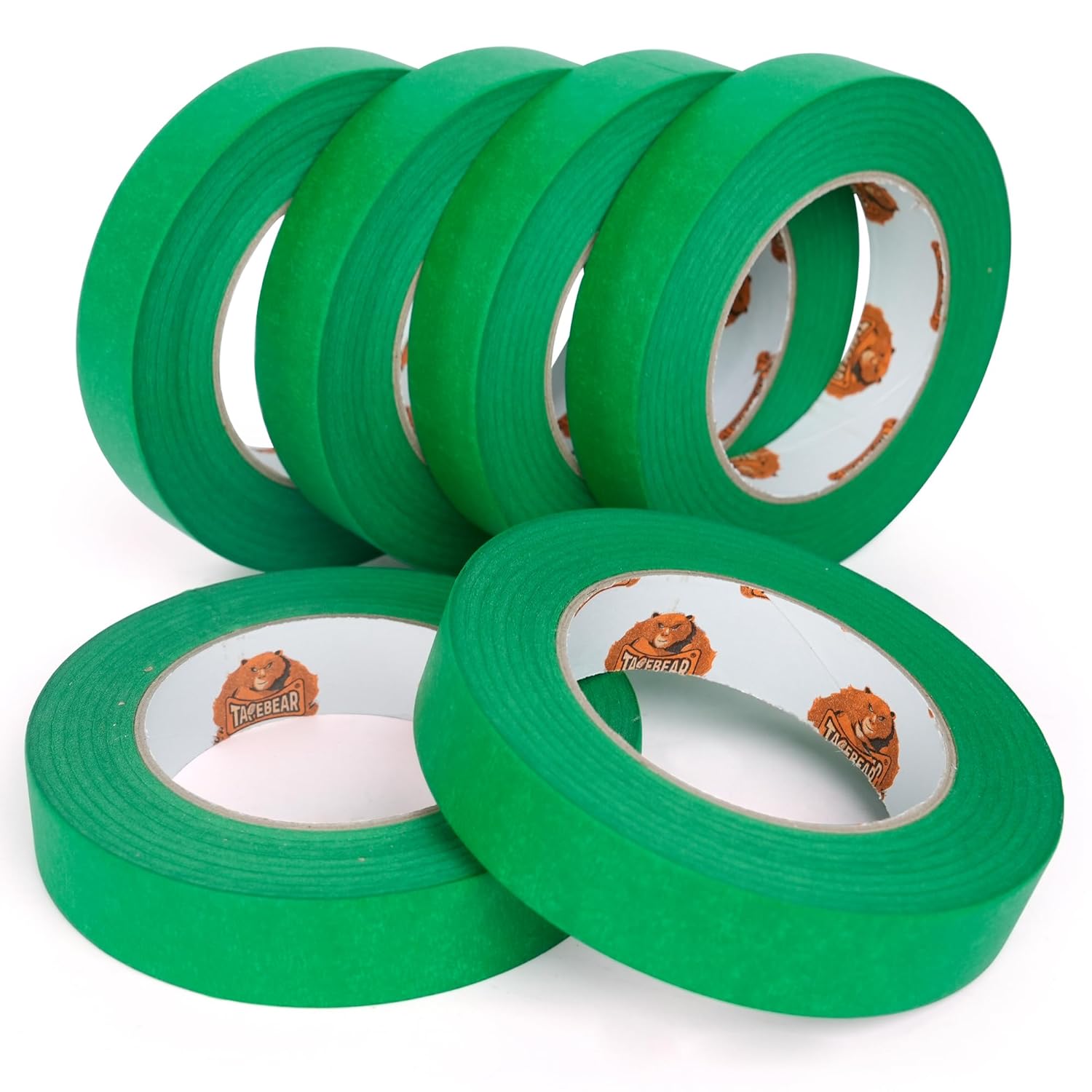
- Green Painter's Tape for Clearly Visible Painting Borders: Provides a contrasting masking color that can help artists identify protected edges against white or cream watercolor paper.
- Multi-Surface Masking Design for General Painting Preparation: Intended for temporary masking applications, making it relevant to compatible drawing boards, work surfaces, and painting preparation.
- Potential Support for Securing Watercolor Paper Edges: When adhesion is suitable, masking strips can help position loose watercolor sheets against rigid backing boards during ordinary brushwork.
- Useful for Organizing Multiple Watercolor Practice Exercises: Tape can establish separate painting areas for experimenting with graduated washes, color combinations, and watercolor techniques.
- - Practical Temporary Masking for Creative Studio Projects: General painter's tape can assist with surface protection, painting boundaries, and preparing materials for repeated art sessions.
This TAPEBEAR Green Painter's Tape Is Useful for Painting Preparation, but Paper Safety Matters
The TAPEBEAR Green Multi-Surface Painter's Tape is intended for general painting preparation, temporary masking, and protecting compatible surfaces. For artists searching for the best tape for watercolor paper, this type of product can be useful for positioning sheets, creating defined borders, and organizing painting exercises. However, the exact dimensions, package quantity, and adhesive specifications of model B0DDPFWC2W could not be independently confirmed.
The most important consideration is whether the adhesive can be removed without damaging watercolor paper. Unlike painted walls or glass, watercolor paper contains fibers that may lift when aggressive adhesives are peeled away. The correct masking tape for delicate watercolor paper should provide enough temporary adhesion for painting while allowing controlled removal.
The tape's green color is a practical feature because it creates a visible boundary against white or cream watercolor paper. This can help artists identify the working area while preparing compositions and applying washes. However, visibility alone does not establish whether the adhesive is appropriate for professional watercolor paper.
Another important distinction is that TAPEBEAR markets this product as multi-surface painter's tape rather than a verified archival watercolor masking product. General-purpose painter's tape can be useful for studio preparation, but its performance on soft cotton paper and finished artwork should be tested. Artists should avoid applying untested adhesive directly to expensive watercolor paintings.
The Right Application Method Makes a Bigger Difference Than Tape Color Alone
One of the most common reasons artists use masking tape is to create clean white borders around watercolor paintings. The tape covers the outer edge of the paper while the central area remains available for painting. The watercolor masking technique for clean painting borders can produce attractive results when the adhesive and paper surface are compatible.
Consider someone preparing an A4 watercolor sheet measuring 210 by 297mm. They want a white border approximately 10mm wide around a landscape painting. Applying suitable masking tape along all four edges can establish this boundary before painting begins.
The tape must make consistent contact with the paper surface. Small gaps can allow diluted pigment to move underneath the adhesive, creating irregular edges. This is particularly noticeable when painting dark washes near the border.
The proper tape application method for watercolor paper begins with a clean, dry sheet and a stable backing board. Dust, loose fibers, and dried paint residue can interfere with adhesion. Preparing the surface before applying tape helps reduce these problems.
For example, someone reusing a wooden painting board may notice that tape lifts around areas covered with dried pigment. Cleaning the board and allowing it to dry completely can improve contact. The paper should also be positioned carefully before the tape is pressed into place.
Paper texture is another important consideration. Hot-pressed watercolor paper generally has a smoother surface, while cold-pressed and rough watercolor papers contain more pronounced texture. The masking tape adhesion on textured watercolor sheets can vary because the adhesive may not contact every raised and recessed area.
Imagine someone painting on rough 300gsm watercolor paper. The surface texture may create tiny gaps beneath the tape, allowing diluted paint to move underneath. A tape that produces clean borders on smooth paper may behave differently on rough watercolor sheets.
Applying gentle, even pressure along the tape edge may improve contact. However, excessive pressure can increase the risk of fiber lifting during removal. Artists should avoid forcing adhesive deeply into delicate paper surfaces.
The green color provides another practical advantage. White or cream masking tape can be difficult to distinguish from watercolor paper, particularly under bright studio lighting. The high-visibility green masking tape for watercolor borders creates a noticeable boundary around the working area.
For example, someone painting a pale blue sky may find it easier to identify the edge of the composition when the surrounding tape is green. This can help maintain a consistent painting boundary. However, the tape should not be relied upon as a completely waterproof barrier.
Watercolor painting frequently involves diluted pigments, wet brushes, and repeated washes. Some masking adhesives remain attached under moderate moisture exposure, while others can begin lifting. The water resistance requirements for watercolor masking tape should therefore be considered before beginning a large painting.
Consider someone painting a dark mountain silhouette close to the paper edge. If water moves beneath the tape, pigment may spread into the intended white border. Testing the tape with a small wash can help identify this risk before it affects a finished painting.
Another useful application is dividing watercolor paper into separate practice sections. Beginners often repeat the same technique several times to understand how pigment behaves. The masking tape method for watercolor practice exercises can help organize these studies on one sheet.
For example, someone learning graduated watercolor washes could divide a larger sheet into four rectangular areas. One section might contain a blue gradient, another a green wash, and the remaining sections different pigment concentrations. The masking boundaries help keep the exercises visually separated.
This approach can also be useful for comparing wet-on-wet and wet-on-dry techniques. The artist can prepare several sections and apply a different method to each one. After drying, the results can be compared without using separate sheets for every experiment.
The temporary masking technique for watercolor color studies is particularly useful in art classes. Students can practice several methods on one page while keeping each exercise organized. However, the tape should be tested on the selected paper before the class begins.
Another important consideration is watercolor paper weight. Common watercolor paper weights include 190gsm, 300gsm, and 640gsm. Heavier sheets generally resist buckling better than lighter paper, although their performance also depends on water application and paper composition.
Masking tape can help position paper, but it cannot guarantee that the sheet will remain flat during wet painting. The watercolor paper buckling prevention during wet washes depends on several factors beyond adhesive strength. Paper expansion can still create waves even when the edges remain attached.
Consider someone using 190gsm watercolor paper for a large wet-on-wet landscape. The paper may develop noticeable ripples as it absorbs moisture, even when masking tape holds the edges. A heavier sheet or an appropriate stretching method may provide better results.
Traditional watercolor paper stretching differs from ordinary masking. Stretching generally involves wetting suitable paper and securing it to a rigid board while it dries. Gummed watercolor tape is commonly used for this purpose because its adhesive is activated by water.
The difference between watercolor stretching tape and painter's tape is important when preparing heavily saturated paintings. Pressure-sensitive masking tape is not necessarily designed to withstand the tension created as wet paper dries. TAPEBEAR's exact adhesive formulation for this listing has not been verified.
For example, someone preparing a large watercolor painting with repeated wet washes may require stronger attachment than ordinary removable tape provides. Choosing an unsuitable tape can allow the paper to move or detach during painting. The attachment method should match the intended technique.
Paper damage during removal is another major concern. Watercolor paper fibers can lift when aggressive adhesives are peeled away, particularly on soft cotton paper. The safe masking tape removal from watercolor artwork requires careful handling and a compatible adhesive.
Imagine someone completing a detailed botanical illustration on expensive cotton watercolor paper. They remove the tape and discover that part of the paper surface has torn away. This type of damage can be difficult to repair without affecting the finished artwork.
Testing the tape on a spare piece of the same paper is therefore important. Apply a short strip, leave it attached for a representative period, and remove it carefully. Inspect the surface for fiber lifting, adhesive residue, and changes in texture.
The low-angle tape removal technique for watercolor paintings involves peeling the tape slowly back over itself rather than pulling it sharply upward. Supporting the paper during removal can reduce sudden stress on the surface. Artists should stop immediately if the paper begins lifting.
Drying time also matters. Removing tape while the paper is still damp can increase the risk of tearing because wet paper fibers may be weaker. Waiting until the painting has dried completely generally provides a safer starting point.
However, allowing the paper to dry does not guarantee clean removal. Some adhesives become more difficult to remove after extended application periods. The recommended removal window for this TAPEBEAR variant has not been confirmed.
The correct timing for removing watercolor masking tape depends on adhesive formulation and environmental conditions. Temperature, humidity, and sunlight exposure can influence how the adhesive behaves. Artists should follow the manufacturer's instructions when those details are available.
Another consideration is adhesive residue. Residue can attract dust, interfere with later artwork handling, or affect the appearance of the finished border. This is particularly undesirable when preparing paintings for framing or sale.
For example, someone creating a watercolor landscape intended for a frame may want a completely clean white margin. If adhesive remains after removal, the border may no longer have the intended appearance. A verified removable artist tape may be preferable for artwork intended for long-term preservation.
The residue-free masking requirements for professional watercolor artwork are particularly important when using expensive paper. General-purpose painter's tape should not automatically be considered archival. The product's acid-free status and conservation suitability would need to be confirmed separately.
Tape width also influences how it can be used. Narrow tape is convenient for small paintings and thin borders, while wider tape provides more material for securing paper to a board. The correct masking tape width for watercolor projects depends on paper dimensions and the intended border.
For example, a small postcard-sized watercolor may only require a narrow strip. A larger A3 painting may benefit from additional attachment area along the edges. Wider tape is not automatically better because it may cover more paper than necessary.
The exact width and roll length of TAPEBEAR B0DDPFWC2W could not be independently verified. Buyers should confirm these specifications before ordering. They directly influence how suitable the tape will be for small watercolor studies or larger painting projects.
Another practical application is temporarily protecting compatible drawing boards and work surfaces. Watercolor painting can involve accidental splashes, diluted pigments, and repeated brush cleaning. General-purpose painter's tape can help establish temporary masking boundaries around a work area.
For example, an artist using a shared desk may want to protect the edge of a drawing board from paint marks. Suitable tape can provide temporary masking while the painting is completed. However, painted, varnished, or delicate surfaces should be tested before application.
The multi-surface masking tape for general art studio preparation may also be useful for labeling temporary work areas or organizing practice materials. These applications do not require the tape to contact finished watercolor artwork directly. This can make general-purpose painter's tape useful even when its compatibility with delicate paper remains uncertain.
Art teachers may also find temporary masking useful when preparing watercolor exercises. Students often need to divide paper into separate painting sections or attach sheets to boards. However, the exact package quantity of this TAPEBEAR listing has not been confirmed, so its suitability for bulk classroom use cannot be assessed reliably.
There are limitations worth considering. The tape is not independently verified as low-tack, archival, or specifically formulated for watercolor paper. Its adhesive strength, removal window, and performance under moisture exposure remain uncertain.
For artists working with expensive cotton paper or preparing finished artwork for sale, a specialist artist tape with documented paper compatibility may be preferable. General-purpose painter's tape can still be useful for practice sheets and studio preparation, but suitability should be established through testing.
Why We Ranked This TAPEBEAR Green Painter's Tape Sixth Instead of Higher
We placed the TAPEBEAR Green Multi-Surface Painter's Tape B0DDPFWC2W at number six among our seven selections because it offers potential usefulness for general painting preparation but lacks independently verified specifications for this exact variant. Its green color and multi-surface purpose make it relevant to temporary masking tasks. However, its dimensions, package quantity, and watercolor paper compatibility remain uncertain.
Our first-ranked TAPEBEAR Green Multi-Surface Painter's Tape B0DDPC5F6C has a clearly identified six-roll package, with each roll measuring 48mm wide and 55 meters long. This provides approximately 330 meters of tape. The verified masking tape dimensions and package quantity make that product easier to evaluate for repeated painting preparation.
By comparison, the exact dimensions and roll quantity of this sixth-ranked TAPEBEAR listing could not be confirmed. We therefore cannot claim that it provides the same amount of material or equivalent coverage. Buyers should check the listing details before comparing value.
Our third-ranked BOMEI PACK Green Masking Tape provides five rolls measuring 36mm wide and 55 yards long. That package contains approximately 251.5 meters of tape. Its documented dimensions make it easier to calculate how much material is available for repeated projects.
Our fourth-ranked BOMEI PACK option includes three rolls measuring 48mm wide and 55 yards long. This provides approximately 150.9 meters of masking tape. The wider format may be useful for securing larger watercolor sheets to compatible backing boards.
Our second-ranked and fifth-ranked selections also have incomplete technical information. Their exact adhesive properties and paper compatibility could not be established. As a result, their positions should be understood as provisional rather than verified performance rankings.
One potential advantage of the TAPEBEAR product is its visible green color. This can help artists identify masking boundaries against white watercolor paper. The high-visibility green painter's tape for watercolor preparation is useful when organizing painting areas and preparing practice exercises.
Another potential benefit is its general multi-surface purpose. Painter's tape can be useful for protecting compatible drawing boards, masking temporary work areas, and preparing painting boundaries. However, general surface compatibility does not establish suitability for delicate watercolor paper.
The watercolor paper compatibility and clean removal performance should receive greater consideration than color or general-purpose adhesion claims. A tape that removes cleanly from glass may still damage soft cotton paper. This distinction is particularly important for artists preparing finished paintings.
For example, someone practicing watercolor gradients on inexpensive paper may prioritize convenience and tape quantity. Someone preparing an original painting for sale may prioritize minimal adhesive residue and reduced fiber damage. The best choice depends on the intended application.
The sixth-place ranking also reflects uncertainty about the product's intended use. Without verified adhesive specifications, it is difficult to determine whether the tape is appropriate for temporary paper masking or better suited to general painting preparation.
One practical advantage of suitable masking tape is its ability to establish defined painting borders. Artists can mask the edges before applying pigment and remove the tape after the paper dries. The clean border masking method for watercolor paintings is useful for landscapes, botanical illustrations, and geometric compositions.
Another potential benefit is temporary paper positioning. Keeping a loose sheet from sliding across a drawing board can make brushwork more controlled. However, the adhesive must provide adequate holding strength without damaging the paper during removal.
There are disadvantages to consider. Unknown adhesive strength creates uncertainty about paper tearing, while unverified moisture resistance makes it difficult to predict performance during wet washes. These limitations are particularly relevant to artists using expensive watercolor materials.
The importance of testing masking tape before watercolor painting is therefore central to our assessment. A small trial can reveal problems with adhesion, pigment seepage, residue, and paper damage. This preparation step may prevent unnecessary damage to a finished painting.
We would also recommend checking whether the manufacturer specifies a clean-removal period. Some masking tapes are intended for short-term applications, while others advertise longer removal windows. Leaving unsuitable adhesive attached for too long can make removal more difficult.
For artists who primarily work on small watercolor studies, suitable removable tape can be convenient. It helps establish boundaries, organize exercises, and position paper during painting. These are practical reasons to consider the product once its specifications have been confirmed.
For artists who frequently stretch watercolor paper, specialist gummed tape or another appropriate stretching system may be more suitable. Ordinary masking tape should not automatically be expected to provide the same attachment performance during prolonged moisture exposure.
Importantly, the sixth-place ranking does not mean this TAPEBEAR variant has been demonstrated to perform poorly. The available information is insufficient to establish whether its adhesive or construction offers advantages over the higher-ranked products. Confirming the exact specifications would allow a more meaningful comparison.
Overall, we believe the TAPEBEAR Green Multi-Surface Painter's Tape B0DDPFWC2W remains a reasonable sixth-place candidate among the best tape for watercolor paper options in this comparison. Its potential usefulness lies in temporary masking, paper positioning, and creating defined painting borders when used on compatible surfaces. For watercolor artists who verify the product specifications and perform a small compatibility test before use, it may still be a practical choice for everyday painting preparation.

- Temporary Masking for Defined Watercolor Painting Borders: Compatible tape can help establish clean boundaries around watercolor artwork while protecting selected areas from paint.
- Paper Positioning During Everyday Watercolor Painting Sessions: Appropriate masking tape can help hold loose watercolor sheets against rigid backing boards during ordinary brushwork.
- Useful Separation for Multiple Watercolor Practice Exercises: Masking strips can divide larger paper sheets into sections for experimenting with gradients, washes, and color mixtures.
- Potential Support for Cleaner Finished Painting Edges: Suitable adhesive contact can reduce unwanted pigment movement beneath masking boundaries during watercolor application.
- - Convenient Surface Protection for General Painting Preparation: Removable masking tape can help protect compatible drawing boards and organize temporary painting workspaces.
This Watercolor Masking Tape Could Be Useful, but Its Adhesive Needs Checking First
The product identified by Amazon ASIN B0GWV2KH2J occupies the seventh position in our comparison of the best tape for watercolor paper. Its exact manufacturer, dimensions, and adhesive specifications could not be verified, which limits how confidently we can assess its performance. For watercolor artists, those details matter because masking tape must hold paper securely without damaging its surface during removal.
Watercolor masking tape is commonly used to create clean borders, position loose paper on drawing boards, and separate painting exercises. The right masking tape for delicate watercolor paper should provide temporary adhesion without lifting paper fibers or leaving unwanted residue. A tape that works well on walls or glass may behave differently on textured cotton watercolor paper.
The main concern with this listing is the absence of confirmed technical specifications. Without knowing its adhesive formulation, width, roll length, or recommended surfaces, it is difficult to determine whether it is intended for delicate artwork or general-purpose masking. These details should be checked before applying the product to expensive watercolor paper.
Nevertheless, suitable masking tape can be extremely useful for watercolor preparation. Artists regularly need temporary boundaries when painting landscapes, botanical illustrations, and practice exercises. Understanding how masking tape interacts with watercolor paper is therefore essential when evaluating this product.
Clean Watercolor Borders Depend on Paper Texture, Adhesion, and Removal Technique
One of the most common reasons artists use masking tape is to establish a white border around a watercolor painting. The tape covers the outer edges of the sheet while the central area remains available for paint. The watercolor masking technique for clean painting borders can produce attractive results when the adhesive and paper surface are compatible.
Consider someone preparing an A4 watercolor sheet measuring 210 by 297mm. They want a white border approximately 10mm wide around a landscape painting. Applying suitable masking tape along all four edges can establish this boundary before the first wash is applied.
The tape must make consistent contact with the paper surface. Small gaps can allow diluted pigment to move underneath the adhesive, producing irregular edges. This becomes particularly noticeable when painting dark colors near the border.
The proper masking tape application for watercolor paper begins with a clean, dry sheet and a stable backing board. Dust, loose paper fibers, and dried pigment can interfere with adhesion. Preparing the surface before applying tape can help reduce these problems.
For example, someone using a wooden drawing board covered with old watercolor paint may notice that tape lifts in certain areas. Cleaning the board and allowing it to dry completely can improve adhesive contact. The paper should also be positioned carefully before the tape is pressed into place.
Paper texture is another important consideration. Hot-pressed watercolor paper generally has a smoother surface, while cold-pressed and rough watercolor papers contain more pronounced texture. The masking tape adhesion on textured watercolor sheets may vary because the adhesive cannot always contact every raised and recessed area.
Imagine someone painting on rough 300gsm watercolor paper. The surface texture may create small gaps beneath the tape, allowing diluted pigment to travel underneath. A tape that produces clean borders on smooth paper may behave differently on heavily textured sheets.
Applying gentle, even pressure along the masking edge can improve contact. However, excessive pressure may increase the risk of fiber lifting during removal. Artists should avoid forcing adhesive deeply into delicate paper surfaces.
Another useful application is dividing watercolor paper into separate practice sections. Beginners often repeat the same technique several times to understand how pigment behaves under different conditions. The masking tape method for watercolor practice exercises can help organize these studies on a single sheet.
For example, someone learning graduated watercolor washes could divide a larger sheet into four rectangular sections. One section might contain a blue gradient, another a green wash, and the remaining sections different pigment concentrations. The masking boundaries help keep the exercises visually separated.
This approach can also be useful for comparing wet-on-wet and wet-on-dry techniques. The artist can prepare several sections and apply a different method to each one. After drying, the results can be compared without using separate sheets for every experiment.
The temporary masking technique for watercolor color studies is particularly useful in art classes. Students can practice several methods on one page while keeping each exercise organized. However, the tape should be tested on the selected paper before the class begins.
Another important consideration is watercolor paper weight. Common watercolor paper weights include 190gsm, 300gsm, and 640gsm. Heavier sheets generally resist buckling better than lighter paper, although their performance also depends on water application and paper composition.
Masking tape can help position paper, but it cannot guarantee that the sheet will remain flat during wet painting. The watercolor paper buckling prevention during wet washes depends on several factors beyond adhesive strength. Paper expansion can still create waves even when the edges remain attached.
Consider someone using 190gsm watercolor paper for a large wet-on-wet landscape. The paper may develop noticeable ripples as it absorbs moisture, even when masking tape holds the edges. A heavier sheet or an appropriate stretching method may provide better results.
Traditional watercolor paper stretching differs from ordinary masking. Stretching generally involves wetting suitable paper and securing it to a rigid board while it dries. Gummed watercolor tape is commonly used for this purpose because its adhesive is activated by water.
The difference between watercolor stretching tape and masking tape is important when preparing heavily saturated paintings. Pressure-sensitive masking tape is not necessarily designed to withstand the tension created as wet paper dries. The adhesive formulation of this specific Amazon product has not been verified.
For example, someone preparing a large watercolor painting with repeated wet washes may require stronger attachment than ordinary removable tape provides. Choosing an unsuitable tape can allow the paper to move or detach during painting. The attachment method should match the intended technique.
Water resistance is another consideration. Watercolor painting frequently involves diluted pigments, wet brushes, and repeated washes. Some masking adhesives remain attached under moderate moisture exposure, while others can begin lifting.
The water resistance requirements for watercolor masking tape should be evaluated before beginning a large painting. Applying a small wash along a test strip can reveal whether the tape remains attached and whether pigment moves underneath. This is more reliable than assuming that every masking tape creates a waterproof seal.
Consider someone painting a dark blue sky close to the edge of a watercolor sheet. If diluted pigment moves beneath the tape, the finished border may contain irregular marks. Testing the tape beforehand helps identify this risk before it affects an important painting.
Paper damage during removal is another major concern. Watercolor paper fibers can lift when aggressive adhesives are peeled away, particularly on soft cotton paper. The safe masking tape removal from watercolor artwork requires careful handling and a compatible adhesive.
Imagine someone completing a detailed botanical illustration on expensive cotton watercolor paper. They remove the tape and discover that part of the paper surface has torn away. This type of damage can be difficult to repair without affecting the finished artwork.
Testing the tape on a spare piece of the same paper is therefore important. Apply a short strip, leave it attached for a representative period, and remove it carefully. Inspect the surface for fiber lifting, adhesive residue, and changes in texture.
The low-angle tape removal technique for watercolor paintings involves peeling the tape slowly back over itself rather than pulling it sharply upward. Supporting the paper during removal can reduce sudden stress on the surface. Artists should stop immediately if the paper begins lifting.
Drying time also matters. Removing tape while the paper is still damp can increase the risk of tearing because wet paper fibers may be weaker. Waiting until the painting has dried completely generally provides a safer starting point.
However, allowing the paper to dry does not guarantee clean removal. Some adhesives become more difficult to remove after extended application periods. The recommended removal window for this particular product has not been confirmed.
The correct timing for removing watercolor masking tape depends on adhesive formulation and environmental conditions. Temperature, humidity, and sunlight exposure can influence how the adhesive behaves. Artists should follow the manufacturer's instructions when those details are available.
Another consideration is adhesive residue. Residue can attract dust, interfere with later artwork handling, or affect the appearance of the finished border. This is particularly undesirable when preparing paintings for framing or sale.
For example, someone creating a watercolor landscape intended for a frame may want a completely clean white margin. If adhesive remains after removal, the border may no longer have the intended appearance. A verified removable artist tape may be preferable for artwork intended for long-term preservation.
The residue-free masking requirements for professional watercolor artwork are particularly important when using expensive paper. General-purpose masking tape should not automatically be considered archival. The product's acid-free status and conservation suitability would need to be confirmed separately.
Tape width also influences how it can be used. Narrow tape is convenient for small paintings and thin borders, while wider tape provides more material for securing paper to a board. The correct masking tape width for watercolor projects depends on paper dimensions and the intended border.
For example, a small postcard-sized watercolor may only require a narrow strip. A larger A3 painting may benefit from additional attachment area along the edges. Wider tape is not automatically better because it may cover more paper than necessary.
The exact width and roll length of ASIN B0GWV2KH2J could not be verified. Buyers should check these specifications before ordering. They directly influence how suitable the tape will be for small watercolor studies or larger painting projects.
Another practical application is temporarily protecting compatible drawing boards and work surfaces. Watercolor painting can involve accidental splashes, diluted pigments, and repeated brush cleaning. General-purpose masking tape can help establish temporary boundaries around a work area.
For example, an artist using a shared desk may want to protect the edge of a drawing board from paint marks. Suitable tape can provide temporary masking while the painting is completed. However, painted, varnished, or delicate surfaces should be tested before application.
The temporary surface masking method for watercolor studio preparation may also be useful for organizing reference materials. Artists sometimes need to position color studies, composition sketches, or practice sheets around their working area. Suitable removable tape can help keep these materials in place.
However, finished artwork should not be treated like ordinary scrap paper. Even tape advertised as removable can damage certain surfaces. The adhesive should be tested before contacting valuable drawings or paintings.
Another important consideration is package quantity. Artists who paint frequently may benefit from multi-roll packages, while occasional hobbyists may prefer a single roll of specialist tape. The exact quantity supplied under this Amazon ASIN could not be confirmed.
Without verified dimensions or package quantity, it is difficult to calculate how many painting sheets the product could prepare. Buyers should check the roll width, length, and number of rolls before comparing value with other masking tape products.
There are limitations worth considering. The exact manufacturer, adhesive type, paper compatibility, and removal specifications remain unknown. These missing details prevent a reliable assessment of its performance compared with products that provide documented technical information.
For artists using expensive cotton watercolor paper or preparing archival artwork, a specialist low-tack artist tape may be preferable. General-purpose masking tape can still be useful for practice sheets and studio preparation, but its suitability should be established through testing.
Why We Placed This Watercolor Masking Tape Seventh in Our Comparison
We assigned the product identified by ASIN B0GWV2KH2J the number seven position among our seven selections for best tape for watercolor paper. However, this ranking remains provisional because its exact manufacturer specifications could not be independently confirmed. A definitive performance comparison would require verified information about adhesive strength, dimensions, residue behavior, and compatibility with watercolor paper.
Our first-ranked TAPEBEAR Green Multi-Surface Painter's Tape provides a documented six-roll package, with each roll measuring 48mm wide and 55 meters long. This gives artists approximately 330 meters of tape for repeated painting preparation. The verified masking tape dimensions and package quantity make that product easier to evaluate for frequent studio use.
Our third-ranked BOMEI PACK Green Masking Tape includes five rolls measuring 36mm wide and 55 yards long. That provides approximately 251.5 meters of tape. Its documented dimensions make it easier to calculate how much material is available for repeated projects.
Our fourth-ranked BOMEI PACK option provides three rolls measuring 48mm wide and 55 yards long. This offers approximately 150.9 meters of masking tape. The wider format may be useful for securing larger watercolor sheets to compatible backing boards.
Our second-ranked, fifth-ranked, and sixth-ranked selections also have incomplete technical information. Their exact adhesive properties and paper compatibility could not be established. As a result, their positions should be understood as provisional rather than verified performance rankings.
By comparison, the exact quantity and dimensions of this seventh-ranked product remain unknown. We therefore cannot claim that it provides more material, stronger adhesion, or better value than the higher-ranked alternatives. These details should be checked before purchasing.
Another important ranking consideration is paper compatibility. General-purpose painter's tape is not necessarily designed for delicate cotton watercolor paper. The clean removal performance on watercolor paper surfaces should receive greater attention than general adhesion claims.
For example, an artist preparing inexpensive practice sheets may prioritize convenience and quantity. Someone preparing an original painting for sale may prioritize minimal adhesive residue and reduced fiber damage. The best choice depends on the intended application.
The seventh-place position also reflects uncertainty about the product's intended use. Without verified adhesive specifications, it is difficult to determine whether the tape is appropriate for temporary paper masking or better suited to general painting preparation.
One potential advantage of suitable masking tape is its ability to establish defined painting borders. Artists can mask the edges before applying pigment and remove the tape after the paper dries. The clean border masking method for watercolor paintings is useful for landscapes, botanical illustrations, and geometric compositions.
Another potential benefit is temporary paper positioning. Keeping a loose sheet from sliding across a drawing board can make brushwork more controlled. However, the adhesive must provide adequate holding strength without damaging the paper during removal.
There are disadvantages to consider. Unknown adhesive strength creates uncertainty about paper tearing, while unverified moisture resistance makes it difficult to predict performance during wet washes. These limitations are particularly relevant to artists using expensive watercolor materials.
The importance of testing masking tape before watercolor painting is therefore central to our assessment. A small trial can reveal problems with adhesion, pigment seepage, residue, and paper damage. This preparation step may prevent unnecessary damage to a finished painting.
We would also recommend checking whether the manufacturer specifies a clean-removal period. Some masking tapes are intended for short-term applications, while others advertise longer removal windows. Leaving unsuitable adhesive attached for too long can make removal more difficult.
For artists who primarily work on small watercolor studies, suitable removable tape can be convenient. It helps establish boundaries, organize exercises, and position paper during painting. These are practical reasons to consider the product once its specifications have been confirmed.
For artists who frequently stretch watercolor paper, specialist gummed tape or another appropriate stretching system may be more suitable. Ordinary masking tape should not automatically be expected to provide the same attachment performance during prolonged moisture exposure.
Importantly, the seventh-place ranking does not mean that this product has been demonstrated to perform poorly. The available information is simply insufficient to establish whether its adhesive or construction offers advantages over the higher-ranked products. Confirming the exact specifications would allow a more meaningful comparison.
Someone who discovers that the product has verified low-tack adhesion and appropriate paper compatibility may find it more useful than the current ranking suggests. The quality of masking tape should ultimately be judged by its behavior on the intended watercolor paper rather than its position in a comparison alone.
Overall, the Amazon-listed product B0GWV2KH2J remains a provisional seventh-place candidate in our best tape for watercolor paper comparison. Its potential usefulness lies in temporary masking, paper positioning, and creating defined painting borders, provided its adhesive is suitable for the chosen paper. For watercolor artists who verify the product specifications and perform a small compatibility test before use, it may still be a practical option for everyday watercolor preparation.