

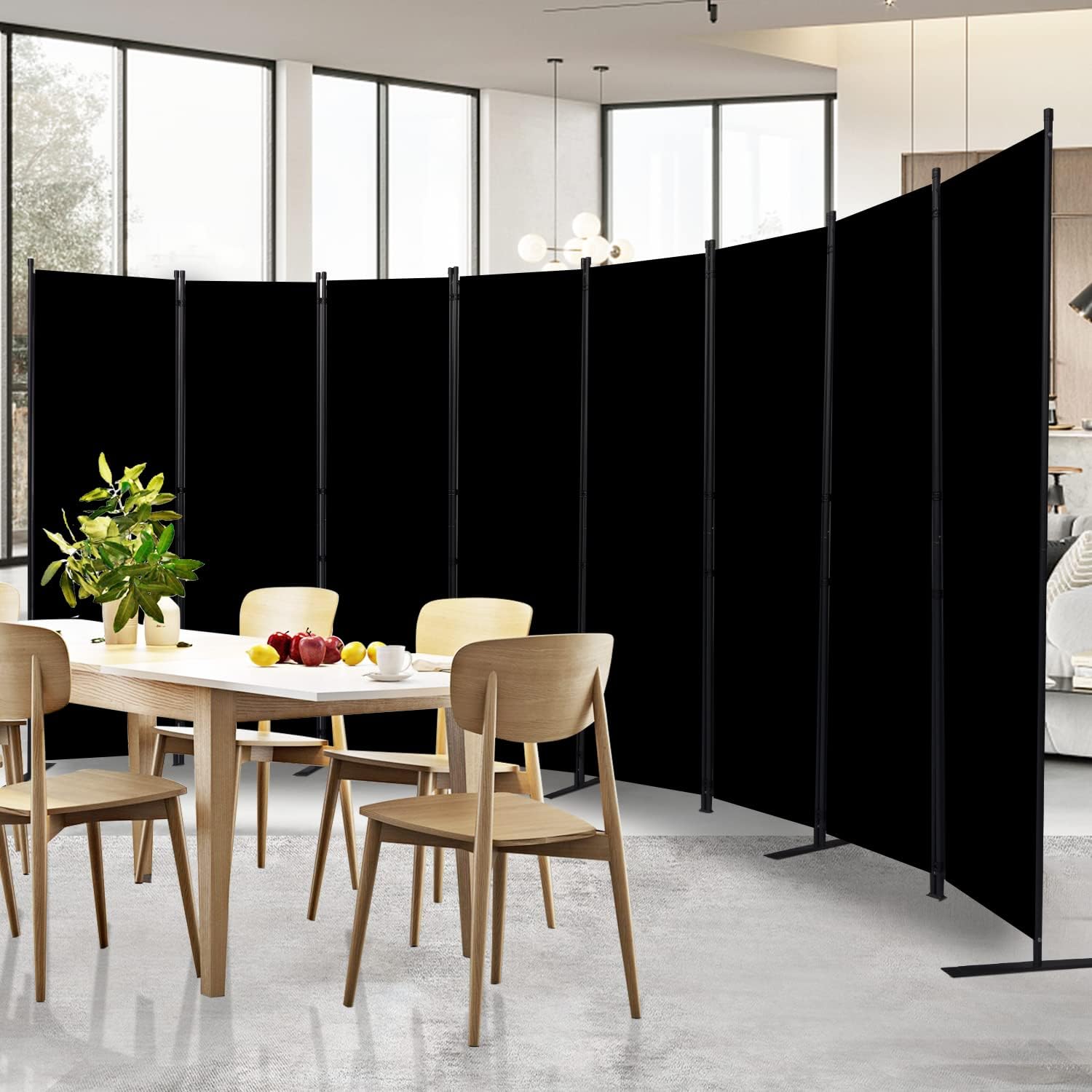
- Extra-wide eight-panel configuration creates substantial visual separation for home offices, bedrooms, and shared living spaces.
- Flexible two-way hinges allow panels to fold in either direction for customized room layouts.
- Opaque polyester fabric helps block direct visibility and create a more private working environment.
- Lightweight folding construction makes repositioning and storing the divider more convenient when room layouts change.
- - Freestanding metal-framed design provides a temporary partition without requiring permanent walls or structural modifications.

This Extra-Wide Room Divider Makes a Real Difference in Shared Spaces
The HOMSCREENER 55PJ3 8-Panel Room Divider is designed for people who need a separate working area without building a permanent wall. It measures approximately 176 inches wide and 71 inches high when fully extended, giving it enough coverage to divide substantial sections of a living room, bedroom, or shared workspace. For buyers comparing the best room divider for home office use, its generous width and flexible panel arrangement are the main reasons it stands out.
The divider consists of eight connected panels covered with black polyester fabric. Each panel contributes to the overall privacy screen, allowing users to create a visual boundary between their desk and the surrounding room. The extra-wide eight-panel privacy screen design is particularly useful for people who work from home but do not have a separate office.
At 176 inches, the divider provides approximately 14 feet and 8 inches of total panel width when fully extended. That is considerably more coverage than many compact three-panel or four-panel folding screens. However, the actual straight-line separation will be shorter when the panels are angled to improve stability.
The 71-inch height is another practical advantage. At approximately 5 feet and 11 inches tall, the screen can block direct views of desks, monitors, and other equipment from many seated and standing positions. The tall and opaque fabric panel construction helps create a more private environment for everyday work.
The black fabric also provides a relatively neutral appearance that can fit into modern home offices and living spaces. It creates a defined visual boundary without requiring permanent construction. This makes the divider especially useful for renters or households that need flexible room arrangements.
The Flexible Hinges and Opaque Fabric Make It Useful for Everyday Work
One of the strongest features of the HOMSCREENER divider is its two-way hinge system. The connected panels can fold in either direction, allowing users to arrange the screen according to the available space. The flexible dual-direction folding hinge design makes it easier to create different layouts without purchasing additional partition components.
Consider a household where someone works from a desk positioned in the corner of a living room. During the day, the divider can be arranged around the desk to reduce visual distractions from other household activities. In the evening, the panels can be folded into a smaller configuration to reopen the shared living space.
The eight-panel construction also provides more layout flexibility than a smaller folding screen. Users can arrange the panels in a relatively straight line, create a shallow curve, or form an angled partition around a working area. The most suitable configuration depends on the room dimensions and the stability requirements of the divider.
For example, a home office positioned near a dining area may need a visual boundary approximately 10 feet wide. The HOMSCREENER's total panel width provides enough material for an angled arrangement that covers this distance, depending on how the panels are positioned. The adjustable room separation and privacy coverage makes it suitable for spaces where furniture arrangements change regularly.
The polyester fabric is advertised as opaque and non-see-through. This helps block direct visibility through the screen, which can be useful during video meetings or when sensitive documents are visible on a desk. However, users should remember that a fabric divider does not provide the same privacy as a solid wall.
Sound reduction is an important distinction. Although the divider creates visual separation, the manufacturer does not provide a verified acoustic performance rating for this model. The opaque fabric provides visual privacy rather than soundproofing, so conversations and other household noises may still pass around or through the partition.
Imagine someone attending an online meeting while another family member watches television nearby. The divider can prevent the television and surrounding activity from appearing in the camera background. It will not necessarily prevent the microphone from picking up the television audio.
For users who need better acoustic privacy, a headset with a suitable microphone and additional room treatments may be necessary. Placing the workstation away from major noise sources can also improve call quality. The divider should be viewed primarily as a visual partition rather than a replacement for acoustic insulation.
The freestanding construction is another important feature. Users do not need to build a permanent wall or modify the room structure to create a separate working area. The freestanding and portable room partition design is particularly convenient for renters and people who want to preserve flexibility in their homes.
This can be useful in studio apartments where the same room serves several purposes. A desk may be used for work during the day, while the surrounding space functions as a bedroom or living area in the evening. A folding partition allows the room layout to change without moving heavy furniture.
The product uses a metal frame with a powder-coated finish. This provides the structural support for the polyester fabric panels while maintaining a relatively lightweight construction. The metal framing is intended for indoor use and should be assembled according to the supplied instructions.
The divider is supplied with rods, fabric panels, and screws that require assembly. Users should connect the frame components carefully and ensure that the fabric is properly positioned before placing the completed screen in its intended location. Correct assembly and secure frame connections are important for maintaining the divider's stability.
One common mistake is extending a large folding screen into a perfectly straight line without considering its support requirements. A wide divider can become more vulnerable to tipping when its panels are not positioned appropriately. Angling the panels and following the manufacturer's stability instructions can help create a safer arrangement.
Floor conditions also matter. The divider should be positioned on a level surface where its supporting components can remain stable. Users should avoid placing it in narrow walkways or locations where people may frequently bump into the panels.
Another practical consideration is the amount of floor space required. Although the divider provides substantial coverage, angled panels occupy some depth as well as width. Planning the room layout before installation helps prevent the screen from obstructing doors, drawers, or commonly used walking paths.
The folding design also makes storage more convenient. When the full width is not needed, the panels can be brought together to reduce the amount of space occupied by the screen. This is useful for households that only require privacy during working hours.
Maintenance is relatively straightforward. The polyester fabric can be wiped with a damp or dry cloth according to the product's care instructions. Regular cleaning helps prevent dust buildup, particularly when the divider is positioned near frequently used workstations.
The black fabric may also help create a consistent background for video calls. A plain, opaque surface can reduce visual distractions compared with an open living room or a busy bookshelf. However, users should check their lighting because a dark background may require additional illumination to keep their face clearly visible on camera.
Why We Believe the HOMSCREENER Room Divider Deserves First Place
We ranked the HOMSCREENER 55PJ3 first out of seven because it combines generous coverage, flexible panel positioning, and practical visual privacy in one freestanding product. The 176-inch width is particularly useful for people who need to divide a substantial portion of a shared room. The combination of wide coverage and flexible configuration gives it an advantage over smaller privacy screens.
The eight-panel arrangement is another reason for its ranking. Instead of being restricted to a fixed straight partition, users can adjust the panels to accommodate desks, furniture, and different room layouts. This flexibility is especially valuable in homes where the available working area changes throughout the day.
The opaque polyester fabric also provides a practical level of visual separation. It can help conceal work equipment, create a more consistent video meeting background, and reduce distractions caused by activity elsewhere in the room. These benefits are particularly relevant for remote workers sharing their living space with family members.
The freestanding design adds further convenience. There is no need for permanent wall installation, making the divider suitable for rented properties and temporary home office arrangements. The portable and non-permanent partition construction also allows users to reorganize their rooms without major expense or structural changes.
There are some limitations worth acknowledging. The divider does not provide verified soundproofing, so it will not eliminate conversations or household noise. Buyers who require acoustic privacy may need a different type of partition or additional sound treatment.
The large width also requires careful positioning. Although the screen folds for storage, its full configuration needs sufficient floor space and appropriate panel angles for stability. Smaller rooms may not require all eight panels to be extended.
Assembly is another consideration. The metal frame and fabric sections must be connected before the divider can be used. Users seeking a completely assembled folding screen may find this additional setup inconvenient.
Nevertheless, these limitations are relatively manageable for buyers whose main priority is visual privacy and flexible room separation. The product's wide coverage, two-way hinges, and opaque fabric directly address common home office problems. The practical balance of privacy and room flexibility makes it particularly appealing for shared living environments.
Ultimately, we believe the HOMSCREENER 55PJ3 deserves first place because it offers a substantial privacy screen that can be adapted to different room layouts without permanent installation. Its eight-panel construction, 71-inch height, and flexible folding design make it suitable for home offices, bedrooms, studio apartments, and shared workspaces. For buyers who want to create a more private and organized working environment while maintaining flexibility in their living space, the HOMSCREENER is an excellent choice.

- Ten-panel configuration provides extensive room separation for home offices and shared living areas.
- Portable partition design allows flexible placement without constructing permanent interior walls.
- Multiple connected panels offer adaptable layouts for separating desks, bedrooms, and multipurpose spaces.
- Wide privacy screen arrangement helps reduce visual distractions during remote work and video meetings.
- - Freestanding room divider concept provides temporary privacy while preserving flexibility in shared spaces.
A Compact Privacy Divider That Makes Shared Rooms Easier to Work In
The MAYOLIAH MY005-WH Folding Room Divider is a practical option for people who need a dedicated working area without making permanent changes to their home. This white four-panel configuration measures approximately 80 inches wide and 72 inches high, with an iron frame and polyester fabric screens. For anyone comparing the best room divider for home office use, its main advantage is providing visual separation in a relatively manageable format.
The four connected panels create a temporary boundary between a workstation and the surrounding living area. Unlike a permanent partition wall, the divider can be repositioned or folded when the room needs to serve another purpose. The portable four-panel privacy screen design is particularly useful for remote workers living in apartments, shared houses, or multipurpose rooms.
At 72 inches tall, the screen provides approximately six feet of vertical coverage. This is enough to block many ordinary sightlines across a room, particularly when someone is seated at a desk. The height can also help conceal computer equipment, paperwork, and other work-related items from the surrounding space.
The listed width of 80 inches represents approximately six feet and eight inches of panel coverage. However, the usable straight-line separation becomes smaller when the panels are positioned at angles to improve stability. The adjustable folding room separation layout gives users flexibility, but measuring the intended installation area remains important.
The white finish is another practical consideration. It can blend into lighter interiors and provide a neutral background for video meetings. Users should still check how the material appears under their room lighting because fabric opacity and lighting conditions can influence visual privacy.
The Folding Design Is Especially Useful When One Room Has Several Purposes
One of the strongest advantages of the MAYOLIAH divider is its freestanding construction. It can create a temporary working area without requiring drilling, wall brackets, or permanent structural modifications. The freestanding and removable partition arrangement makes it particularly attractive for renters who want to preserve their existing room layout.
Consider someone working from a desk in the corner of a living room. During business hours, the screen can be positioned between the desk and the main seating area to reduce visual distractions. After work, it can be folded away so the room feels less divided.
This flexibility matters in smaller homes where the same area may be used for work, relaxation, and occasional guests. A permanent partition could make the room feel unnecessarily restricted throughout the day. A folding screen provides separation only when it is needed.
The polyester screen material is intended to provide a visual barrier between different sections of a room. It can help conceal a busy background during video meetings or prevent household activity from remaining directly within view. The fabric panels provide everyday visual privacy, although they should not be confused with acoustic insulation.
For example, someone attending a video conference may want to keep a nearby dining table or television out of the camera frame. Positioning the divider behind the desk can create a more consistent visual background. However, the fabric does not necessarily prevent conversations or television sounds from reaching the microphone.
Soundproofing is an important distinction when choosing a room divider for a home office. Fabric partitions may affect sound reflections slightly, but the MAYOLIAH does not have a verified acoustic reduction rating. Users requiring better audio privacy should consider headphones, microphone positioning, and additional sound treatment.
The frame uses iron components with a powder-coated finish, according to the matching product specifications. This construction is intended to provide a practical supporting structure while allowing the divider to remain portable. The powder-coated iron frame construction is useful for repeated indoor setup and repositioning.
The listed product weight is approximately 15 pounds, making it relatively manageable compared with heavier solid-panel partitions. This can be useful for someone who needs to move the screen between a bedroom and living room. Users should still handle the divider carefully and avoid dragging its supporting components across delicate flooring.
Another feature is the adjustable footpad arrangement described in the product information. Adjustable contact points can help accommodate minor floor irregularities and improve the divider's positioning. However, the screen should still be installed on a reasonably level surface to reduce the possibility of tipping.
One common mistake is positioning a folding divider in a completely straight line without considering its stability. Angled panels generally create a more secure arrangement because the screen occupies some depth as well as width. Correct panel positioning and stable floor contact are important for safe everyday use.
For example, placing the divider across an open living room may require a shallow zigzag configuration. This reduces the effective width but can improve the screen's ability to remain upright. Users should follow the manufacturer's setup instructions rather than assuming the maximum advertised width is always the best operating arrangement.
The folding construction also simplifies storage. When privacy is no longer required, the panels can be brought together to occupy less space. This is useful for households where a temporary office needs to disappear during evenings or weekends.
Assembly is required, and the product includes installation instructions. Users should connect the frame components carefully and ensure that the fabric panels are positioned correctly. Proper assembly and secure frame connections help maintain the divider's intended stability.
Before purchasing, buyers should measure the room carefully. The 80-inch nominal width may be sufficient to conceal a desk or create a modest visual boundary, but it will not divide a large open-plan room as extensively as a wider partition. Furniture placement and walking space should be considered alongside the divider's dimensions.
For example, a desk measuring 48 inches wide may only require a relatively narrow visual barrier behind it. The MAYOLIAH's four-panel arrangement can be suitable for that type of installation. A larger workstation or shared office with several desks may require additional panels or a wider divider.
Another consideration is access. The screen should not obstruct doorways, emergency exits, or frequently used walking paths. Leaving sufficient clearance around the divider helps prevent accidental contact and makes the working area more comfortable.
The polyester fabric is also relatively straightforward to maintain. The matching product instructions recommend wiping the screen with a dry cloth. Regular cleaning can help prevent dust buildup, particularly when the divider remains positioned near a frequently used desk.
The white fabric may also affect lighting within the room. Compared with a dark partition, a light-colored screen can reflect more ambient light and create a brighter visual background. However, users should position desk lamps and video lighting carefully to avoid glare or unwanted shadows.
Why We Ranked the MAYOLIAH Room Divider Number Two
We placed the MAYOLIAH MY005-WH second out of seven because it offers a practical balance of privacy, portability, and straightforward room separation. Its six-foot height provides useful visual coverage, while the folding four-panel construction makes it easier to reposition than a permanent partition. The combination of flexible placement and visual privacy is particularly appealing for people working in shared living spaces.
The freestanding design contributes significantly to its ranking. Users can establish a temporary home office without modifying walls or installing permanent fixtures. This is especially valuable for renters and people whose working arrangements change throughout the week.
The relatively manageable weight is another advantage. At approximately 15 pounds, the screen can be moved between different rooms without the same effort required for heavier wooden or solid-panel dividers. Its folding design also makes storage more convenient when the partition is not needed.
However, the MAYOLIAH ranks below our first-place HOMSCREENER 55PJ3 because it provides considerably less total panel width. The HOMSCREENER's eight-panel configuration offers approximately 176 inches of coverage, making it more suitable for dividing larger living areas. The smaller four-panel coverage area limits the MAYOLIAH's versatility in spacious home offices.
The absence of verified acoustic performance is another limitation. Although the polyester fabric provides visual separation, it cannot be expected to block conversations or other household noise effectively. Buyers who require sound isolation may need a more specialized acoustic partition.
The freestanding design also requires careful positioning. The panels need sufficient depth and stable floor contact to remain upright. This can reduce the amount of straight-line coverage available compared with the nominal width.
Another consideration is the white fabric. While it suits lighter interiors, it may show dirt or marks more readily than darker alternatives. Regular maintenance may be necessary in busy households or shared workspaces.
These limitations explain why the MAYOLIAH occupies second place rather than the top position. Nevertheless, its practical folding design and lightweight construction provide meaningful advantages for people who need temporary privacy without permanent installation. It is especially useful for smaller rooms where a very wide partition would be unnecessary.
Ultimately, we believe the MAYOLIAH MY005-WH deserves second place because it offers convenient room separation, manageable dimensions, and flexible everyday use. Its iron frame, polyester screens, and freestanding construction make it suitable for home offices, bedrooms, studio apartments, and shared living areas. For buyers who want an adaptable privacy screen that can be repositioned or stored when necessary, the MAYOLIAH remains a strong and worthwhile choice.
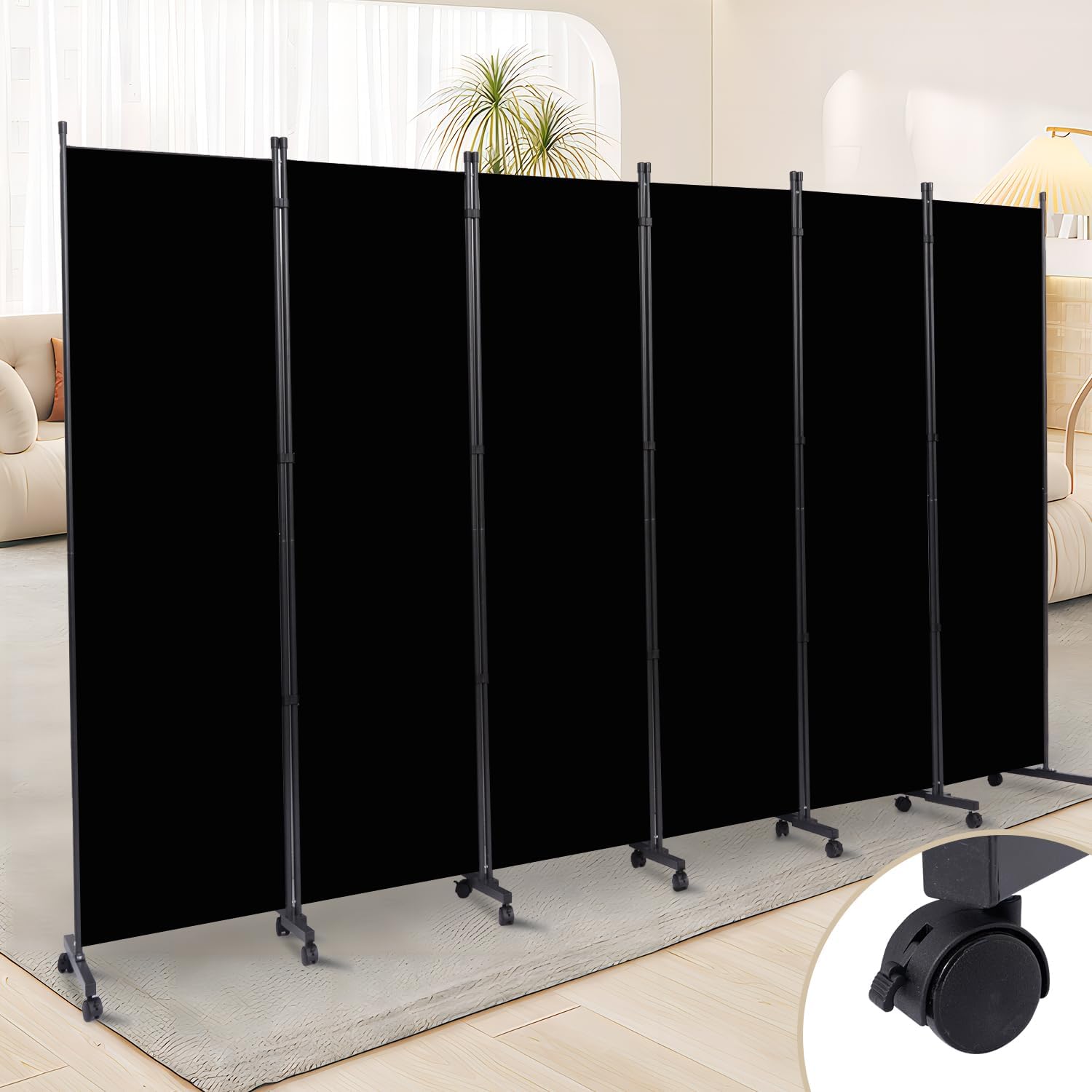
- Portable partition concept allows flexible separation of home office and shared living spaces.
- Freestanding room divider design can create temporary privacy without constructing permanent interior walls.
- Dedicated privacy screen helps keep desks and work equipment out of direct view.
- Repositionable partition arrangement can accommodate changing furniture layouts and different working requirements.
- - Room separation functionality helps establish a more defined workspace within multipurpose living areas.
A Practical Room Divider for Creating Privacy Without Permanent Changes
This Portable Room Divider for Home Office Separation is intended for people who need a more private working area without installing permanent walls. The Amazon listing identifies it as a portable partition for separating different areas of a room, making it relevant to remote workers, renters, and households with shared living spaces. For anyone comparing the best room divider for home office use, the main attraction is the ability to establish a dedicated workspace while keeping the existing room layout flexible.
A freestanding privacy partition can be particularly useful when a desk is positioned in a bedroom, living room, or shared office. Instead of allowing the entire room to remain visible, a divider creates a physical boundary around the working area. The practical separation of work and living spaces can make a multipurpose room easier to organize.
The product is presented as a portable partition rather than a permanent wall system. That distinction matters for people who cannot drill into walls or make structural changes to their homes. A movable divider provides a way to create temporary separation while preserving the option to rearrange furniture later.
The exact dimensions, panel count, and construction materials of this model have not been independently confirmed. Buyers should check these specifications before purchasing, especially when trying to cover a particular desk or section of a room. Choosing the correct divider width and height is one of the most important parts of creating effective visual privacy.
For example, a standard home office desk may measure approximately 48 to 60 inches wide. A divider positioned behind that desk should provide enough coverage to conceal the workstation from the intended viewing angle. The required width may be greater when the divider needs to surround the desk rather than simply sit behind it.
Flexible Room Separation Can Make Working From Home More Comfortable
One of the main advantages of a portable room divider is that it allows a household to use the same room for different activities. A living room might function as a home office during business hours and return to its usual purpose in the evening. The flexible and temporary room partition arrangement can support both activities without requiring permanent construction.
Consider someone who works from a desk beside a dining table. During online meetings, household members may walk through the background or use the surrounding space for other activities. Positioning a privacy divider between the desk and the main room can help reduce these visual distractions.
This is particularly useful for video conferences. A partition placed behind a workstation can conceal household furniture, personal belongings, or unrelated activity from the camera. It also allows the user to maintain a more consistent background without rearranging the entire room before every meeting.
However, visual privacy should not be confused with acoustic privacy. Most ordinary portable room dividers are not designed to block conversations, television noise, or other household sounds. Creating visual privacy does not guarantee sound isolation, and buyers should not assume that a fabric or lightweight partition will provide meaningful soundproofing.
For example, a divider may prevent someone sitting on a sofa from seeing a computer monitor directly. It will not necessarily stop that person from hearing a business conversation taking place nearby. Users who need acoustic privacy may require a separate room, suitable headphones, or additional sound treatment.
Another practical benefit is the ability to establish a more defined working area. People who work from home often use furniture that was originally intended for other activities. A room partition can help separate the desk from the surrounding living space, making the layout more intentional.
Imagine a studio apartment where the bedroom, living room, and office occupy one open area. A freestanding divider can establish a visual boundary between the desk and sleeping area. The ability to create distinct functional zones can be valuable when there is no separate room available for work.
The exact positioning of the divider makes a considerable difference. A screen placed directly behind a desk may be useful for video calls, while one positioned beside the workstation can reduce distractions from nearby activity. Users should decide which direction requires privacy before selecting the final location.
Room dimensions are another important consideration. A partition that is too wide may obstruct walkways, while a narrow divider may leave large gaps around the workstation. Measuring the available floor space before ordering can prevent these problems.
For example, a desk positioned near a doorway may require a divider that leaves enough room for people to enter and exit comfortably. A partition should never block an emergency exit or create a narrow passage where it can easily be knocked over. Maintaining safe access around the workstation is just as important as achieving visual separation.
Stability is another factor buyers should evaluate carefully. Portable dividers need appropriate support to remain upright during everyday use. The required arrangement depends on whether the product uses individual support feet, connected panels, or another freestanding structure.
Some folding partitions gain stability when their panels are arranged at alternating angles. Others rely on dedicated support feet and may be designed to stand in a relatively straight line. Because the exact support system for this product has not been verified, buyers should follow the manufacturer's installation instructions rather than assuming a particular configuration.
Flooring can also affect stability. A divider positioned on thick carpeting may behave differently from one standing on hardwood or tile. A level floor and properly secured supports help reduce the possibility of unwanted movement.
Portability is particularly useful when room arrangements change frequently. Someone who works remotely three days per week may only need a partition during those working hours. A movable screen allows the room to return to its normal arrangement when the working day ends.
However, buyers should confirm the product's actual weight and whether it includes folding or rolling components. Portable does not necessarily mean that a divider can be moved easily by one person. Larger partitions may require assistance when being repositioned.
Another consideration is how the divider affects natural light. An opaque screen positioned directly in front of a window may make the workstation noticeably darker. Balancing privacy with available natural lighting can help maintain a more comfortable working environment.
For example, placing a divider perpendicular to a window may provide separation while allowing daylight to reach the desk. Positioning it directly across the window could reduce illumination and increase the need for artificial lighting. Users should test the proposed arrangement before deciding on a permanent location within the room.
Maintenance requirements also depend on the divider's construction materials. Fabric panels may require occasional dust removal, while metal or plastic components may need wiping with a suitable cloth. Buyers should follow the manufacturer's care instructions rather than applying cleaning products that could damage the finish.
Assembly is another detail worth checking before purchase. Some portable room dividers arrive with connected panels, while others require individual frame components to be assembled. Correct assembly and secure component connections are important for maintaining the stability of any freestanding partition.
Why We Ranked This Portable Room Divider Number Three
We placed this Portable Room Divider third out of seven because its advertised room separation and portability address important home office requirements, although its exact specifications could not be independently verified. The ability to establish a temporary visual boundary is useful for remote workers who share their living space with other people. The combination of flexible placement and workspace privacy is its main appeal.
The portable design is particularly relevant to renters and households that frequently rearrange furniture. A temporary partition can provide a dedicated working area without requiring permanent structural changes. This makes it a practical alternative to installing a fixed wall or purchasing additional large furniture.
The product also offers a useful approach to managing visual distractions. By separating a desk from the surrounding room, users can create a more consistent working environment for video calls and ordinary computer tasks. The actual effectiveness will depend on the divider's coverage, opacity, and positioning.
However, the product ranks below our first-place HOMSCREENER 55PJ3 because its dimensions and panel configuration remain unverified. The HOMSCREENER offers a documented eight-panel arrangement measuring approximately 176 inches wide and 71 inches high. Those specifications make it easier to assess whether the divider will provide sufficient coverage for a particular room.
Our second-ranked MAYOLIAH MY005-WH also has more clearly identified product details, including its four-panel construction and approximately 80-inch width. These measurements help buyers plan furniture placement and compare available floor space. The lack of independently confirmed product dimensions is therefore an important disadvantage when evaluating this third-ranked option.
Another consideration is the absence of verified material specifications. Buyers cannot confidently assess fabric opacity, frame construction, or maintenance requirements without additional product information. These details matter because a privacy divider must provide adequate coverage while remaining stable during everyday use.
The exact assembly method is also unclear. Some room dividers require only a few connections, while others involve more extensive installation. Buyers who want a partition that can be set up quickly should confirm the assembly requirements before ordering.
There is also no verified acoustic performance information for this model. Users should therefore treat it as a visual privacy solution rather than an acoustic office partition. Those requiring substantial sound reduction may need a specialized product with documented acoustic performance.
These limitations explain why the divider occupies third place rather than a higher ranking. Nevertheless, the practical benefits of temporary room separation remain relevant for home offices, bedrooms, and shared living spaces. A portable partition can provide useful flexibility when permanent construction is unnecessary or impractical.
Ultimately, we believe this Portable Room Divider deserves third place because it offers a straightforward approach to creating a more private working environment, although buyers should verify its dimensions, materials, and support system before purchasing. It is particularly relevant to remote workers, renters, and households that need to divide multipurpose rooms. For users who want an adaptable way to organize their home office without permanent modifications, this type of room divider remains a practical and worthwhile option.

- Extended room divider design is intended to create a wider visual boundary between working and living areas.
- Portable partition construction allows temporary workspace separation without permanent wall installation or structural alterations.
- Fabric screening helps conceal office equipment, computer monitors, and household activity from direct view.
- Freestanding room separation concept offers flexible positioning for home offices, bedrooms, and multipurpose spaces.
- - Dedicated privacy partition can create a more consistent background for video meetings and remote work.
A Longer Fabric Room Divider That Makes Shared Workspaces More Practical
This Extended Privacy Room Divider with Portable Fabric Partition is intended for people who need to separate their working area from the rest of a shared room. The Amazon listing emphasizes an extended divider design, portable construction, and fabric screening for temporary room separation. For buyers comparing the best room divider for home office use, these are relevant features because a larger privacy screen can help create a more defined working environment without permanent construction.
The extended design is particularly interesting for people whose desks are positioned in open living areas. A narrow partition may conceal a computer monitor but leave the surrounding workstation visible from different angles. The extended fabric privacy partition design is intended to provide more visual coverage, although the exact width and height of this model should be confirmed before purchasing.
A portable room divider also offers an alternative to installing permanent interior walls. This is useful for renters, remote workers, and households that regularly change how their rooms are used. The ability to create temporary separation allows a living room or bedroom to accommodate a workstation without requiring structural modifications.
The fabric screen is another practical consideration. Fabric partitions can provide a visual boundary between different areas of a room, depending on their opacity and installation. The dedicated fabric screening and separation arrangement may help conceal desks, computer equipment, and everyday household activity from direct view.
However, the exact construction details for this product remain unverified. Buyers should confirm the dimensions, frame materials, support arrangement, and fabric specifications before ordering. These details are important because a portable partition must provide sufficient coverage while remaining stable during normal use.
The Extra Coverage Could Be Especially Useful for Video Calls and Shared Rooms
One of the main advantages of an extended room divider is the ability to create a larger visual boundary. This becomes useful when a workstation includes more than a single desk and laptop. The wider workspace separation and privacy coverage can help accommodate monitors, office chairs, storage cabinets, and other equipment.
Consider someone working from a desk in the corner of a living room. During online meetings, other household members may walk behind the workstation or use nearby furniture. Positioning a fabric divider between the desk and the shared area can reduce these visual distractions.
The divider may also help establish a more consistent video conference background. Instead of showing a television, kitchen area, or household belongings, the camera can face a dedicated partition. This is useful for people who regularly participate in professional meetings from shared living spaces.
However, the placement of the divider matters just as much as its size. A screen positioned too far behind the desk may still allow activity to appear around its edges. Correct partition placement behind the workstation can help create a cleaner camera background without unnecessarily blocking the rest of the room.
For example, a standard office desk might measure approximately 48 to 60 inches wide. A privacy screen should generally extend beyond the area that needs to be concealed, particularly when the camera uses a wide field of view. Buyers should measure the intended coverage rather than relying only on photographs of the divider.
Another useful application is separating a bedroom from a temporary home office. Many people work from bedrooms because they do not have a dedicated study. A fabric partition can help distinguish the desk area from the sleeping area while allowing both spaces to remain accessible.
Imagine a studio apartment where the desk, sofa, and bed occupy one large room. A portable divider can establish a temporary boundary around the workstation during working hours. The flexible separation of different living areas is especially valuable when permanent walls would make the room less adaptable.
Fabric construction can also influence the appearance of the room. A neutral partition may provide a relatively consistent visual background, while darker materials can create stronger contrast with surrounding furniture. The actual appearance depends on the fabric color, opacity, and lighting conditions of the specific configuration.
Lighting deserves attention because an extended divider can block some natural light. Placing a large partition directly in front of a window may make the workstation noticeably darker. Users should consider positioning the screen perpendicular to the window when possible to preserve daylight.
Another important distinction is that visual privacy does not guarantee acoustic privacy. Ordinary fabric partitions are not necessarily designed to block conversations, television noise, or other household sounds. Visual separation should not be confused with soundproofing, particularly when the product does not have a verified acoustic performance rating.
For example, a divider may prevent family members from seeing a computer monitor while someone attends a video meeting. It will not necessarily prevent the microphone from picking up conversations occurring nearby. Users requiring better audio privacy may need a headset, microphone adjustments, or additional acoustic treatment.
Portability is another practical benefit of this type of room divider. A temporary partition can be repositioned when furniture arrangements change or when the room is needed for another activity. This flexibility is particularly useful for households where the working area is only required during certain hours.
However, buyers should confirm how the specific product is moved and stored. Some portable dividers use folding panels, while others rely on a freestanding frame with fabric stretched across it. The actual portability and storage requirements depend on the construction, weight, and assembly method.
Stability is especially important for extended partitions. A wider screen may require a larger support footprint to remain upright, particularly when positioned away from surrounding furniture. Users should follow the manufacturer's installation instructions and avoid placing the divider where it could be accidentally knocked over.
Floor conditions can also affect stability. Thick carpeting, uneven flooring, and narrow walkways may create additional positioning challenges. A level surface and correctly installed supports help maintain a safer arrangement.
Another common mistake is choosing a room divider based only on its advertised width. The overall height, support depth, and surrounding furniture can determine whether the partition works effectively. Measuring the complete room divider footprint helps prevent problems with doorways, office chairs, and walking paths.
For example, a partition placed beside a desk should leave enough clearance for the office chair to move backward. It should also avoid blocking access to drawers, electrical outlets, or frequently used storage cabinets. Planning these details before assembly can prevent inconvenient changes later.
Maintenance is another consideration. Fabric partitions can collect dust over time, especially when positioned near frequently used workstations. Buyers should follow the manufacturer's cleaning instructions and avoid using unsuitable cleaning products that could damage the material.
The divider should also be kept away from heaters and other sources of excessive heat unless the manufacturer specifically approves that placement. Fabric materials vary in their fire resistance, and no verified fire rating is available for this particular product. Appropriate positioning helps reduce unnecessary safety risks.
Why We Ranked This Extended Room Divider Number Four
We placed this Extended Privacy Room Divider fourth out of seven because its advertised combination of extended coverage, portable construction, and fabric screening addresses several practical home office requirements. The ability to establish a temporary visual boundary is useful for people working in shared living spaces. The combination of flexible room separation and visual privacy is its strongest attraction.
The extended design is particularly relevant to users who need to conceal a larger workstation. A wide partition can be more useful than a narrow privacy screen when several pieces of office furniture occupy the same area. This makes the product concept suitable for living rooms, bedrooms, and multipurpose spaces.
The portable construction is another positive feature. Renters and homeowners can create temporary separation without installing a permanent wall. A repositionable divider can also accommodate changes in furniture layout or working arrangements.
However, the lack of independently verified technical specifications affects its ranking. The exact width, height, frame construction, and support arrangement remain unconfirmed. The absence of confirmed dimensions and construction details makes it harder to evaluate compatibility with a particular room.
Our first-ranked HOMSCREENER 55PJ3 provides a documented eight-panel arrangement measuring approximately 176 inches wide and 71 inches high. Those measurements allow buyers to calculate how much room separation they can achieve. The available information for this fourth-ranked product is less complete.
The higher-ranked MAYOLIAH divider also has more clearly identified product specifications, including its four-panel configuration and approximately 80-inch width. Buyers can use those measurements to plan desk placement and available walking space. That level of detail is important when selecting furniture for a small home office.
Another limitation is the absence of verified acoustic performance information. Although the fabric partition is intended to provide visual separation, buyers should not assume it offers substantial sound reduction. The limited information about acoustic privacy performance makes it less suitable for users whose main concern is confidential conversations.
The installation method is another consideration. Without confirmed assembly details, buyers cannot determine how much time or space the divider requires for setup. Those who frequently move their partition should verify whether it can be repositioned conveniently after assembly.
These uncertainties explain why the product occupies fourth place rather than a higher ranking. Nevertheless, its emphasis on extended coverage and temporary separation remains useful for remote workers who need a more defined workspace. A properly sized fabric partition can help reduce visual distractions without permanently changing the room.
Ultimately, we believe this Extended Privacy Room Divider deserves fourth place because it offers a practical approach to flexible home office privacy, although its dimensions and construction should be verified before purchase. It is particularly relevant to renters, remote workers, and households that need to divide shared living areas. For buyers who confirm that the screen fits their space and meets their stability requirements, it remains a worthwhile option for creating a more organized and private working environment.

- Six-panel folding configuration provides extensive visual separation for home offices and shared living spaces.
- Approximately six-foot-tall privacy screens help conceal desks, monitors, and household activity during video meetings.
- Powder-coated metal framing offers structural support with resistance to ordinary indoor corrosion.
- Water-resistant polyester fabric creates a practical visual barrier that is relatively easy to clean.
- - Freestanding folding construction allows flexible room arrangements and more compact storage when not in use.
A Six-Panel Room Divider That Offers Plenty of Privacy for Shared Spaces
The CHOSENM WJPF 6-Panel Folding Room Divider is designed for people who need a substantial privacy screen without installing permanent walls. It features six connected panels, a powder-coated metal frame, grey polyester fabric, and an advertised maximum width of approximately 204 inches. For buyers comparing the best room divider for home office use, its main advantage is the amount of visual separation it can provide in larger living areas.
The divider stands approximately 71 inches high, which is just under six feet. That height can conceal desks, computer monitors, office chairs, and other equipment from many ordinary viewing angles. The extra-wide six-panel privacy screen design is particularly useful for remote workers whose office occupies part of a living room or bedroom.
Each panel measures approximately 33.9 inches wide and 71.3 inches high, according to matching product specifications. When all six panels are extended, the total panel width reaches approximately 204 inches, or 17 feet. However, the actual straight-line coverage becomes shorter when the panels are positioned at angles to improve stability.
The frame uses powder-coated metal components intended to resist ordinary indoor corrosion. The grey polyester fabric provides a visual barrier while maintaining a relatively simple appearance suitable for modern offices and living spaces. The combination of metal framing and polyester screening creates a practical alternative to heavier wooden room partitions.
The complete divider weighs approximately 27.8 pounds. That makes it portable compared with many permanent partition systems, although moving the fully assembled screen may still require care because of its considerable width. Users should check the available floor space before purchasing, especially when the room contains several pieces of furniture.
The Folding Panels Make It Easier to Create a Temporary Home Office
One of the most useful features of the CHOSENM divider is its folding panel arrangement. The six sections can be positioned to create different room layouts, allowing users to separate a workstation from the surrounding living area. The flexible folding room partition configuration is especially useful when the same room serves several purposes throughout the day.
Consider someone working from a desk in a large living room. During online meetings, family members may walk behind the workstation or use nearby furniture. Positioning the divider around the desk can help reduce those visual distractions without requiring everyone else to leave the room.
The substantial width also makes it possible to create separation across a larger area. For example, someone might want to divide an open-plan living room into a working section and a relaxation area. The six-panel arrangement provides more flexibility than a narrow three-panel privacy screen.
However, the divider should not necessarily be positioned in a completely straight line. Angling the connected panels can improve stability by creating a wider supporting footprint. Correct panel positioning and stable floor contact are important when installing a large freestanding screen.
The polyester fabric is another practical feature. CHOSENM describes it as water-resistant and suitable for ordinary indoor use. This can make the material easier to maintain when compared with delicate decorative fabrics, although water resistance should not be confused with complete waterproofing under every condition.
The fabric also helps create a consistent background for video conferences. Instead of showing a television, dining table, or household belongings, users can position the screen behind their workstation. The neutral grey fabric privacy background can provide a more controlled appearance during professional video meetings.
For example, someone who regularly attends client meetings may have a desk positioned near a busy family area. A large fabric divider can conceal much of that activity from the camera. This is particularly helpful when the workstation cannot be moved into a separate room.
However, visual privacy and acoustic privacy are different. The CHOSENM divider does not have a verified sound reduction rating, so buyers should not expect it to block conversations or television noise effectively. The fabric screen provides visual separation rather than soundproofing, which is an important distinction for remote workers.
Imagine attending a video meeting while someone watches television nearby. The divider may prevent the television from appearing in the camera background, but the microphone could still capture its sound. Users requiring better audio privacy may need a headset, suitable microphone settings, or additional acoustic treatment.
The freestanding construction is another useful characteristic. The divider does not require a permanent wall or structural modification to create separation. This makes it attractive for renters, shared households, and people who regularly change their furniture arrangements.
The product is also designed to fold for storage. When the full partition is unnecessary, the connected sections can be brought together to reduce the space they occupy. The portable folding design for temporary privacy is particularly convenient for households where the office area is only needed during working hours.
For example, a living room might function as a home office from Monday to Friday. During the weekend, the divider can be folded and moved aside to make the room more suitable for guests. This flexibility is difficult to achieve with a permanent interior wall.
Assembly is required, and the listed package includes fabric panels, metal frame components, and screws. CHOSENM advertises a relatively straightforward installation process that can take approximately 15 minutes, although actual assembly time depends on experience and the working area. Users should follow the instructions carefully and check that all frame connections are secure.
One common mistake is assembling a large room divider in a space that is too small to accommodate the completed structure. With approximately 17 feet of total panel width, the CHOSENM requires room for positioning and adjustment. Measuring the complete partition footprint before assembly helps prevent problems with furniture placement and walking paths.
The divider should also be positioned away from frequently used doorways and narrow passages. A large folding screen can become inconvenient if people regularly need to walk around it. Leaving sufficient clearance improves accessibility and reduces the chance of accidental contact.
Floor conditions are another consideration. The screen should stand on a reasonably level surface with its supporting components positioned correctly. Thick carpeting or uneven flooring may require additional care when arranging the panels.
Lighting can also affect the usefulness of the divider. A large fabric screen positioned directly in front of a window may reduce natural light reaching the workstation. Balancing privacy with comfortable office lighting helps create a working environment that remains practical throughout the day.
For example, positioning the divider perpendicular to a window may provide visual separation while allowing daylight to reach the desk. A screen placed directly across the window could make the workspace darker. Users should test different positions before deciding on the final arrangement.
Maintenance is relatively straightforward. The polyester fabric can be wiped with a suitable cloth according to the product's care instructions. Regular cleaning helps prevent dust buildup, especially when the divider remains positioned near a frequently used workstation.
Why We Ranked the CHOSENM Room Divider Number Five
We placed the CHOSENM WJPF fifth out of seven because it provides extensive visual coverage and a flexible folding design, but its large dimensions may be excessive for smaller home offices. The six-panel arrangement offers approximately 204 inches of total panel width, making it suitable for separating substantial sections of a room. The combination of generous coverage and flexible room separation is its strongest advantage.
The powder-coated metal frame is another positive feature. It provides a practical supporting structure while maintaining a relatively manageable product weight. The grey polyester fabric also creates a neutral appearance that can work well in home offices and shared living areas.
The folding construction adds convenience for users who need temporary privacy. Instead of installing permanent walls, the divider can be repositioned or folded when the room layout changes. This is particularly useful for renters and households with multipurpose spaces.
However, the CHOSENM ranks below our first-place HOMSCREENER 55PJ3 because the HOMSCREENER offers a more segmented eight-panel arrangement with two-way hinges. Although the CHOSENM provides greater nominal total width, additional panels and flexible hinge positioning can make it easier to create certain layouts. The differences in panel configuration and positioning flexibility are important when comparing large room dividers.
The CHOSENM's considerable width can also be a disadvantage. A divider measuring approximately 17 feet across its extended panels requires careful planning, particularly in smaller rooms. Buyers who only need to conceal a single desk may find a more compact partition easier to position.
Another limitation is the lack of verified acoustic performance. The polyester fabric provides visual privacy, but it should not be expected to block conversations or other household noise. Users requiring confidential audio separation may need a dedicated room or specialized acoustic partition.
Assembly is another consideration. Although the manufacturer advertises a relatively quick installation process, connecting six panels and their supporting frame components requires time and space. Buyers looking for a divider that arrives completely assembled may prefer a different design.
The product also lacks a documented wheeled mobility system. While its folding construction allows repositioning, moving a large assembled partition may be less convenient than using a divider with locking casters. The absence of integrated rolling mobility may matter to users who frequently rearrange their workspace.
These considerations explain why the CHOSENM occupies fifth place rather than a higher ranking. Nevertheless, its substantial coverage, freestanding construction, and neutral fabric design provide meaningful advantages for people working in shared spaces. It offers a practical way to establish privacy without committing to permanent construction.
Ultimately, we believe the CHOSENM WJPF deserves fifth place because it delivers extensive visual privacy with flexible folding panels, although its large dimensions and limited acoustic protection make it less suitable for every household. It is particularly useful for remote workers, renters, and families who need to divide larger rooms into separate functional areas. For buyers with sufficient space who want a wide, portable privacy screen, the CHOSENM remains a practical and worthwhile choice.

- Eight-panel partition design provides substantial visual separation for home offices and shared living areas.
- Portable room divider construction allows temporary privacy without permanent walls or structural modifications.
- Multiple connected panels provide flexible positioning around desks, furniture, and multipurpose working spaces.
- Wide privacy screen arrangement helps conceal office equipment and household activity during video meetings.
- - Freestanding room separation design offers a practical way to establish dedicated work areas in open spaces.
An Eight-Panel Room Divider That Gives Shared Spaces More Privacy
The MAYOLIAH 8-Panel Room Divider is designed for people who need a substantial privacy screen without installing permanent interior walls. It combines eight connected panels, a freestanding support arrangement, and fabric screening to create temporary separation within larger rooms. For buyers comparing the best room divider for home office use, its main attraction is the ability to divide a shared living area into more defined working and personal spaces.
The MAYOLIAH eight-panel product family includes a configuration measuring approximately 160 inches wide, 17.7 inches deep, and 72 inches high. That provides more than 13 feet of total panel width and approximately six feet of vertical coverage. The extra-wide eight-panel privacy screen design is particularly useful for people whose home office occupies part of a living room, bedroom, or open-plan apartment.
The exact width available for room separation depends on how the panels are arranged. A screen positioned in a straight line provides different coverage from one arranged in a shallow zigzag or angled configuration. Buyers should measure the intended working area and account for the depth required by the supporting structure.
The product family uses iron poles for the frame and thickened fabric for the privacy panels. The fabric is described as non-see-through, making it suitable for blocking direct views of desks, computer monitors, and surrounding household activity. The opaque fabric and metal frame construction provide a practical alternative to permanent walls or heavy wooden partitions.
The freestanding arrangement is another advantage. Users can create a separate working area without drilling into walls or making structural changes to their homes. This makes the divider especially relevant to renters, remote workers, and households where room layouts change regularly.
The Flexible Panel Arrangement Makes Temporary Workspaces Easier to Manage
One of the most useful features of the MAYOLIAH divider is its eight-panel construction. The connected sections can be arranged to create different room layouts, allowing users to adjust the partition according to available floor space. The flexible eight-panel room separation system is particularly useful when a workstation needs privacy from more than one direction.
Consider someone working from a desk positioned near the dining area of an open-plan apartment. During online meetings, other household members may walk behind the desk or use nearby furniture. Positioning the divider between the workstation and the shared living area can reduce these visual distractions.
The eight-panel arrangement also provides flexibility when the room serves several purposes. During working hours, the divider can establish a more defined office area. After work, the panels can be repositioned or folded to make the surrounding space more accessible.
For example, a family might use one section of a living room as a temporary office during the day. A wide privacy screen can separate the desk from the main seating area without requiring everyone else to leave the room. The ability to create temporary functional zones is especially useful in homes without a dedicated study.
The fabric panels can also provide a more consistent background for video conferences. Instead of showing a television, kitchen area, or household belongings, users can position the screen behind their workstation. This can make online meetings appear more organized while reducing visual activity in the camera frame.
However, the divider should not be confused with an acoustic partition. Ordinary fabric screens do not provide the same sound isolation as permanent walls, and this MAYOLIAH product does not have a verified acoustic reduction rating. The fabric panels provide visual privacy rather than soundproofing, which is important for buyers who regularly participate in confidential meetings.
Imagine attending a video conference while someone watches television nearby. The screen may prevent the television from appearing behind the user, but the microphone could still capture the sound. A suitable headset, microphone positioning, and additional room treatment may be necessary when audio privacy is important.
The approximately 72-inch height is another practical consideration. At six feet tall, the screen can block many ordinary sightlines across a room. It may conceal computer equipment, office chairs, and paperwork from people standing or sitting on the opposite side.
However, the divider does not extend to the ceiling. People may still see over it from elevated positions, and light or sound can pass around its edges. The six-foot privacy screen height is useful for ordinary visual separation but does not create a fully enclosed room.
The iron frame is intended to provide structural support while allowing the panels to remain portable. MAYOLIAH describes the frame as resistant to rust and corrosion, making it suitable for regular indoor use. The exact finish and frame specifications should be confirmed for the selected Amazon variation.
The multi-base support arrangement is another feature associated with the eight-panel product family. Its supporting feet help maintain the screen's position when the panels are arranged correctly. The freestanding frame with multiple support bases is important because a wide divider requires appropriate stability during everyday use.
One common mistake is positioning a large folding screen without considering its support footprint. A divider may appear stable when untouched but become vulnerable to tipping if someone bumps into it. Users should follow the manufacturer's assembly instructions and avoid placing the partition in narrow, heavily used walkways.
Floor conditions also matter. A level surface generally provides more predictable support than uneven flooring or thick carpeting. Users should check that the supporting feet make proper contact with the floor before leaving the divider in place.
Another practical consideration is the amount of space required. A 160-inch-wide partition can provide substantial coverage, but its angled arrangement may occupy more floor depth than expected. Measuring the full partition footprint before installation helps prevent problems with desks, chairs, and surrounding furniture.
For example, a desk measuring 60 inches wide may only require a relatively narrow screen behind it. Using all eight panels around that workstation could unnecessarily restrict walking space. Buyers should consider whether the entire divider is needed or whether a smaller configuration would be more practical.
The product family also emphasizes portability and folding storage. When privacy is no longer required, the panels can be brought together to reduce the space occupied by the screen. This is useful for households that only need a separate working area during business hours.
However, a large eight-panel divider may still be awkward to move when fully assembled. Users should avoid dragging the supporting feet across delicate flooring and should handle the frame carefully during repositioning. The folding design for temporary room separation is convenient, but the actual ease of movement depends on the completed screen's weight and dimensions.
Assembly is required, and MAYOLIAH provides installation instructions for its eight-panel divider family. Users should connect the frame components carefully and confirm that all panel connections are secure before positioning the screen. Correct assembly is particularly important for a partition with several connected sections.
Lighting is another detail worth considering. An opaque fabric screen can block direct sunlight or artificial light, depending on its placement. Positioning the divider directly in front of a window may make the workstation darker than expected.
For example, placing the screen perpendicular to a window may provide privacy while allowing daylight to reach the desk. A divider positioned across the window could require additional artificial lighting. Balancing visual privacy with comfortable workspace lighting helps maintain a more practical home office environment.
Maintenance is relatively straightforward. The manufacturer describes the thickened fabric as suitable for wiping with a damp cloth. Regular cleaning can help prevent dust buildup, especially when the divider remains positioned near a frequently used workstation.
Why We Ranked the MAYOLIAH Room Divider Number Six
We placed the MAYOLIAH 8-Panel Room Divider sixth out of seven because it offers substantial visual coverage and flexible positioning, but its large dimensions may be unnecessary for many home offices. The eight-panel design is useful for separating larger rooms, while the opaque fabric helps conceal work equipment and household activity. The combination of wide coverage and flexible room separation is its strongest advantage.
The freestanding construction also provides practical benefits. Users can create temporary privacy without modifying walls or installing permanent fixtures. This makes the divider attractive for renters and households that regularly change their room arrangements.
The eight-panel configuration offers more positioning options than smaller privacy screens. It can accommodate angled layouts around desks or broader partitions across shared living areas. However, that flexibility also requires more careful planning to maintain stability and preserve walking space.
One reason this product ranks below our first-place HOMSCREENER 55PJ3 is the difference in documented configuration and hinge flexibility. The HOMSCREENER provides an approximately 176-inch-wide arrangement with two-way hinges, while the MAYOLIAH eight-panel family is commonly listed at approximately 160 inches wide. The differences in panel width and adjustment features may affect how easily each divider fits a particular room.
The MAYOLIAH also requires assembly. Connecting eight panels and their supporting components can take more time than positioning a smaller preassembled folding screen. Buyers who frequently move their partition may prefer a more compact design.
Another limitation is the absence of verified soundproofing performance. Although the fabric provides visual separation, it should not be expected to block conversations or other household noise effectively. The lack of documented acoustic insulation performance makes it less suitable for people whose primary concern is confidential audio privacy.
The considerable width can also be restrictive in smaller rooms. A large partition may block access to furniture, windows, or frequently used walking paths if positioned incorrectly. Buyers should measure the available floor space before deciding whether an eight-panel divider is necessary.
Another consideration is the variation in product specifications across different MAYOLIAH listings. Colors, dimensions, and model numbers may differ between configurations. Buyers should confirm the exact measurements and included components for their selected Amazon variation before ordering.
These limitations explain why the MAYOLIAH occupies sixth place rather than a higher ranking. Nevertheless, its substantial privacy coverage and adaptable panel arrangement provide useful advantages for larger homes and shared workspaces. The freestanding design also makes it possible to create separate working areas without permanent construction.
Ultimately, we believe the MAYOLIAH 8-Panel Room Divider deserves sixth place because it offers a practical way to divide larger rooms while requiring more floor space and setup planning than some higher-ranked alternatives. Its opaque fabric, multiple panels, and portable construction make it relevant to home offices, bedrooms, studio apartments, and shared living areas. For buyers who have sufficient space and want flexible visual privacy without permanent walls, the MAYOLIAH remains a worthwhile choice.

- Compact 29 by 65-inch freestanding panel creates targeted visual privacy around home office desks.
- Scratch-resistant polyester fabric provides a durable privacy surface for everyday indoor use.
- Powder-coated steel frame and protective bases support stable placement without permanent wall installation.
- Modular design supports connecting additional panels using separately purchased neodymium magnetic accessories.
- - Lightweight portable construction makes repositioning easier between home offices, classrooms, and shared living spaces.
A Compact Privacy Panel That Works Best for Smaller Home Offices
The DECOLAB 3028 Freestanding Room Divider is designed for people who need a simple privacy partition without installing permanent walls or purchasing a large folding screen. It measures 29 inches wide and 65 inches high, with a powder-coated steel frame and a polyester fabric covering. For buyers comparing the best room divider for home office use, its main advantage is providing targeted visual separation while occupying relatively little floor space.
Unlike large room dividers with six or eight connected panels, the DECOLAB uses a single-panel construction. This makes it easier to position beside a desk, between two workstations, or near an area that requires additional privacy. The compact single-panel room divider design is particularly useful for apartments, bedrooms, and smaller home offices where a wide partition would be unnecessary.
At 65 inches high, the screen provides approximately five feet and five inches of vertical coverage. That is sufficient to conceal many seated workers, computer monitors, and ordinary desk equipment from direct view. However, taller people standing nearby may still be able to see over the partition.
The 29-inch width is another important consideration. It provides approximately two feet and five inches of horizontal coverage, making it better suited to localized privacy than dividing an entire room. The narrow and portable privacy screen configuration works well when users want to block a particular viewing angle rather than create a completely separate office.
The divider weighs approximately 13.3 pounds, making it relatively manageable for occasional repositioning. Its freestanding construction also eliminates the need for drilling into walls or making permanent structural modifications. This is especially useful for renters and people who frequently rearrange their working environments.
The Scratch-Resistant Fabric and Modular Design Add Practical Flexibility
One of the strongest features of the DECOLAB room divider is its polyester fabric covering. The manufacturer describes the material as scratch-resistant, tear-resistant, and designed for repeated indoor use. The durable polyester privacy screen material can be useful in busy home offices where furniture and equipment are frequently moved.
Consider someone working from a desk positioned beside a shared living area. Other household members may regularly walk past the workstation, creating distractions during computer tasks or online meetings. Placing the DECOLAB panel beside the desk can block part of that activity from direct view.
The panel can also help conceal computer monitors from people approaching from a particular direction. This is useful when working with personal documents, financial information, or other materials that should not remain visible to everyone in the room. However, the narrow width means users should carefully consider where the screen is positioned.
For example, someone using a 48-inch-wide desk may find that one 29-inch panel only covers part of the workstation. The divider could still provide useful side privacy, but it would not necessarily conceal the entire desk. Correct panel placement for effective visual privacy is therefore essential.
Another interesting feature is the modular connection system. DECOLAB advertises compatibility with neodymium magnets that allow multiple panels to be connected and arranged in different configurations. These magnets are sold separately, so buyers should account for the additional cost when planning a larger partition.
This modular arrangement can be useful for people whose privacy requirements change over time. A user might begin with one panel beside a desk and later purchase additional panels to create a wider separation area. The expandable magnetic room partition system provides flexibility that is not always available with fixed single-piece privacy screens.
For example, a small business operating from a shared office may initially need privacy between two desks. As the workspace develops, additional panels could be connected to create separate working areas. This approach allows users to expand the partition gradually rather than replacing the entire setup.
However, the connection system should not be confused with a permanent wall installation. Magnetic connections allow panels to be arranged together, but their stability depends on the support bases, floor conditions, and overall configuration. Users should follow the manufacturer's instructions when connecting several panels.
The steel frame is another practical feature. DECOLAB uses a powder-coated metal structure intended to provide support while maintaining a relatively compact appearance. The powder-coated steel frame and protective bases help create a stable freestanding partition for ordinary indoor environments.
The supporting bases are designed to reduce unwanted movement while protecting the floor from direct contact with the metal frame. This can be useful in home offices with hardwood, laminate, or tile flooring. Users should still check that the divider stands evenly before leaving it in place.
One common mistake is positioning a freestanding partition where people regularly walk or move office chairs. Even a relatively stable screen can be knocked over if someone accidentally contacts it. The DECOLAB should be positioned away from narrow walkways and frequently used doorways whenever possible.
The polyester fabric also has practical maintenance advantages. The manufacturer recommends removing ordinary dust with a duster or vacuum and cleaning localized marks with a cloth dampened with cold water. The relatively simple fabric cleaning requirements make the divider suitable for everyday home office use.
For example, a panel positioned near a desk may collect dust from computer equipment, nearby shelves, and normal household activity. Regular cleaning helps maintain the fabric's appearance without requiring specialized maintenance equipment. Users should avoid harsh cleaning products unless specifically approved by the manufacturer.
DECOLAB also advertises several additional fabric characteristics, including resistance to fading and pilling. Its product information references flame-retardancy testing under California Technical Bulletin 117-2013, although buyers should verify the certification details for their selected configuration. These characteristics may be relevant in shared offices and other environments where furniture receives frequent use.
The fabric may also help soften direct light passing through a workspace, depending on its placement and opacity. A partition positioned beside a window can reduce some direct visual exposure to sunlight. However, users should not assume that the divider provides complete blackout coverage or specialized glare protection.
Another consideration is sound. Some DECOLAB descriptions mention sound absorption, but a verified noise reduction coefficient or sound transmission rating is not available for this exact configuration. Visual privacy should not be confused with acoustic isolation, particularly when selecting a divider for confidential meetings.
Imagine someone attending a video conference while another person speaks nearby. The panel may block part of the surrounding room from the camera, but it will not necessarily prevent the microphone from capturing nearby conversations. Users requiring substantial acoustic privacy should consider additional sound treatment or a dedicated enclosed workspace.
The divider also offers opportunities for organizing lightweight office materials. The manufacturer describes the possibility of pinning notes to suitable fabric areas or attaching magnets to compatible sections of the frame. This can be useful for reminders, schedules, or frequently referenced information.
For example, someone managing several projects may want a small area beside their desk for task reminders and meeting notes. A compatible privacy panel can provide additional vertical space without requiring another wall-mounted organizer. The combination of privacy and workspace organization can be particularly useful when desk space is limited.
Assembly is required, and the product includes steel frame components, a fabric sleeve, supporting bases, and installation hardware. Buyers should follow the supplied instructions carefully and check that all connections are secure before positioning the completed panel. The relatively compact design may make assembly more manageable than that of a large multi-panel divider.
Room measurements should still be checked before purchase. The panel needs enough floor space for its supporting bases, not simply the 29-inch width of the fabric screen. Users should also ensure that its placement does not obstruct office chairs, drawers, electrical outlets, or frequently used walkways.
Why We Ranked the DECOLAB Room Divider Number Seven
We placed the DECOLAB 3028 seventh out of seven because it provides useful targeted privacy but offers considerably less coverage than the larger room dividers in our comparison. Its compact construction, durable fabric, and modular expansion options are practical features. The combination of portability and focused privacy coverage is its strongest advantage.
The single-panel design makes it convenient for smaller workspaces. Users can position it beside a desk or between two working areas without occupying the same amount of space as a wide folding screen. This makes it particularly suitable for apartments and compact home offices.
The powder-coated steel frame is another positive feature. It provides a dedicated support structure while keeping the panel relatively lightweight. The scratch-resistant polyester fabric also makes the divider appropriate for ordinary indoor use.
However, the limited width is the main reason for its final ranking. At 29 inches wide, one panel cannot provide the same separation as our first-ranked HOMSCREENER 55PJ3, which offers approximately 176 inches of total panel coverage. The smaller overall privacy screen coverage makes the DECOLAB less suitable for dividing larger rooms.
The 65-inch height is another limitation. Although sufficient for many seated working arrangements, it is shorter than several of the six-foot-tall partitions featured higher in our comparison. Users who need to block standing sightlines may prefer a taller divider.
Another consideration is the additional cost of expansion. Although multiple DECOLAB panels can be connected using compatible neodymium magnets, those accessories are sold separately. Buyers who require a wide partition may need to purchase several panels and connection components.
This can make the overall cost less attractive than purchasing a larger folding divider with multiple panels already included. The additional expense of modular expansion should be considered when comparing the DECOLAB with wider room separation systems. Its modular design is most beneficial when users only need a small partition initially.
The divider also lacks a verified acoustic performance rating. While the fabric provides a visual barrier, buyers should not expect it to create a soundproof working environment. This limits its usefulness for people whose primary concern is preventing conversations from being overheard.
Another limitation is the lack of integrated folding hinges between multiple included panels. The DECOLAB is supplied as a single freestanding unit, and additional panels require separate purchases and compatible connection accessories. Buyers seeking an immediately usable wide folding screen may prefer one of the higher-ranked alternatives.
These considerations explain why the DECOLAB occupies seventh place rather than a higher ranking. Nevertheless, its durable construction and expandable modular design provide meaningful advantages for users who only need localized privacy. The compact dimensions also make it easier to incorporate into smaller working environments.
Ultimately, we believe the DECOLAB 3028 deserves seventh place because it offers a practical and portable privacy solution while sacrificing the extensive coverage provided by larger room dividers. Its steel frame, scratch-resistant fabric, freestanding construction, and optional magnetic expansion make it useful for home offices, classrooms, studios, and shared workspaces. For buyers who want a compact privacy panel rather than a full room partition, the DECOLAB remains a worthwhile and flexible choice.