

Quick guide: choose the connection before the speaker
USB audio, USB power and Bluetooth are different jobs. Check the exact input your laptop and speaker support; a USB power cable may still need a separate analog audio lead.
For a desk, prioritize comfortable speech and stable placement. For travel, count every cable and adapter. For calls, select the microphone separately and test echo and video timing before the return window closes.

- 66W RMS output delivers powerful sound from compact speakers.
- Bluetooth 5.3 supports convenient wireless audio from compatible laptops.
- USB C audio provides a direct digital computer connection.
- Hi Res Audio certification supports detailed high resolution playback.
- - Compact desktop cabinets fit comfortably beside most laptop setups.


- Compact stereo speaker design fits easily around laptop workstations.
- Bluetooth connectivity provides convenient wireless audio from compatible laptops.
- Multiple input options support computers and other audio devices.
- Dedicated sound modes optimize playback for different entertainment uses.
- - Customizable RGB lighting adds visual effects to desktop setups.

- Compact stereo speakers occupy very little laptop desk space.
- USB powered design avoids needing a separate wall adapter.
- Simple wired connection provides stable everyday computer audio playback.
- Separate left and right speakers provide better stereo separation.
- - Lightweight portable design makes moving between workspaces much easier.

- 32W peak output delivers strong sound from compact cabinets.
- Bluetooth connectivity supports convenient wireless playback from compatible laptops.
- USB and AUX inputs provide flexible wired connection options.
- Music, game and movie modes adjust sound for different content.
- - RGB lighting adds customizable visual effects to desktop setups.

- Compact single speaker design fits easily beside most laptops.
- Bluetooth connectivity provides convenient wireless audio without desk cables.
- Rechargeable battery supports listening away from electrical outlets.
- Lightweight construction makes transportation between workspaces much easier.
- - Simple onboard controls provide quick access to everyday functions.

- Compact stereo cabinets fit comfortably around smaller laptop workstations.
- Bluetooth connectivity provides convenient wireless audio from compatible computers.
- USB and AUX inputs support flexible wired audio connections.
- Multiple sound modes adjust playback for different entertainment content.
- - RGB lighting adds customizable visual effects to gaming setups.
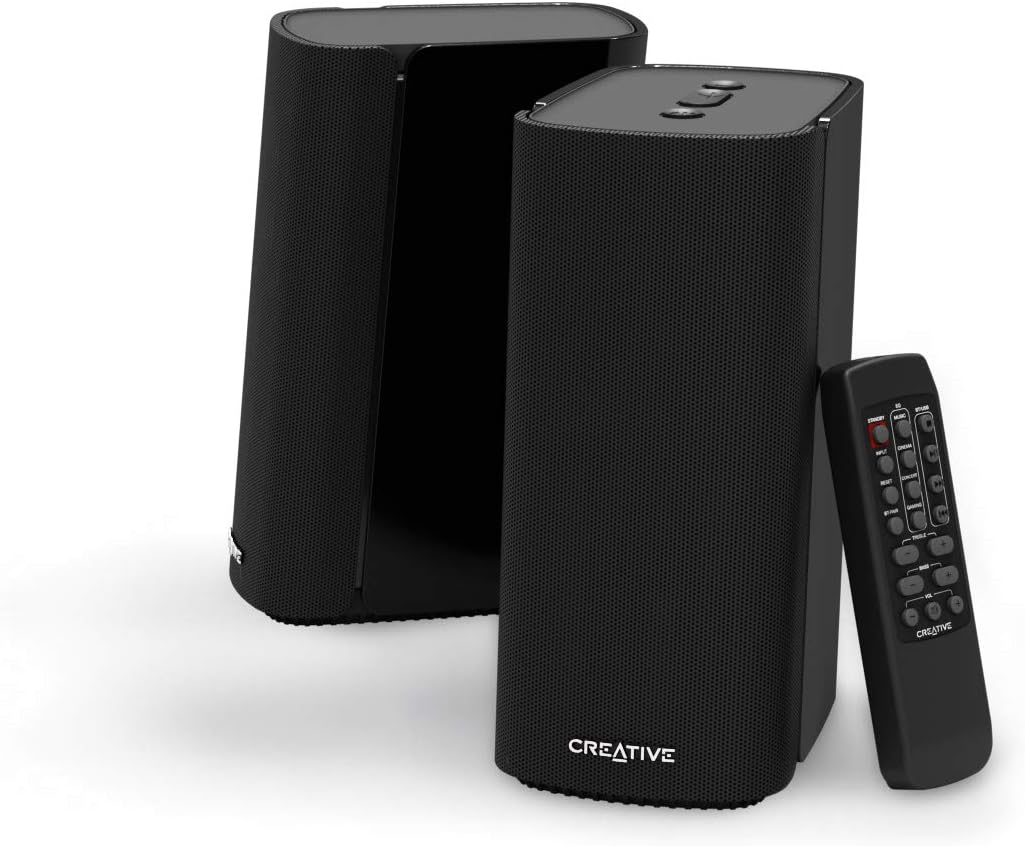
- 40W RMS output provides strong sound for desktop listening.
- Bluetooth 5.0 supports convenient wireless audio from compatible laptops.
- Optical and AUX inputs provide additional wired connection choices.
- BasXPort technology enhances bass without requiring a separate subwoofer.
- - Dedicated remote control provides convenient volume and playback adjustments.
Start with the laptop connection, not the speaker shape
Portable speakers can make a laptop more convenient for a presentation, a film or background listening, but the useful upgrade depends on the complete signal path. Before choosing a model, identify how audio will leave your computer, where the speaker will receive power and whether you need sound in one seat or across a room. These are separate decisions. A small enclosure, a USB connector or a Bluetooth label does not answer all three.
Write down the laptop model, operating system, available ports and the applications you normally use. Include any dock or adapter that stays attached. Then check the exact speaker documentation for supported inputs, power requirements and included cables. Treat the ranked products above as starting points for comparison, not a promise that every connection works with every computer. The right purchase is the one whose documented setup fits your actual routine without an inconvenient chain of adapters.
For shared desks, consider other people as well as your own listening. Speakers broadcast meeting audio and notification sounds to the room. If privacy or concentration matters more than filling the space, our guide to headphones for office work offers a different category to investigate.
Separate USB audio from USB power
A USB cable can carry audio data, provide power or do both, depending on the speaker. A USB-powered analog pair may still require a separate 3.5 mm lead from the laptop’s audio output. Connecting only its power cable will not create an audio device in the computer’s output list. Conversely, a USB audio speaker receives a digital signal and may appear as a selectable playback device. Check the manual rather than relying on a photograph of the connector.
USB-C describes a connector, not a complete compatibility guarantee. The laptop port, cable, adapter and speaker must support the intended function. Some cables are intended primarily for charging; some speakers use their USB socket only to recharge an internal battery. If an adapter is needed, confirm its audio function and operating-system support. A passive shape converter is not automatically a digital-to-analog audio adapter.
Also distinguish a speaker’s power input from the output of a hub. Follow the specified supply voltage, current and approved charging arrangements. A lightly equipped travel hub may not behave like a dedicated supply when several devices share it. If audio becomes intermittent, simplify the setup by testing a documented direct connection before deciding the speaker itself is faulty. Keep the original cable available for that comparison.

Choose analog or Bluetooth for the way you work
A 3.5 mm analog connection can be a straightforward option when the laptop has a suitable headphone output and the speaker has a compatible input. Check whether the computer’s socket is a headphone output or a combined headset connection, and use the speaker’s specified cable. Seat plugs fully without forcing them. If the laptop lacks an analog socket, an appropriate audio adapter may add one, but verify that adapter’s compatibility separately.
Bluetooth reduces the need for an audio cable, although power or charging is still required. Confirm that the computer supports Bluetooth audio, that its radio is enabled and that workplace policy allows pairing. Put the speaker into its documented pairing mode; a device already connected to a phone may need to be disconnected or switched before the laptop can use it. Multipoint behavior varies and should not be assumed.
For films, calls or games, test synchronization rather than assuming wireless audio is instantaneous. Delay depends on the devices, their audio processing and the application. A wired option can be worth investigating when timing is important, but it is not a universal guarantee of zero delay. Compare the connection you plan to use with ordinary speech and visible lip movement. For broader room-listening options, see Bluetooth speakers for office spaces.
Check computer outputs and application permissions
After connecting, select the intended playback device in the operating system’s sound settings. A laptop may continue sending sound to its own speakers, a monitor connected through HDMI or a previously paired headset. Start with a familiar local audio file at a low level. Verify that playback is running, the application is not muted and any physical speaker mute or volume control is set appropriately.
Next, inspect the application itself. Meeting software can retain its own output selection independently of the system default. Choose the speaker inside the call application, then run its test sound if available. Recheck after docking, waking the laptop or reconnecting equipment, because the available device list can change. Do not solve a routing problem by turning every volume control to maximum.
Microphone permissions are a different issue from speaker playback. An ordinary portable speaker does not necessarily include a microphone, and hearing a call does not prove that other participants can hear you. Select the intended microphone and grant the relevant application permission when required. If a work computer blocks device installation, pairing or permissions, ask your IT team rather than installing untrusted drivers. Prefer support files from the exact manufacturer’s official channel.
Place speakers for listening and clearer calls
Give speakers a stable surface with enough clearance for their controls, connectors and any openings identified in the manual. Avoid balancing them on the laptop hinge, covering ventilation or stretching a cable across a walkway. For a stereo pair, confirm left and right orientation and start with the units on opposite sides of the screen, reasonably directed toward your listening position. Placement should suit the product’s intended orientation rather than a photograph’s styling.
The desk, nearby wall and room furnishings can change what you hear. Move one variable at a time: speaker position, angle or distance from the wall. Listen from the chair where you actually work. A setup that sounds satisfactory while standing next to the desk may not give the same clarity at your seat. Keep expectations realistic; a small portable system is not automatically a replacement for larger room audio equipment.
For calls, consider the microphone’s position as well as the speaker’s. Sound from a nearby speaker may be picked up and sent back into the meeting. Use the call application’s available echo-control settings and make a short test with another person. If conversations remain difficult, lower playback level, change placement or consider a purpose-built speakerphone for home office calls. No placement arrangement guarantees freedom from echo in every room.

Evaluate portability as a complete kit
Measure the packed kit, not only the speaker enclosure. A pair of speakers may require an interconnecting lead, a power cable, an audio cable and an adapter. Think about how those parts fit beside the laptop and whether setup is easy at a borrowed desk. Check that controls remain accessible and that the cable lengths suit the distance to your power source without tension.
For battery-powered models, manufacturer runtime claims need their stated conditions. Playback level, connection mode and other features can affect usable time. Do not plan a full working day around an unspecified headline figure. Test your normal use during the return period and keep charging arrangements available. Confirm whether playback while charging is supported; the presence of a charging port alone does not establish that behavior.
Protect grilles and connectors in transit, and keep small adapters in a consistent place. A cable organizer bag can help you compare storage approaches, but check the actual compartment dimensions against your equipment. Let a damp or dirty item dry and clean it as instructed before packing. Do not infer water resistance from a rugged appearance, and do not expose an ordinary speaker to rain because it is described as portable.
Set sensible volume expectations and care habits
Look for intelligible speech and comfortable listening at your normal distance before chasing maximum loudness. Published power figures do not by themselves tell you how clearly a speaker will play in your room. Small speakers can have limits in bass output and room coverage; avoid promising yourself cinema-scale sound from a bag-sized system. Audition spoken material as well as music, since a lively music balance may not be your preference for long presentations.
Begin with modest playback levels and raise them gradually. If you hear distortion, rattling or uncomfortable harshness, reduce the level and check the source recording and placement. Do not keep increasing gain to overcome a noisy room. Consider headphones or a different listening arrangement instead. Follow applicable workplace rules and protect others from unexpected notification sounds, especially when switching a laptop from headphones to speakers.
For cleaning, switch the speaker off and disconnect its power or charging lead as instructed. Use the exact model’s recommended cloth and methods; do not spray liquid into grilles, connectors or controls. Avoid sharp tools and unapproved solvents. Check cables for damage and keep connections free of strain. Battery servicing and disposal should follow the manufacturer’s directions and local arrangements, not improvised repairs based on a generic online video.

Run a practical trial before the return window closes
Confirm the seller’s current return conditions before ordering, including packaging requirements and any restrictions on opened items. Keep accessories together and record the model information. Your trial should reproduce the tasks that motivated the purchase: a local video, a browser presentation, your usual call application and an ordinary workday of connection and disconnection.
Use a short checklist. Does the laptop detect the intended output? Can you hear speech comfortably from your chair? Do calls use the correct microphone? Is video synchronization acceptable? Can you reach the mute control quickly? Does the whole kit pack without pressure on connectors? For a battery model, observe your own routine rather than converting an advertised maximum into a guaranteed runtime.
Try wake-from-sleep and docking if those are part of daily use, and note any settings you must select again. When a problem appears, change one connection or setting at a time so the result is useful. Compare with the laptop’s built-in audio using the same material at a comfortable level, not an assumed equal volume-slider percentage. Keep the system that solves your actual listening problem with manageable setup, not merely the one with the longest feature list.
Portable laptop speaker FAQs
Does a USB-powered speaker also carry audio through USB?
Not necessarily. Some speakers use USB only for power and need a separate analog audio cable. Check the exact model’s manual for its supported audio input.
Will a USB-C speaker work with every laptop?
No universal compatibility should be assumed. Verify the speaker’s audio function, the laptop port, the cable or adapter and the supported operating system.
Why is sound still coming from my laptop?
Check the operating system’s playback output and the application’s own output selection. Also check mute settings, cable connections and the speaker’s controls at a modest volume.
Can I use portable speakers for video calls?
You can use a supported speaker as the playback output, but it may not include a microphone. Select a separate microphone when needed and test for echo with your usual meeting software.
Is Bluetooth suitable for watching videos?
It can be, but synchronization varies with devices, processing and applications. Test speech and visible lip movement using the exact connection you intend to keep.
What should I test before deciding to keep the speakers?
Check output selection, speech clarity, video timing, call microphone behavior, control access, cable routing and packed size. For battery models, test your actual routine and confirm the seller’s current return conditions.