


- Spacious 22-inch-wide seat provides additional sitting room for comfortable home office work.
- Thick 4.33-inch layered cushioning combines latex and foam for supportive everyday seating.
- Three-inch rubber caster wheels are designed for quiet movement across different flooring surfaces.
- Adjustable flip-up armrests help the chair fit beneath desks when space is limited.
- - Height adjustment, swivel movement, and reclining functionality support different working positions.

A Wide, Cushioned Office Chair That Makes Sense for Carpeted Workspaces
This brown leather-style ergonomic office chair is designed for people who want generous seating space, adjustable support, and convenient movement around their workstation. The closely matching product specifications describe a 22-inch-wide seat, 4.33-inch-thick cushioning, flip-up armrests, and 3-inch rubber caster wheels. For buyers searching for the best office chair for carpet, the caster design is particularly interesting because wheel size and material can affect how easily a chair moves across different floor surfaces.
The chair features brown polyurethane leather upholstery with a high-back design and contoured cushioning. Its wide seat measures approximately 22 inches across and 19.5 inches deep, providing more room than many compact office chairs. The spacious and generously padded seat design is especially useful for people who prefer additional hip room or regularly change their sitting position.
The cushioning is another notable feature. The matching retailer description identifies a 4.33-inch-thick seat constructed with natural latex, high-density foam, and a supporting wooden base. This layered arrangement is intended to provide a combination of softness and structural support during extended desk work.
However, thick cushioning does not automatically guarantee proper ergonomic support. Seat comfort also depends on body proportions, posture, desk height, and how the cushion responds to pressure over time. The combination of seat dimensions and cushioning thickness should therefore be considered alongside the chair's adjustment features.
The brown PU leather finish provides a professional appearance that can suit home offices, studies, and traditional desk arrangements. It is also relatively straightforward to wipe clean compared with some woven upholstery materials. Buyers should remember that polyurethane leather is synthetic rather than genuine animal leather.
The Larger Casters and Adjustable Arms Are Particularly Useful
One of the most relevant features for carpeted offices is the chair's wheel configuration. The closely matching product listing describes transparent rubber casters measuring approximately 3 inches in diameter. The oversized three-inch rubber caster wheels are intended to provide smooth movement while reducing the likelihood of scratching hard flooring.
Wheel diameter matters because small casters can encounter greater rolling resistance on soft surfaces. Carpet fibers compress beneath the wheels, and thicker carpet can make a chair harder to move. Larger wheels may improve mobility, although the actual performance depends on carpet pile height, wheel construction, and the weight carried by the chair.
Consider someone working at a desk positioned on low-pile office carpet. Throughout the day, they may need to move between a keyboard, filing cabinet, and nearby storage area. A chair with appropriately designed casters can make these small movements more convenient without requiring the user to stand repeatedly.
However, the manufacturer's description of rubber wheels as suitable for different flooring surfaces does not establish independently tested performance on every carpet type. The difference between low-pile and thick carpeting is important because plush carpet can significantly increase rolling resistance.
For example, a chair may move comfortably on commercial office carpet but feel noticeably harder to push across thick residential carpeting. Deep fibers can restrict wheel rotation or cause the chair to sink slightly into the surface. Users with high-pile carpet should confirm caster compatibility before purchasing.
A suitable chair mat may also improve mobility. On thicker carpeting, a rigid mat designed for the carpet's pile height can provide a more consistent rolling surface. Buyers should choose a mat specifically rated for their flooring rather than assuming every plastic chair mat will work.
The chair's five-star base is another relevant feature. The matching retailer listing describes a heavy-duty metal base with an advertised maximum weight capacity of 300 pounds. The five-star support base and swivel mechanism are designed to provide stable seating while allowing the chair to rotate through 360 degrees.
The swivel function is useful when working with several monitors or reaching equipment positioned beside a desk. Instead of twisting the upper body repeatedly, users can rotate the chair toward the required area. This may help reduce awkward reaching movements during ordinary office tasks.
Another important feature is the adjustable armrest design. The matching product description identifies three-dimensional adjustable arms that can change height and flip upward through approximately 90 degrees. The adjustable and flip-up armrest system provides more flexibility than fixed armrests.
For example, someone working at a relatively narrow desk may find that conventional armrests prevent the chair from sliding underneath the work surface. Raising the armrests can create additional clearance. This allows the chair to be stored closer to the desk when it is not being used.
Adjustable armrests can also help improve working posture. When positioned appropriately, they support the forearms without forcing the shoulders upward. Users should avoid setting the armrests so high that they create unnecessary tension in the neck and shoulders.
The chair also includes pneumatic seat-height adjustment. The matching specifications describe an adjustable seat height ranging from approximately 18.5 to 20.9 inches. The adjustable seating height for desk alignment allows users to adapt the chair to different desk heights and body proportions.
Correct seat height matters because the feet should ideally rest comfortably on the floor while the knees remain in a relaxed position. If the chair is too high, pressure may develop beneath the thighs. If it is too low, the user may sit with excessively bent knees or find it difficult to maintain a comfortable desk posture.
For example, a shorter user working at a standard-height desk may need to lower the seat and adjust the armrests. A taller user may prefer a higher position while maintaining adequate leg clearance beneath the desk. Users who cannot place their feet comfortably on the floor may benefit from a suitable footrest.
The chair also provides a reclining mechanism. The matching product information describes a tilt range of approximately 90 to 110 degrees, allowing users to sit upright or lean backward slightly. The adjustable reclining backrest and tilt function can support different activities throughout the working day.
An upright position may be preferable for typing or detailed computer work. A slightly reclined position can be useful when reading documents or taking a short break from the keyboard. However, the chair should still support the lower back appropriately in the selected position.
The contoured high backrest is intended to support the upper body during seated work. It may help users maintain a more consistent sitting position than a chair with minimal back support. However, the exact lumbar adjustment mechanism has not been independently verified for this Amazon product.
One common mistake is assuming that an ergonomic chair eliminates the need to change position. Even a comfortable chair cannot prevent every problem associated with prolonged sitting. Regular movement and appropriate workstation adjustments remain important for maintaining comfort during long working sessions.
For example, someone spending eight hours at a computer should periodically stand, walk, and change position. Adjusting the monitor height and keyboard placement can also reduce unnecessary strain. The chair works best as part of a properly arranged workstation rather than as the only ergonomic consideration.
The leather-style upholstery is another practical detail. PU leather is generally easier to wipe clean than many fabric coverings, making it suitable for offices where drinks and everyday dust are common. However, synthetic leather can retain heat and may feel less breathable than mesh upholstery during warm weather.
Users should clean the material according to the manufacturer's instructions. Harsh chemicals and abrasive cleaning products may damage the surface coating. Proper maintenance of the synthetic leather upholstery can help preserve its appearance over time.
Assembly is also worth considering. The matching retailer listing indicates that the chair requires assembly and includes the necessary tools. Buyers should follow the supplied instructions carefully, particularly when attaching the armrests, seat mechanism, base, and caster wheels.
Incorrect assembly can affect stability and adjustment performance. For example, loosely installed armrests may move unexpectedly when supporting the forearms. Users should inspect all fasteners and confirm that the height adjustment, swivel, and tilt functions operate correctly before regular use.
Why We Believe This Office Chair Deserves First Place
We ranked this wide-seat ergonomic office chair first out of seven because its combination of generous cushioning, adjustable seating features, and large caster wheels addresses several important home office requirements. The 22-inch-wide seat provides substantial sitting room, while the 4.33-inch-thick cushion offers a supportive seating arrangement. The combination of spacious seating and adjustable comfort is particularly appealing for people who spend several hours working at a desk.
The 3-inch rubber caster design is one of the main reasons it stands out in a comparison focused on carpeted workspaces. Larger wheels can be advantageous when moving across some carpet surfaces, particularly compared with smaller casters. However, buyers should remember that actual carpet performance has not been independently verified for this model.
The adjustable flip-up armrests are another useful feature. They provide flexibility for different working positions while making it easier to slide the chair beneath a desk. This is particularly valuable in smaller home offices where floor space is limited.
The pneumatic seat-height adjustment and reclining mechanism also contribute to the chair's appeal. Users can adapt the seating position to their desk height and preferred posture. The practical range of ergonomic seating adjustments makes the chair suitable for a variety of everyday computer tasks.
There are some limitations worth acknowledging. PU leather may feel warmer than breathable mesh, especially during extended sitting in hot conditions. The cushioning may also feel too soft or too firm depending on individual preferences.
Carpet compatibility is another consideration. Although the larger rubber wheels are promising, very thick carpeting may still restrict movement. Users with plush carpet may need a suitable chair mat or specialized carpet casters.
The chair also has a listed maximum weight capacity of 300 pounds in the matching retailer description. Buyers should confirm the capacity for the exact Amazon variation before purchasing. The chair's adjustment range should also be checked against the user's height and desk dimensions.
These considerations do not eliminate its practical advantages. The chair combines a spacious seat, thick cushioning, adjustable armrests, reclining functionality, and a five-star wheeled base in one design. The balance of everyday comfort and workstation flexibility makes it a compelling option for home office use.
Ultimately, we believe this brown ergonomic office chair deserves first place because it offers a useful combination of seating comfort, adjustable features, and potentially improved mobility through its larger caster design. Its wide seat, padded backrest, flip-up arms, and height adjustment address several common problems associated with extended desk work. For buyers who confirm its compatibility with their carpet and workstation, it remains a strong choice for creating a comfortable and functional home office.

- Six-inch pocket-spring seat cushion combines individual springs and foam for generously padded seating.
- Breathable linen-style fabric upholstery helps reduce heat buildup during extended desk work.
- Reclining backrest adjusts up to 155 degrees with a retractable footrest for resting.
- Reinforced steel base and Class 4 gas lift support an advertised 400-pound capacity.
- - Polyurethane swivel casters provide rolling mobility, although performance on thick carpet requires verification.
A Heavily Cushioned Office Chair That Offers More Than Basic Desk Seating
The mokodo 3084G Big and Tall Office Chair is designed for people who prefer a generously padded executive chair with reclining functionality and substantial weight support. Matching product listings describe a six-inch pocket-spring cushion, breathable fabric upholstery, a reclining backrest, and a reinforced steel base. For buyers searching for the best office chair for carpet, its combination of supportive seating and rolling mobility makes it worth considering, although its carpet performance has not been independently tested.
The most noticeable feature is the unusually thick seat cushion. At approximately six inches, it uses individually pocketed springs combined with resilient foam to provide a different seating feel from conventional office chairs. The six-inch pocket-spring seat cushion is intended to distribute pressure across the sitting surface while providing a cushioned foundation.
Individual pocket springs compress according to the pressure applied to different areas of the seat. This can provide a more responsive feeling than a simple flat foam cushion, although comfort will depend on the user's weight, posture, and preferences. A thick cushion is not automatically more ergonomic, so the chair's height and support adjustments remain important.
The upholstery uses a breathable linen-style textile rather than conventional synthetic leather. This may appeal to people who work in warmer rooms or dislike the sensation of sitting against leather-style upholstery for several hours. The breathable fabric executive chair upholstery can provide a more comfortable surface during extended computer work.
The chair is also marketed for larger users, with an advertised maximum weight capacity of 400 pounds. That rating is supported by the manufacturer's description of a reinforced steel base and Class 4 gas lift. Buyers should still confirm the weight rating and dimensions for the exact variation they intend to purchase.
The Reclining Backrest and Rolling Base Need a Little Planning on Carpet
One of the more distinctive features of the mokodo chair is its reclining mechanism. Matching listings describe a backrest that adjusts from an upright position to approximately 155 degrees. The adjustable reclining backrest and integrated footrest allow the chair to accommodate both desk work and short periods of relaxation.
For example, someone working from home may spend several hours typing, reading documents, and attending online meetings. An upright position is usually more practical for keyboard work, while a reclined position may be preferable during a short break. The retractable footrest provides additional leg support when the chair is tilted backward.
However, reclining to 155 degrees requires more clearance behind the chair than ordinary upright seating. This matters in small home offices where desks are positioned close to walls, cabinets, or other furniture. Users should measure the available space before assuming the chair can recline fully.
The footrest also changes how the chair is used. When extended, it occupies additional space in front of the seat and should be kept clear of desk legs and nearby furniture. Allowing sufficient clearance for the reclining mechanism helps prevent accidental contact with surrounding objects.
The integrated headrest and lumbar pillow are intended to provide additional support. Matching descriptions indicate that the pillow can be repositioned between the neck and lower-back areas. This flexibility may be useful for users who prefer different support arrangements during work and relaxation.
Consider someone who spends most of the day sitting upright but occasionally reclines to read lengthy documents. They may prefer more lower-back support while typing and additional neck support when leaning backward. A repositionable cushion can help accommodate those different activities, although it does not replace a fully adjustable ergonomic backrest.
Another important feature is the heavy-duty base. The mokodo 3084G product family is advertised with a reinforced chromed steel base and an SGS-certified Class 4 gas lift. The reinforced steel base and gas lift are intended to support the chair's substantial weight capacity while allowing seat-height adjustment.
Height adjustment is important because a comfortable sitting position depends on more than cushioning. The user's feet should rest securely on the floor or a suitable footrest, with enough clearance beneath the desk. A seat positioned too high can increase pressure beneath the thighs, while one positioned too low can create an awkward working posture.
The chair also includes swivel movement and polyurethane caster wheels. These components allow users to turn toward different areas of their workstation and reposition the chair without lifting it. The polyurethane swivel caster wheel arrangement is relevant to carpeted home offices, although the manufacturer's descriptions do not establish performance on every carpet type.
Carpet creates different rolling conditions from hardwood or tile. Soft fibers compress under the chair's weight, and thick carpet can increase resistance as the wheels move. This means a caster that rolls easily on a hard surface may require noticeably more effort on plush carpeting.
For example, someone working on low-pile commercial office carpet may find that the mokodo moves adequately between their desk and a nearby filing cabinet. The same chair could be harder to move on thick residential carpet. The difference between low-pile and high-pile carpeting is therefore important when evaluating its suitability.
The manufacturer's description refers to quiet polyurethane casters, but it does not provide independently verified carpet-specific rolling measurements. Buyers should not assume that quiet operation on hard flooring guarantees easy movement across thick carpet. Caster diameter, tread material, floor texture, and the combined weight of the chair and user all influence performance.
A suitable chair mat may help when the chair is used on thicker carpeting. A rigid mat designed for the carpet's pile height can provide a more consistent rolling surface and reduce resistance. However, buyers should select a mat rated for their specific flooring rather than choosing one based only on appearance.
Carpet protection is another consideration. Repeated chair movement can compress fibers and gradually create visible wear patterns, particularly in the area directly beneath a desk. Choosing appropriate casters and floor protection can help reduce unnecessary wear while making movement more convenient.
The chair's substantial construction may also influence rolling resistance. Matching product listings identify an assembled weight of approximately 52 to 56 pounds, depending on the configuration. A heavier chair can require more effort to reposition on soft flooring, especially when someone is seated in it.
This is worth considering for users who frequently move between several work surfaces. Someone who remains primarily at one desk may value the thick cushioning and reclining functionality more than effortless mobility. A user who rolls between workstations throughout the day may place greater importance on specialized carpet casters.
The breathable fabric is another practical feature for daily use. Unlike leather-style upholstery, woven fabric can allow more airflow around the seating surface. However, it may also absorb spills and require more careful cleaning.
For example, a spilled drink can soak into fabric more readily than it would remain on a sealed synthetic leather surface. Users should follow the manufacturer's cleaning recommendations and avoid saturating the cushioning. Regular cleaning of the fabric upholstery can help maintain the chair's appearance and condition.
Assembly is required. Matching product descriptions estimate approximately 20 to 30 minutes for installation, although the actual time depends on experience and the available workspace. The base, casters, seat, backrest, and footrest components should be assembled according to the supplied instructions.
One common mistake is failing to check the fasteners after completing assembly. Loose connections can affect the chair's stability or create unwanted movement during reclining. Users should inspect the assembled chair and test its adjustment mechanisms before using it regularly.
The chair should also be positioned on a reasonably level surface. A heavily reclined seating position changes the distribution of weight across the chair's base. Correct assembly and stable floor positioning are especially important when using the reclining function and retractable footrest.
Finally, users should remember that comfortable seating does not eliminate the need for movement throughout the working day. Even a generously cushioned executive chair can become uncomfortable when someone remains in the same position for hours. Periodically standing, walking, and adjusting the workstation remains useful.
Why We Ranked the mokodo Office Chair Number Two
We placed the mokodo 3084G second out of seven because it combines substantial cushioning, breathable upholstery, reclining functionality, and a reinforced support structure. These features make it appealing for people who spend long periods working at a desk and want a chair that can also accommodate occasional relaxation. The combination of thick cushioning and adjustable reclining support is its strongest advantage.
The six-inch pocket-spring cushion is particularly interesting. Its individual springs and foam layers are designed to provide responsive support, making it different from many ordinary office chairs with thinner foam seats. Users who prefer a softer, more generously padded sitting surface may appreciate this construction.
The breathable fabric also contributes to its appeal. Compared with leather-style upholstery, the textile covering may feel more comfortable in warm environments. This makes the chair relevant to home offices where users spend several hours seated each day.
The reinforced steel base and advertised 400-pound capacity are further advantages. These specifications make the chair worth considering for larger users who require substantial support. However, buyers should confirm the exact weight rating and adjustment range for their selected configuration.
One reason the mokodo ranks below our first-place brown ergonomic office chair is the difference in documented caster design. Our first-ranked model has a matching description specifying three-inch rubber casters, while the mokodo is described more generally as having polyurethane wheels. The lack of verified carpet-specific caster dimensions makes it harder to assess rolling performance on thicker carpet.
Another consideration is the chair's weight. At approximately 52 to 56 pounds in matching listings, the mokodo is relatively substantial. This may make it more difficult to reposition on soft carpeting than a lighter office chair, particularly when the user is seated.
The reclining mechanism also requires additional space. A backrest that reaches 155 degrees and a retractable footrest are useful for relaxation, but they may be unnecessary in compact offices. Buyers with limited floor space should measure the full reclining footprint before purchasing.
The thick cushioning may not suit every preference either. Some users prefer firmer seating with more precise lumbar adjustment for intensive computer work. The generous cushioning and reclining-focused design may appeal more to comfort-oriented buyers than those seeking a highly adjustable task chair.
Fabric maintenance is another minor drawback. Although the upholstery offers breathability, it may require more attention after spills than wipe-clean synthetic leather. Users should consider how the chair will be used and whether easy cleaning is a priority.
These limitations explain why the mokodo occupies second place rather than the top position. Nevertheless, its thick pocket-spring cushion, breathable fabric, substantial weight capacity, and reclining features provide meaningful advantages for everyday home office use. The chair offers a useful combination of desk seating and relaxation features.
Ultimately, we believe the mokodo 3084G deserves second place because it provides generous seating comfort with versatile reclining functionality, while its exact carpet mobility performance remains less clearly documented than we would prefer. Its reinforced base, breathable upholstery, integrated headrest, and retractable footrest make it a compelling option for people who prioritize cushioning and support. For buyers who confirm that its casters suit their carpet and that its dimensions fit their workspace, the mokodo remains a strong and practical choice.

- Inflatable lumbar support lets users adjust lower-back pressure for a more personalized seating position.
- Padded high backrest and integrated head support provide cushioning during extended desk work.
- Ninety-degree flip-up armrests allow convenient storage beneath desks and more unrestricted movement.
- Pneumatic seat-height adjustment and locking tilt mechanism accommodate different working and resting positions.
- - Five-star nylon base with swivel casters supports everyday mobility and an advertised 300-pound weight capacity.
The Adjustable Lumbar Support Makes This Executive Chair Worth Considering
The COLAMY 2822 High Back Executive Office Chair offers an interesting combination of thick cushioning, adjustable lower-back support, and practical desk-friendly armrests. It features a padded high backrest, an inflatable lumbar support system, and a five-star rolling base. For anyone comparing the best office chair for carpet, it provides several useful ergonomic features, although its standard casters have not been independently verified for different carpet types.
The chair measures approximately 29.9 inches deep, 26 inches wide, and 48 inches high. Its black leather-style upholstery gives it a conventional executive office appearance, while the padded backrest and seat are intended for everyday computer work. The combination of padded executive seating and adjustable support makes it particularly relevant to people who spend several hours working from home.
One of its most distinctive features is the inflatable lumbar support system. Instead of relying entirely on fixed padding, the chair incorporates an air cushion that users can inflate to adjust the pressure against their lower back. This allows some personalization without requiring a complicated mechanical adjustment system.
For example, someone who finds that ordinary office chairs leave a gap behind their lower back may appreciate being able to increase the lumbar cushion's firmness. Another person might prefer less pressure and choose a softer setting. The customizable inflatable lower-back support system provides flexibility that many basic executive chairs do not offer.
However, lumbar support should not be inflated as firmly as possible. Excessive pressure can push the lower back forward and create an uncomfortable sitting position. Users should make small adjustments until the cushion supports their natural posture without forcing their spine into an exaggerated curve.
The high backrest also includes padded head support. This can be useful when leaning backward to read documents or taking a short break from the computer. However, the headrest is integrated into the chair rather than described as independently height-adjustable, so its positioning may not suit every user equally.
The Flip-Up Arms Are Convenient, but Carpet Mobility Needs Attention
The COLAMY 2822 includes padded armrests that can flip upward approximately 90 degrees. This feature is useful for people who need to slide their chair beneath a desk or prefer additional freedom around their elbows. The space-saving ninety-degree flip-up armrest design is particularly practical in smaller home offices.
Consider someone working at a desk positioned in a bedroom. When the working day ends, they may want to push the chair completely beneath the desktop to create more walking space. Fixed armrests can prevent that movement if they collide with the desk edge.
With the COLAMY, the user can raise the armrests before moving the chair underneath the desk. This reduces the space occupied by the workstation when it is not being used. It can also be useful for people who occasionally play musical instruments or prefer to sit without armrests restricting their movements.
During ordinary computer work, the padded arms provide a place to rest the forearms. However, armrest height should allow the shoulders to remain relaxed rather than raised. Proper arm positioning during extended computer work can help avoid unnecessary tension around the neck and upper shoulders.
The chair also features pneumatic seat-height adjustment. This allows users to raise or lower the sitting position to suit their desk and body proportions. A correctly adjusted chair should allow the feet to rest comfortably on the floor while maintaining a relaxed knee position.
For example, a shorter user may need to lower the seat to avoid pressure beneath the thighs. A taller user may prefer a higher position, provided there is enough clearance beneath the desk. If the feet cannot rest comfortably on the floor, a suitable footrest may be helpful.
The reclining mechanism provides another adjustment option. The chair includes a tilt function that allows the backrest to rock backward, along with a mechanism for locking the chair in an upright position. The adjustable rocking and upright tilt-lock mechanism gives users some flexibility between focused computer work and more relaxed sitting.
Someone reviewing documents may prefer a slightly reclined position, while typing generally requires closer alignment with the desk. The tilt mechanism allows the chair to accommodate these different activities. However, the COLAMY does not offer the extensive reclining range or integrated footrest found on some relaxation-focused executive chairs.
The chair's five-star nylon base is designed to support the seat while allowing 360-degree swivel movement. COLAMY advertises a maximum weight capacity of 300 pounds. This rating should be respected, and users should avoid exceeding the manufacturer's recommended limit.
The swivel function can be useful when working with multiple monitors or reaching equipment beside a desk. Instead of repeatedly twisting the upper body, users can rotate the chair toward the required area. The five-star rolling base and swivel movement support ordinary workstation mobility.
However, carpet introduces additional considerations. The chair includes caster wheels, but the available product specifications do not establish that they are specially designed for thick carpeting. This matters because carpet fibers create rolling resistance that is generally greater than on smooth flooring.
On low-pile office carpet, standard casters may provide adequate movement. On thick residential carpeting, the wheels may sink into the fibers or require more effort to move. The relationship between carpet thickness and caster performance should be considered before purchasing any rolling office chair.
For example, someone working at a desk on commercial carpet may only need to move a few inches to reach a filing cabinet. The COLAMY's rolling base may be adequate for that task. A user with thick plush carpet who frequently moves between several work surfaces may experience considerably more resistance.
Wheel diameter also affects how easily a chair rolls. Larger wheels can sometimes overcome carpet resistance more effectively than smaller casters, although tread material and the chair's total weight also matter. The exact caster diameter for the COLAMY 2822 has not been independently verified.
A suitable chair mat may improve movement on carpeted flooring. Rigid mats designed for the carpet's pile height can provide a more consistent surface for the wheels. Choosing the correct chair mat for carpeting may also help reduce repeated compression and wear in the area beneath the workstation.
However, not every chair mat is appropriate for every carpet. Thin mats can flex or develop indentations when placed over thick carpeting. Buyers should check the manufacturer's pile-height recommendations before selecting one.
The chair's weight is another practical factor. At approximately 38.6 pounds, it is substantial enough to require care when lifting or moving between rooms. However, it is lighter than some heavily padded reclining executive chairs.
The upholstery is another feature worth examining. Matching product descriptions identify the covering as bonded or synthetic leather, with foam cushioning underneath. The padded leather-style executive chair upholstery provides a professional appearance and a surface that can generally be wiped clean.
For example, someone who regularly drinks coffee at their desk may appreciate a surface that is easier to wipe than absorbent woven fabric. Small spills should be cleaned promptly according to the manufacturer's instructions. Harsh chemicals should be avoided because they can damage the upholstery's protective finish.
Leather-style upholstery also has limitations. It may feel warmer than breathable mesh during extended sitting, particularly in rooms without air conditioning. Users who frequently experience heat buildup may prefer a chair with more ventilation.
Assembly is required, and the product includes instructions for attaching the chair's components. Buyers should check that the base, casters, seat mechanism, backrest, and armrests are correctly installed. Secure assembly and correctly tightened chair components are important for maintaining stability.
One common mistake is using a newly assembled chair without testing its adjustment mechanisms. Users should confirm that the pneumatic lift operates correctly, the armrests remain secure, and the tilt mechanism locks as intended. Any unusual movement should be investigated before regular use.
Finally, the chair should be adjusted as part of the entire workstation. Monitor height, keyboard placement, desk clearance, and regular movement all influence sitting comfort. Even a chair with adjustable lumbar support cannot compensate for a poorly arranged desk.
Why We Ranked the COLAMY Office Chair Number Three
We placed the COLAMY 2822 third out of seven because it combines useful ergonomic adjustments, generous cushioning, and a practical executive chair design. Its inflatable lumbar support is particularly appealing for people who want to adjust the firmness of their lower-back support. The combination of customizable lumbar pressure and padded seating is its strongest advantage.
The flip-up armrests also contribute significantly to its ranking. They make the chair easier to position beneath a desk and provide additional flexibility when arm support is unnecessary. This is useful in compact home offices where furniture placement matters.
The chair's pneumatic height adjustment and locking tilt mechanism provide further versatility. Users can adapt the sitting position to their workstation and change between upright and slightly reclined seating. These features make the COLAMY suitable for everyday computer work, reading, and general office activities.
However, the chair ranks below our first-place brown ergonomic office chair because the latter has a matching product description specifying larger three-inch rubber caster wheels. The COLAMY's caster dimensions and carpet-specific rolling performance are less clearly documented. The lack of verified carpet-optimized wheel specifications is an important consideration in a comparison focused on carpeted workspaces.
The second-ranked mokodo 3084G also offers a different level of cushioning and reclining functionality. Its six-inch pocket-spring seat, retractable footrest, and advertised 400-pound weight capacity may appeal to buyers who prioritize substantial padding and relaxation features. The COLAMY offers a more conventional executive office chair arrangement.
Another limitation is the nylon base. Although it is rated for the chair's advertised 300-pound capacity, some buyers may prefer the reinforced metal construction found on heavier executive chairs. Users should compare the manufacturer's load ratings rather than assuming one base material is always stronger.
The bonded leather-style upholstery is another consideration. It provides a professional appearance and straightforward cleaning, but it may not offer the same breathability as fabric or mesh. The tradeoff between easy cleaning and upholstery breathability becomes more noticeable during long working sessions.
The inflatable lumbar system may also require occasional readjustment. Users need to find a comfortable pressure level rather than assuming that maximum inflation provides the best support. Those who prefer a completely passive backrest may find the additional adjustment unnecessary.
These considerations explain why the COLAMY occupies third place rather than a higher ranking. Nevertheless, its ergonomic features remain relevant to everyday home office use. The adjustable lumbar cushion, padded high backrest, flip-up arms, and tilt mechanism provide a practical combination of comfort and flexibility.
Ultimately, we believe the COLAMY 2822 deserves third place because it offers personalized lower-back support and practical workstation adjustments, while its carpet mobility specifications are less comprehensive than we would prefer. Its professional appearance, supportive cushioning, and space-saving armrests make it suitable for home offices and general desk work. For buyers who confirm that its casters suit their carpet, or who plan to use an appropriate chair mat, the COLAMY remains a comfortable and worthwhile option.

- Adjustable lumbar support helps customize lower-back contact during extended computer work.
- Breathable mesh backrest promotes airflow while the cushioned seat provides everyday comfort.
- Flip-up armrests create extra desk clearance and allow more flexible seating positions.
- Reinforced five-point base supports an advertised maximum user weight of 330 pounds.
- - Pneumatic height adjustment and reclining backrest accommodate different desk activities and sitting preferences.
A Breathable Ergonomic Chair That Gets the Important Adjustments Right
The TRALT YX001 Ergonomic Office Chair is designed for people who want adjustable back support, breathable upholstery, and a practical seating arrangement for everyday computer work. This white office chair features a mesh backrest, cushioned seat, adjustable lumbar support, and a five-point rolling base. For buyers comparing the best office chair for carpet, it offers several useful ergonomic features, although its standard casters are primarily advertised for hard flooring.
The chair has an advertised maximum weight capacity of 330 pounds and weighs approximately 30 pounds. Its overall width is listed at approximately 25.7 inches, with an adjustable height reaching around 49.2 inches. The combination of lightweight construction and adjustable ergonomic support makes it suitable for home offices, study rooms, and ordinary computer workstations.
One of its main advantages is the breathable mesh backrest. Unlike thick leather-style upholstery, mesh allows air to circulate around the back during extended sitting. This can be useful in warm rooms where heavily padded executive chairs may feel uncomfortable after several hours.
The seat uses resilient foam cushioning designed to provide support without relying on a completely rigid surface. Matching product descriptions identify a seat approximately 20 inches wide and 17.3 inches deep. The supportive foam seat and breathable mesh backrest offer a different seating experience from oversized reclining office chairs.
However, seat dimensions should be checked against the user's body proportions. A seat that is too deep can make it difficult to maintain contact with the backrest, while one that is too shallow may provide insufficient thigh support. The TRALT's dimensions are useful starting points, but individual comfort will vary.
The Lumbar Adjustment Is Useful, but the Wheels Need Attention on Carpet
One of the most interesting features of the TRALT YX001 is its adjustable lumbar support. The mechanism allows users to change the support provided to the lower back rather than relying entirely on a fixed backrest shape. The adjustable lumbar support and contoured backrest design can help accommodate different sitting preferences.
Consider someone working from home for six or seven hours each day. They may spend the morning typing, the afternoon reviewing documents, and part of the evening attending online meetings. Adjustable lower-back support allows them to experiment with a position that feels comfortable during these different activities.
The important detail is not to push the lumbar support as far forward as possible. Excessive pressure can create an uncomfortable curve in the lower back. Users should make gradual adjustments until the support follows their natural sitting posture.
The chair also includes an adjustable headrest. This can be useful when leaning backward during a break or reading documents away from the keyboard. The adjustable headrest and upper-back support arrangement provides additional flexibility compared with basic office chairs that have no head support.
However, the headrest should not force the neck forward during ordinary computer work. Users should position it according to their height and preferred sitting posture. If it does not align comfortably, it may be better to avoid resting against it while typing.
The seat-height adjustment is another important feature. Matching specifications describe an approximate range of 18.5 to 21.7 inches, allowing the chair to accommodate different desk arrangements. A correctly adjusted seat should allow the feet to rest comfortably on the floor while maintaining adequate clearance beneath the desk.
For example, someone using a standard 29-inch-high desk may need to adjust the chair until their elbows align comfortably with the keyboard. If the chair is too low, the user may raise their shoulders to reach the work surface. Correct seat height and workstation alignment can help reduce unnecessary strain during long working sessions.
The TRALT also includes flip-up armrests. These can be raised when the chair needs to slide beneath a desk or when the user prefers additional freedom around the elbows. This is particularly useful in smaller home offices where every inch of available floor space matters.
Imagine a desk positioned in a bedroom with limited space between the bed and workstation. Fixed armrests may prevent the chair from fitting completely beneath the desktop. Raising the TRALT's armrests can create additional clearance when the chair is not being used.
During computer work, the armrests can provide support for the forearms. They should be positioned so the shoulders remain relaxed rather than elevated. The practical flip-up armrest and desk-clearance design provides flexibility, although it does not offer every adjustment found on premium task chairs.
The backrest also includes a reclining function. Matching descriptions identify an approximate tilt range from 90 to 120 degrees. This allows users to remain upright for typing or lean backward slightly when reading or taking a short break.
The reclining range is more limited than that of relaxation-focused executive chairs with integrated footrests. However, a moderate recline may be more practical for people whose primary activity is computer work. The adjustable backrest with moderate reclining capability provides useful flexibility without requiring extensive space behind the chair.
For carpeted offices, the rolling base deserves particular attention. The TRALT uses a five-point base with swivel casters, allowing the chair to rotate through 360 degrees and move around a workstation. However, the matching product specifications primarily recommend the wheels for hard floors.
This distinction matters because carpet creates additional rolling resistance. The fibers compress beneath the wheels, and thicker carpeting can make the chair harder to reposition. The difference between hard-floor and carpet caster performance should be considered before purchasing.
For example, someone using low-pile commercial carpet may find that the chair moves adequately over short distances. The same chair could require noticeably more effort on thick residential carpet. The actual result depends on wheel diameter, carpet density, pile height, and the combined weight of the user and chair.
The TRALT's caster diameter is not clearly documented in the matching specifications. Buyers should therefore avoid assuming that its wheels are optimized for thick carpet. If carpet mobility is the main priority, checking wheel compatibility before purchasing is particularly important.
A suitable chair mat can help improve rolling movement. Rigid mats designed for the carpet's pile height provide a more consistent surface for caster wheels. Using an appropriate chair mat for carpet may also reduce repeated compression of carpet fibers beneath the workstation.
However, chair mats must be selected carefully. Thin mats can flex or develop indentations when used on thick carpeting. Buyers should choose a mat specifically rated for their carpet type rather than selecting one intended for hardwood flooring.
The chair's relatively manageable weight may make it easier to move between rooms than heavier reclining executive chairs. At approximately 30 pounds, it is substantially lighter than some oversized models. However, weight alone does not determine how easily a chair rolls across carpet.
Assembly is another practical consideration. TRALT advertises an installation process taking approximately 15 minutes, with the necessary tools and instructions included. Actual assembly time may vary depending on experience and the available working area.
One common mistake is failing to check the fasteners after assembly. Loose connections can create unwanted movement or noise during regular use. Secure assembly and properly installed chair components are important for maintaining stability.
The mesh backrest also requires occasional maintenance. Dust and small particles can collect in the fabric, while hair and carpet fibers may become trapped around the caster wheels. Users should inspect the wheels periodically and remove debris that interferes with rotation.
For example, a chair used on carpet may gradually collect loose fibers around the caster axles. This can increase rolling resistance and cause uneven movement. Regular cleaning can help preserve the wheels' operation.
Finally, the chair should be considered part of the entire workstation. Monitor height, keyboard position, desk clearance, and regular movement all influence comfort. Even a chair with adjustable lumbar support cannot compensate for sitting in one position throughout the entire working day.
Why We Ranked the TRALT Office Chair Number Four
We placed the TRALT YX001 fourth out of seven because it offers useful ergonomic adjustments, breathable materials, and a relatively lightweight design. Its adjustable lumbar support, headrest, flip-up arms, and reclining mechanism make it practical for everyday computer work. The combination of breathable seating and adjustable back support is its strongest advantage.
The mesh backrest is particularly appealing for people who work in warm environments. It allows more airflow than many heavily padded leather-style chairs. The cushioned seat also provides support without the bulk of a large executive recliner.
The advertised 330-pound weight capacity is another positive feature. Its reinforced five-point base is intended to provide stability during ordinary use. Buyers should still follow the manufacturer's recommended weight limit and assembly instructions.
However, the TRALT ranks below our first-place office chair because its caster specifications are less suitable for a carpet-focused recommendation. Our first-ranked model has a matching description identifying three-inch rubber wheels, while the TRALT is primarily described as suitable for hard floors. The absence of verified carpet-specific caster compatibility is its main disadvantage in this comparison.
The second-ranked mokodo chair also offers more extensive cushioning and reclining functionality. Its six-inch pocket-spring cushion, retractable footrest, and advertised 400-pound capacity may appeal to users seeking a heavily padded executive chair. The TRALT is more focused on conventional ergonomic desk seating.
Our third-ranked COLAMY 2822 also offers a distinctive inflatable lumbar support system. That feature allows users to adjust lower-back pressure through an air cushion. The TRALT provides adjustable lumbar support but uses a different mechanism.
Another limitation is its moderate reclining range. The approximate 90 to 120-degree adjustment is suitable for changing sitting positions but does not provide the same relaxation options as chairs with deeper reclining mechanisms. The relatively limited reclining and relaxation features may matter to buyers who want a chair for both work and extended resting.
The foam seat may also feel different from the thick cushions found on larger executive chairs. Some users prefer firmer support, while others want a softer sitting surface. Comfort depends on individual preferences and how the chair fits the user's body.
The white finish is another consideration. Although it creates a clean appearance, it may show marks and dust more readily than darker upholstery. Regular cleaning may be necessary in busy home offices.
These considerations explain why the TRALT occupies fourth place rather than a higher ranking. Nevertheless, its ergonomic adjustments, breathable mesh, and space-saving armrests provide meaningful advantages for everyday desk work. The practical balance of comfort and adjustability makes it particularly appealing for users who want a conventional task chair.
Ultimately, we believe the TRALT YX001 deserves fourth place because it offers a useful combination of lumbar support, breathable materials, adjustable seating, and relatively lightweight construction, while its standard casters are not specifically documented for thick carpet. Its comfortable seat, adjustable headrest, and flip-up arms make it suitable for home offices, study rooms, and computer workstations. For buyers who confirm the wheel compatibility with their flooring or use an appropriate carpet chair mat, the TRALT remains a practical and worthwhile choice.
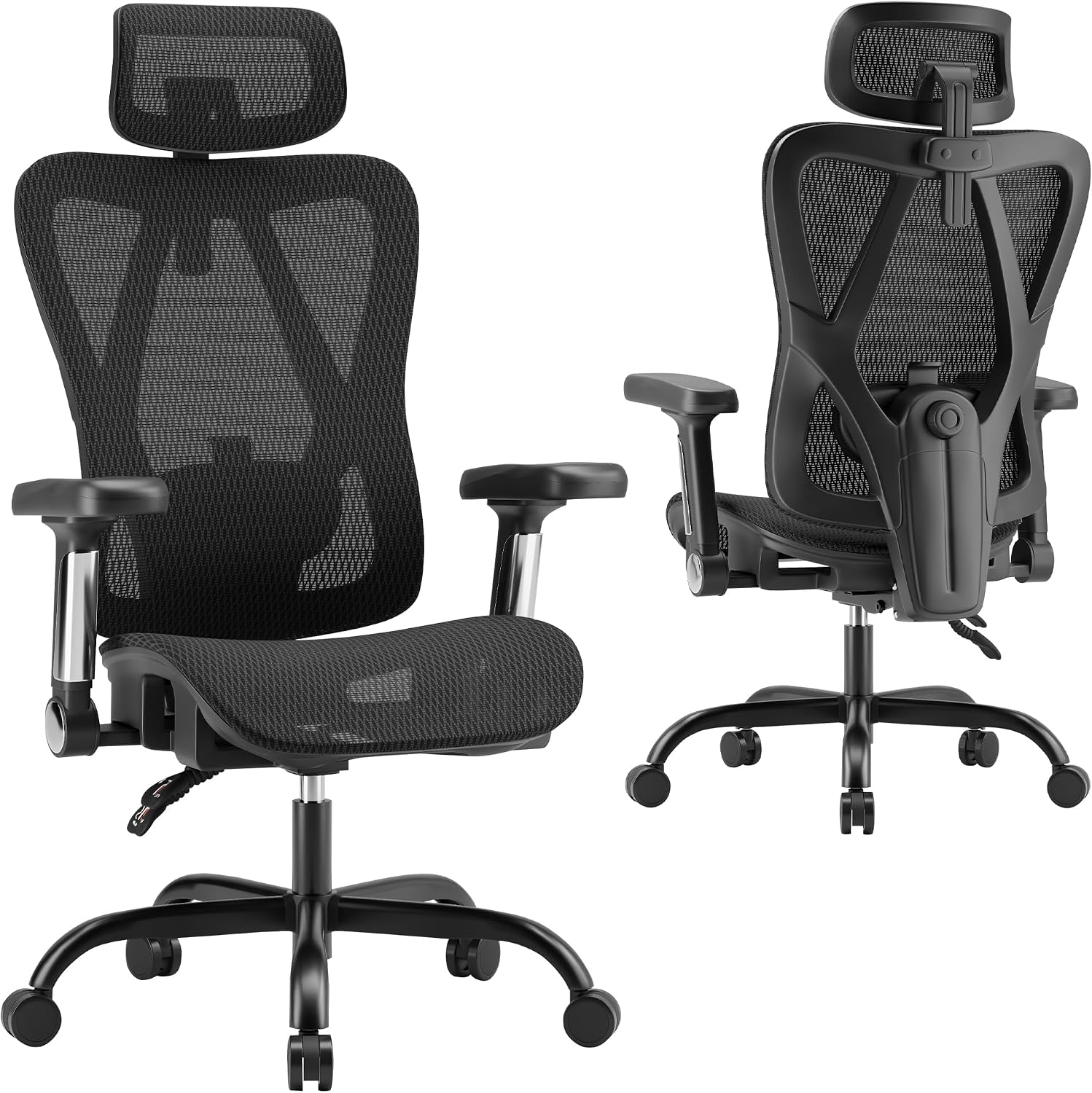
- Breathable mesh seat and backrest promote airflow during extended computer work.
- Adjustable lumbar support moves forward 1.6 inches and upward 3 inches for personalized lower-back contact.
- Five-dimensional armrests provide height, depth, rotation, and angle adjustments for different desk positions.
- Stepless reclining backrest locks at selected angles between 90 and 135 degrees.
- - Two-dimensional adjustable headrest offers height and rotation adjustments for seated neck support.
This Full-Mesh Office Chair Offers More Adjustments Than You Might Expect
The YORSERNY TCOfficeChair2 Ergonomic Office Chair is designed for people who want breathable seating, adjustable lower-back support, and flexible armrest positioning. It features a full mesh seat and backrest, five-dimensional armrests, a two-dimensional headrest, and a reclining mechanism that adjusts between 90 and 135 degrees. For buyers comparing the best office chair for carpet, it offers a useful combination of ergonomic features, although its caster wheels are not specifically documented for thick carpeting.
The chair measures approximately 26.8 inches deep, 25.2 inches wide, and 52 inches high. Its black mesh upholstery gives it a conventional ergonomic task-chair appearance, while the adjustable components allow users to personalize several aspects of their sitting position. The combination of breathable mesh and adjustable ergonomic support makes it particularly relevant for people who spend long periods working at a computer.
One of the most noticeable features is the full mesh construction. Unlike office chairs with thick foam cushions and synthetic leather coverings, the YORSERNY uses mesh across both the seat and backrest. This arrangement allows air to circulate through the seating surfaces, potentially reducing heat buildup during extended work sessions.
For example, someone working from home in a warm room may find that conventional leather-style upholstery becomes uncomfortable after several hours. A breathable mesh chair can provide better airflow around the back and thighs. The ventilated mesh seat and backrest design is particularly useful when temperature control is limited.
However, mesh seating feels different from traditional padded cushions. Some users appreciate the firmer, suspended support, while others prefer the softer contact provided by thick foam. The YORSERNY is better suited to buyers who prioritize ventilation and adjustability over heavily cushioned executive seating.
The chair also has an advertised maximum weight capacity of 350 pounds in its Amazon title. Its listed weight is approximately 30.2 pounds, making it relatively manageable compared with larger reclining office chairs. Buyers should verify the manufacturer's final load rating because some secondary product descriptions provide conflicting figures.
The Lumbar Support and 5D Armrests Make Everyday Desk Work More Flexible
One of the strongest features of the YORSERNY TCOfficeChair2 is its adjustable lumbar support. The manufacturer describes a mechanism that moves the lumbar support forward by up to 1.6 inches and upward by approximately 3 inches. The adjustable lumbar depth and height system allows users to change both the position and pressure of the lower-back support.
This is useful because people have different body proportions and sitting preferences. A fixed lumbar cushion may contact one person's lower back correctly while sitting too high or too low for another. The YORSERNY provides additional adjustment options to address those differences.
Consider someone who works at a computer for seven hours each day. They may initially find that the lumbar support sits too far away from their lower back, leaving an uncomfortable gap. Moving the support forward slightly can improve contact without requiring an additional cushion.
However, the lumbar adjustment should be made gradually. Moving the support too far forward may create excessive pressure and force the lower back into an uncomfortable position. Correct lumbar positioning for natural spinal support is more important than using the maximum adjustment range.
The chair also includes five-dimensional adjustable armrests. According to the Amazon description, the armrests can move vertically by approximately 3.15 inches and forward or backward by up to 1.97 inches. They also offer rotation and angle adjustments, allowing users to position their forearms according to different activities.
This level of flexibility can be useful for people who alternate between typing, using a mouse, reading, and gaming. Each activity may involve a slightly different arm position. The highly adjustable five-dimensional armrest system allows users to experiment with support rather than relying on fixed armrest placement.
For example, someone using a wide keyboard and mouse may prefer the armrests positioned farther apart or rotated to accommodate their elbows. Another user working with a compact laptop may prefer the supports closer to their body. The adjustment system provides options for these different workstation arrangements.
However, armrests should not force the shoulders upward. Excessive height can create tension around the neck and upper shoulders, particularly during long typing sessions. Users should adjust the armrests so their forearms receive support while their shoulders remain relaxed.
The headrest is another adjustable component. The manufacturer describes a two-dimensional mechanism with approximately 4.4 inches of height adjustment and up to 60 degrees of rotation. The adjustable headrest for neck positioning can be useful when leaning backward or reading documents away from the keyboard.
For example, someone who occasionally reclines during a break may appreciate additional support behind the head. The headrest can be positioned to match their height and preferred reclining angle. However, it should not push the head forward during ordinary upright computer work.
The backrest includes a stepless reclining mechanism. Unlike chairs with only a few preset reclining positions, the YORSERNY allows users to select and lock an angle between approximately 90 and 135 degrees. The adjustable reclining backrest with continuous locking provides flexibility for different working and resting positions.
An upright position near 90 degrees may be useful for typing or detailed computer tasks. A moderate recline can be more comfortable when reading documents or taking a short break. The deeper reclining range may appeal to people who want additional relaxation without purchasing a large executive chair.
However, reclining requires sufficient clearance behind the workstation. A chair positioned directly against a wall may not have enough room to use the full adjustment range. Buyers should measure the available space before assuming that every reclining position will be practical.
For carpeted offices, the rolling base deserves particular attention. The YORSERNY includes swivel caster wheels designed for ordinary workstation movement. However, the Amazon listing does not clearly identify their diameter or confirm that they are optimized for thick carpeting.
This matters because carpet creates more rolling resistance than smooth flooring. The fibers compress beneath the wheels, and thicker carpet can make it harder to move the chair while seated. The relationship between carpet pile and wheel resistance should be considered before purchasing.
For example, someone using low-pile commercial office carpet may find that the chair moves adequately over short distances. The same chair could require noticeably more effort on thick residential carpeting. Actual performance depends on wheel size, tread material, carpet density, and the combined weight of the chair and user.
A common mistake is assuming that all swivel casters perform equally on every floor type. Some wheels are designed primarily for hard surfaces, while others have larger diameters or specialized treads intended for carpeting. Checking caster compatibility before using the chair on carpet can prevent unnecessary frustration.
A suitable chair mat may improve mobility when the chair is positioned on thick carpeting. Rigid mats designed for the carpet's pile height can provide a more consistent rolling surface. They may also reduce repeated compression and visible wear in the area beneath the desk.
However, buyers should select the mat carefully. A thin mat intended for hardwood flooring may flex or develop indentations when placed over plush carpet. The mat should be rated for the actual carpet thickness and expected loading conditions.
The chair's relatively manageable weight may make it easier to reposition than some larger executive models. At approximately 30.2 pounds, it is lighter than many heavily padded reclining chairs. However, weight alone does not determine rolling performance, particularly when the chair is occupied.
Another consideration is seat size. The matching product specifications identify a seat depth of approximately 20.9 inches. The relatively deep ergonomic mesh seating surface may provide useful thigh support for taller users, but shorter users should confirm that they can sit comfortably against the backrest.
A seat that is too deep can create pressure behind the knees or prevent proper contact with the lumbar support. Users should be able to maintain a small clearance between the front edge of the seat and the backs of their knees. If the seat dimensions do not suit their body proportions, additional adjustment may not fully resolve the problem.
The chair also requires assembly. Buyers should follow the supplied instructions when attaching the base, casters, seat mechanism, backrest, and armrests. Secure assembly and properly tightened frame connections are important for maintaining stability during ordinary use.
One common mistake is failing to test the adjustment mechanisms after installation. Users should confirm that the reclining lock engages correctly, the armrests remain secure, and the lumbar adjustment operates smoothly. Any unusual movement should be investigated before the chair is used regularly.
Maintenance is another practical consideration. Mesh upholstery can collect dust, lint, and small particles over time, especially in carpeted rooms. Regular vacuuming with a suitable upholstery attachment can help maintain airflow and appearance.
The caster wheels should also be inspected periodically. Carpet fibers and hair can become trapped around the wheel axles, increasing resistance and making movement less consistent. Regular caster cleaning for smoother rolling movement can help preserve everyday usability.
Finally, the chair should be adjusted as part of the entire workstation. Monitor height, keyboard position, desk clearance, and regular movement all influence comfort. Even a chair with extensive ergonomic adjustments cannot compensate for remaining in the same position throughout the entire working day.
Why We Ranked the YORSERNY Office Chair Number Five
We placed the YORSERNY TCOfficeChair2 fifth out of seven because it offers extensive ergonomic adjustments and breathable seating, but its suitability for carpeted flooring is not clearly documented. The adjustable lumbar support, five-dimensional armrests, and reclining backrest are meaningful advantages. The combination of personalized support and breathable construction is its strongest selling point.
The full mesh seat and backrest are particularly appealing for people who work in warm environments. They allow airflow through both major seating surfaces, which may feel more comfortable than thick synthetic leather upholstery during extended sitting. This makes the chair relevant to home offices and computer workstations where ventilation matters.
The lumbar support system is another positive feature. Its forward and vertical adjustment ranges allow users to modify the support position according to their body proportions. This provides more flexibility than a fixed lumbar cushion.
The five-dimensional armrests also contribute to its appeal. Their height, depth, rotation, and angle adjustments allow users to customize forearm support for different desk activities. The extensive armrest and lumbar adjustment options make the chair suitable for people who regularly change working positions.
However, the YORSERNY ranks below our first-place office chair because the latter has a matching product description identifying three-inch rubber caster wheels. The YORSERNY's wheel diameter and carpet-specific performance are not clearly established. This is a meaningful disadvantage in a comparison focused on carpeted offices.
Our second-ranked mokodo chair also offers a different approach to comfort. Its six-inch pocket-spring cushion, retractable footrest, and heavily padded executive design may appeal to people who prioritize soft seating and relaxation. The YORSERNY is more focused on breathable ergonomic task-chair construction.
The third-ranked COLAMY 2822 offers an inflatable lumbar support system and padded executive seating. The fourth-ranked TRALT YX001 provides breathable mesh construction with conventional ergonomic adjustments. The YORSERNY's strongest distinction is its advanced adjustability, rather than a verified advantage in carpet mobility.
Another consideration is the mesh seat. Although it promotes airflow, it may feel firmer than heavily padded foam or pocket-spring cushions. Buyers who prefer a soft executive chair may find the seating surface less suitable for their preferences.
The advertised weight capacity also requires attention. Amazon describes the chair as supporting 350 pounds, but some secondary product records contain conflicting figures. Buyers should confirm the manufacturer's recommended limit before purchasing.
The absence of a dedicated carpet caster specification remains its main limitation. Thick carpeting can significantly increase rolling resistance, even when a chair is otherwise comfortable and adjustable. The uncertainty surrounding thick-carpet rolling performance prevents us from placing it higher in this comparison.
These considerations explain why the YORSERNY occupies fifth place rather than a higher ranking. Nevertheless, its breathable construction, adjustable lumbar system, versatile armrests, and reclining backrest provide useful benefits for everyday desk work. It offers more adjustment options than many basic office chairs.
Ultimately, we believe the YORSERNY TCOfficeChair2 deserves fifth place because it provides extensive ergonomic customization with breathable mesh seating, while its carpet mobility performance remains less clearly documented than we would prefer. Its adjustable headrest, lumbar support, five-dimensional armrests, and reclining mechanism make it a practical choice for home offices and computer workstations. For buyers who confirm that its casters suit their carpet or use an appropriate chair mat, the YORSERNY remains a comfortable and worthwhile option.

- Extra-wide seating surface accommodates relaxed sitting positions and provides additional room for movement.
- Six-way adjustable armrests offer flexible positioning and can move aside for cross-legged sitting.
- Pet-friendly PU leather upholstery is designed for easier cleaning and resistance to everyday scratches.
- Integrated side storage pocket keeps small office accessories and personal belongings conveniently accessible.
- - Wide-seat ergonomic design combines adjustable arm support with a practical home office seating arrangement.
A Wide Office Chair That Gives You More Freedom to Sit Comfortably
The HUANUO Free-Sit Wide Office Chair is designed for people who prefer a spacious seat and adjustable armrests rather than the narrow sitting position of a conventional office chair. Its main features include a wide seating surface, six-way adjustable armrests, pet-friendly PU leather upholstery, and a convenient side storage pocket. For buyers comparing the best office chair for carpet, it offers useful everyday comfort, although its wheel performance on carpeting requires additional consideration.
The most interesting feature is the wide seat. Unlike traditional ergonomic task chairs with pronounced side contours, this design provides additional room for changing sitting positions. The extra-wide and flexible seating arrangement is particularly appealing for people who occasionally sit cross-legged or prefer more space around their hips and thighs.
This matters because sitting preferences vary considerably. Some people prefer keeping both feet on the floor throughout the working day, while others occasionally change position when reading, attending meetings, or taking a short break. A wider seat can accommodate those changes more easily than a compact office chair.
However, additional seating space does not automatically mean better ergonomic support. A chair still needs to position the user appropriately in relation to the desk, keyboard, and monitor. The balance between seating freedom and proper posture is important when choosing a chair for extended computer work.
The HUANUO also uses synthetic PU leather upholstery rather than a conventional mesh covering. The material is marketed as pet-friendly and resistant to everyday scratches. This may appeal to households where cats or dogs regularly spend time near the home office.
The chair's appearance is relatively understated, making it suitable for bedrooms, home offices, and shared living spaces. Its wide-seat construction also provides a different seating experience from the tall, heavily padded executive chairs commonly used in traditional offices. Buyers should consider whether they prefer relaxed seating flexibility or more structured back support.
The Adjustable Armrests and Pet-Friendly Upholstery Have Practical Advantages
One of the strongest features of this HUANUO chair is its six-way adjustable armrest system. The manufacturer describes a design that allows the armrests to be repositioned and flipped upward for different sitting arrangements. The versatile six-way adjustable armrest design is particularly useful for people who regularly change how they sit.
Consider someone who spends the morning typing at a computer and the afternoon reviewing documents. During typing, they may prefer the armrests positioned to support their forearms. When reading or relaxing, moving the armrests aside can create additional room around the seat.
The flip-up arrangement is especially relevant to people who occasionally sit cross-legged. Conventional fixed armrests can restrict the available space and make it uncomfortable to change leg positions. Raising the HUANUO's armrests provides more freedom without requiring the user to remove any components.
However, cross-legged sitting should not become the only position used throughout the working day. Remaining in one posture for extended periods can create discomfort, regardless of how spacious the chair feels. Changing sitting positions throughout the working day is generally more practical than maintaining one position continuously.
The adjustable arms can also be useful when storing the chair beneath a desk. Fixed armrests sometimes collide with the underside of the work surface, preventing the chair from sliding forward. Flip-up armrests may reduce this problem when sufficient clearance is available.
For example, someone working in a small bedroom may have limited space between the desk and nearby furniture. Moving the armrests aside can make the chair easier to position when it is not being used. This is particularly helpful in rooms where the office area shares space with a bed or storage cabinet.
Armrest positioning also influences upper-body comfort. When the supports are too high, they can force the shoulders upward. Correct armrest height and comfortable forearm support help maintain a more relaxed position during typing and mouse use.
Users should adjust the armrests so they support the forearms without interfering with natural shoulder movement. The elbows should remain relatively close to the body during ordinary keyboard work. The best position depends on desk height, body proportions, and personal preference.
The PU leather upholstery is another important feature. HUANUO markets the material as scratch-resistant and suitable for homes with pets. The pet-friendly and easy-clean PU leather surface can be useful when animals regularly approach or climb onto office furniture.
Imagine someone who works from home while their cat frequently jumps onto the desk or chair. Fabric upholstery can collect loose hair, while some woven materials may be vulnerable to snagging. A smooth synthetic leather surface can make removing ordinary pet hair more convenient.
However, scratch resistance does not mean that the material is completely resistant to damage. Sharp claws, repeated abrasion, and rough contact can still mark or puncture synthetic leather. Users should avoid assuming that pet-friendly upholstery is indestructible.
The surface is also relatively straightforward to clean. Small amounts of dust, pet hair, and ordinary dirt can generally be removed with a suitable soft cloth. Regular cleaning of synthetic leather upholstery can help preserve the chair's appearance during everyday use.
For example, someone who drinks coffee at their workstation may appreciate a surface that does not immediately absorb every small spill. Prompt cleaning can help prevent residue from remaining on the upholstery. Users should follow the manufacturer's care instructions and avoid abrasive cleaning products.
One limitation of PU leather is breathability. Compared with open mesh seating, synthetic leather can retain more heat and moisture against the body. This may become noticeable during extended work sessions in warm rooms.
For someone working in an air-conditioned home office, this may not be a significant concern. In a room without adequate cooling, the upholstery could feel warmer than a breathable mesh chair. The difference between synthetic leather and mesh ventilation is worth considering before purchasing.
Another interesting feature is the integrated side storage pocket. This provides a convenient location for small items that users want to keep near their workstation. It can help reduce clutter on the desk without requiring an additional storage accessory.
For example, someone may use the pocket to store a notebook, charging cable, or small personal item. Keeping frequently used accessories nearby can make the working area easier to organize. The built-in side pocket for small accessories is a simple feature, but it can be useful in compact home offices.
The pocket should not be overloaded with heavy objects. Excessive weight or sharp items could damage the material or interfere with the chair's movement. It is better suited to lightweight accessories than substantial office equipment.
For buyers specifically looking for an office chair for carpet, the rolling mechanism deserves attention. The available product descriptions emphasize the wide seat, armrests, and upholstery rather than specialized carpet casters. The exact wheel diameter and carpet compatibility have not been independently verified for this Amazon variation.
This is important because carpeting creates additional rolling resistance. Carpet fibers compress beneath the chair's wheels, and thick carpeting can make movement more difficult. The relationship between caster design and carpet thickness can significantly affect everyday usability.
Consider someone working at a desk positioned on low-pile commercial carpet. They may only need to move the chair a short distance when reaching a filing cabinet or adjusting their position. Standard rolling casters may be sufficient for this type of use, depending on their design.
The same chair could behave differently on thick residential carpeting. Plush fibers can increase resistance and make the wheels harder to turn. Buyers should confirm whether the installed casters are suitable for their specific flooring.
One common mistake is assuming that all office chair wheels perform equally on carpet. Wheels designed primarily for hard surfaces may not move as easily on deep-pile flooring. Checking caster compatibility before purchasing an office chair can help prevent unnecessary frustration.
A suitable chair mat may improve mobility on carpeted floors. Rigid mats designed for the carpet's pile height can provide a more consistent rolling surface. They may also reduce repeated compression and wear beneath the workstation.
However, chair mats should be selected carefully. A thin mat intended for hardwood flooring may flex or develop indentations when placed on thick carpeting. Buyers should choose a mat rated for their carpet type and expected loading conditions.
The chair's wide seating arrangement also affects how it should be positioned relative to the desk. A spacious seat can encourage users to change posture, but the keyboard and monitor should remain comfortably accessible. Maintaining correct desk alignment with a wide seat is important during extended computer work.
For example, sitting cross-legged may temporarily change the user's height and position relative to the keyboard. This can affect elbow alignment and the amount of support provided by the backrest. Users should readjust their position when returning to ordinary typing.
Seat height is another detail buyers should confirm for the selected configuration. A chair that sits too high may prevent the feet from resting comfortably on the floor, while one that sits too low can create awkward knee and hip angles. The exact adjustment range for this Amazon variation has not been independently established.
Assembly should also be considered. Buyers should follow the supplied instructions carefully when installing the seat, armrests, support mechanism, and any rolling components. Correct assembly and secure chair connections are important for maintaining stability during everyday use.
After assembly, the chair should be tested before regular use. The armrests should move correctly, the seat should remain stable, and the rolling components should operate without unusual resistance. Any loose or incorrectly fitted components should be addressed before prolonged sitting.
Maintenance is particularly relevant in carpeted home offices. Loose fibers, dust, and pet hair can accumulate around caster wheels over time. Periodic inspection and cleaning can help prevent debris from interfering with wheel rotation.
Finally, users should remember that a comfortable chair is only one part of an effective workstation. Desk height, monitor position, keyboard placement, and regular movement all influence sitting comfort. A spacious seat can provide flexibility, but it does not eliminate the need for appropriate ergonomic habits.
Why We Ranked the HUANUO Office Chair Number Six
We placed the HUANUO Free-Sit Wide Office Chair sixth out of seven because it offers a spacious seating arrangement, versatile armrests, and practical upholstery, but its carpet-specific mobility features are not clearly documented. The wide seat is particularly appealing for people who prefer relaxed sitting positions. The combination of generous seating space and adjustable arms is its strongest advantage.
The six-way adjustable armrest system contributes significantly to its appeal. Users can change the armrest arrangement according to their sitting preferences and available desk space. This provides more flexibility than conventional chairs with fixed armrests.
The pet-friendly PU leather is another positive feature. Its smooth surface can make ordinary cleaning easier, particularly in households with animals. The side storage pocket also provides a convenient place for lightweight accessories.
However, the HUANUO ranks below our first-place office chair because the latter has a matching product description identifying three-inch rubber caster wheels. Those larger wheels provide a more clearly documented basis for evaluating potential carpet mobility. The absence of verified carpet-specific caster specifications is the HUANUO's main disadvantage in this comparison.
The second-ranked mokodo chair also offers more extensive reclining and cushioning features. Its six-inch pocket-spring cushion, integrated footrest, and substantial advertised weight capacity may appeal to users seeking a heavily padded executive chair. The HUANUO is more focused on seating freedom and adjustable arm positioning.
Our third-ranked COLAMY 2822 provides inflatable lumbar support, while the fourth-ranked TRALT YX001 offers a breathable mesh backrest and conventional ergonomic adjustments. The fifth-ranked YORSERNY TCOfficeChair2 also emphasizes extensive lumbar, armrest, and headrest customization. The HUANUO prioritizes wide seating and flexible armrests rather than the same range of independently documented back-support adjustments.
Another consideration is the PU leather upholstery. Although it is convenient to clean, it may feel warmer than mesh during long working sessions. Buyers who prioritize ventilation may prefer a chair with breathable fabric or mesh seating.
The wide seat may also be unnecessary for some users. People who prefer a structured sitting position with pronounced side support may find a conventional ergonomic chair more suitable. The HUANUO is particularly appealing to those who value additional room for changing positions.
The lack of confirmed carpet caster dimensions remains an important limitation. Thick carpeting can create substantial rolling resistance, even when a chair is otherwise comfortable. The uncertainty surrounding rolling performance on thick carpet prevents us from placing this model higher in the ranking.
These considerations explain why the HUANUO occupies sixth place rather than a higher position. Nevertheless, its wide seat, six-way adjustable armrests, pet-friendly upholstery, and convenient side pocket provide meaningful advantages for everyday home office use. It offers a different approach to comfort from traditional executive and mesh task chairs.
Ultimately, we believe the HUANUO Free-Sit Wide Office Chair deserves sixth place because it provides flexible seating comfort with practical everyday features, while its carpet mobility performance remains less clearly documented than we would prefer. Its spacious seat and adjustable armrests make it especially relevant to users who enjoy changing sitting positions throughout the day. For buyers who confirm that its casters suit their carpet or use an appropriate chair mat, the HUANUO remains a comfortable and worthwhile home office option.

- Adjustable lumbar support is advertised to help customize lower-back contact during desk work.
- Ergonomic office chair design is intended to provide a more supportive seated working position.
- Computer-oriented seating arrangement is suitable for home offices, study areas, and everyday desk tasks.
- Adjustable lower-back support offers flexibility for users with different sitting preferences and body proportions.
- - Dedicated office seating design can be combined with appropriate carpet casters or a chair mat.
An Ergonomic Office Chair That Focuses on Adjustable Lower-Back Support
This Ergonomic Office Chair with Adjustable Lumbar Support is intended for people who want a more supportive seating arrangement for everyday computer work. The Amazon product title identifies adjustable lumbar support as a central feature, making it relevant to home offices, study rooms, and other desk-based environments. For buyers comparing the best office chair for carpet, it is worth considering, although its wheel construction and carpet compatibility have not been independently confirmed.
The main attraction is the adjustable lower-back support. Unlike a completely fixed backrest, an adjustable lumbar mechanism allows users to change how the chair supports the lower portion of their spine. The adjustable lower-back support system is particularly relevant for people who spend several hours sitting at a computer.
Proper lumbar positioning matters because people have different body proportions. A backrest that feels comfortable for one person may place pressure too high or too low for another. Having some adjustment available can make it easier to find a suitable sitting position.
However, the exact adjustment range and mechanism for this particular model have not been verified. Buyers should confirm whether the lumbar support adjusts vertically, forward and backward, or through another method. The type and range of lumbar adjustment can make a substantial difference to everyday comfort.
The product is also described as an ergonomic computer office chair. That suggests a design intended for seated desk work, but the available listing information does not establish its precise dimensions, upholstery materials, or weight capacity. These specifications should be checked before purchasing, particularly when the chair will be used for extended periods.
The Lumbar Adjustment Is Useful, but Carpet Mobility Matters Just as Much
One of the most practical reasons to consider this chair is its advertised lumbar support. A properly positioned lower-back support can help users maintain comfortable contact with the backrest instead of sitting forward throughout the working day. Maintaining comfortable support against the backrest is an important part of setting up an ergonomic workstation.
Consider someone working from home for seven or eight hours each day. They may spend the morning answering emails, the afternoon reviewing documents, and the evening completing additional computer tasks. During these activities, a supportive backrest can make the seated position easier to maintain.
However, lumbar support should not be adjusted to create excessive pressure. Pushing the lower back too far forward can become uncomfortable and may encourage an unnatural sitting position. Users should make small adjustments until the support follows their natural spinal curve.
Another important consideration is the relationship between the chair and the desk. Even a chair with useful back support can become uncomfortable if the sitting height does not match the workstation. Correct chair height and desk alignment help users maintain a more relaxed working position.
For example, someone using a standard desk approximately 29 inches high should position their chair so their elbows can reach the keyboard comfortably. If the seat is too low, they may raise their shoulders while typing. If it is too high, their feet may not rest properly on the floor.
The exact seat-height adjustment range for this model has not been confirmed. Buyers should check the manufacturer's measurements and compare them with their own body proportions. A suitable footrest may help if the chair cannot be lowered enough for comfortable foot placement.
Seat depth is another important factor. A seat that is too deep can make it difficult to maintain contact with the lumbar support, particularly for shorter users. Choosing the correct seat depth and backrest position helps avoid unnecessary pressure behind the knees.
As a practical guideline, users should be able to sit against the backrest while leaving a small gap between the front edge of the seat and the backs of their knees. This allows the thighs to receive support without excessive pressure. The exact dimensions required depend on the individual's height and leg proportions.
For carpeted home offices, the chair's caster wheels deserve particular attention. The available product information does not identify the wheel diameter, tread material, or whether the casters are designed specifically for carpet. This is an important limitation when comparing office chairs for different flooring surfaces.
Carpet creates more rolling resistance than most smooth floors. Its fibers compress beneath the wheels, and thicker carpeting can make a chair harder to reposition. The relationship between carpet thickness and caster resistance is therefore one of the most important considerations for this product category.
For example, someone working on low-pile commercial carpet may only need to move their chair a few inches throughout the day. A conventional rolling office chair may provide adequate mobility in that environment. However, the same wheels could perform differently on thick residential carpeting.
High-pile carpet can make chair movement more difficult because the wheels sink farther into the fibers. This may require the user to apply additional force when moving backward or sideways. Over time, repeated movement can also create visible compression patterns in the carpet.
Wheel diameter can influence this behavior. Larger casters may roll more easily across certain carpet surfaces, although their performance also depends on material, construction, and loading. Checking the actual caster size and material is preferable to assuming that every office chair will perform equally on carpet.
A suitable chair mat may provide a practical solution. Rigid mats designed for carpeted flooring can create a more consistent rolling surface beneath the workstation. They may also help reduce repeated compression of carpet fibers in frequently used areas.
However, not every chair mat is suitable for every carpet. A thin mat intended for hardwood flooring may flex or develop indentations when placed on thick carpeting. Buyers should choose a mat specifically rated for their carpet's pile height.
Another option may be replacing the chair's original casters with compatible carpet-oriented wheels. However, this should only be considered after confirming the wheel stem dimensions and the manufacturer's replacement guidance. Using compatible replacement casters for carpet can be useful, but not every office chair supports the same wheel fittings.
Carpet maintenance also affects rolling performance. Loose fibers, dust, and hair can accumulate around caster axles, gradually increasing resistance. Inspecting and cleaning the wheels periodically can help maintain smoother movement.
For example, someone who works in a room with pets may notice hair collecting around the chair wheels. This can restrict rotation and make the chair harder to move. Removing the accumulated debris can restore some mobility without requiring replacement parts.
The chair's overall stability is another important consideration. The exact base material and advertised weight capacity for this model have not been independently established. Confirming the manufacturer's maximum weight capacity is essential before purchasing any office chair.
A chair should support the user comfortably while maintaining a stable base during ordinary movement. Buyers should not assume that all ergonomic office chairs have the same load rating. The manufacturer's specifications should be checked carefully, particularly for users requiring higher weight capacities.
Armrest design is another feature worth investigating. Adjustable armrests can help users position their forearms comfortably while typing, while fixed armrests may offer fewer options. However, the exact armrest configuration for this Amazon model has not been verified.
For example, someone using a narrow desk may need armrests that fit beneath the desktop. If the armrests are too high or cannot be moved, the chair may remain farther away from the keyboard than intended. Checking armrest clearance before purchasing can prevent this common workstation problem.
Backrest reclining is another consideration. Some ergonomic chairs provide a limited rocking function, while others allow the backrest to lock at several angles. Buyers should confirm the actual reclining mechanism rather than assuming that every ergonomic chair includes the same adjustments.
Reclining can be useful when reading documents or taking a short break from the keyboard. However, the chair should provide adequate support in the selected position. A comfortable reclining arrangement also requires enough clearance behind the workstation.
Upholstery material can affect everyday comfort as well. Mesh chairs generally provide more airflow, while padded fabric or leather-style chairs may offer a different cushioning experience. Choosing suitable upholstery for extended sitting depends on room temperature, maintenance preferences, and personal comfort.
The exact upholstery used on this model has not been independently confirmed. Buyers should examine the manufacturer's material description and care instructions before purchasing. This is particularly important for people who work in warm rooms or prefer specific seating textures.
Assembly is another practical consideration. Most adjustable office chairs require some installation, although the exact process varies between models. Users should follow the supplied instructions and check that all structural connections are secure before regular use.
One common mistake is failing to test the chair after assembly. Any height adjustment, lumbar mechanism, reclining function, or rolling component should operate correctly before the chair is used for extended periods. Proper assembly and regular component inspection are important for maintaining stability and everyday usability.
Finally, the chair should be considered part of the complete workstation. Monitor position, keyboard height, lighting, and regular movement all influence comfort. Even a well-adjusted ergonomic chair cannot eliminate every problem associated with sitting continuously for several hours.
Why We Ranked This Ergonomic Office Chair Number Seven
We placed this Ergonomic Office Chair with Adjustable Lumbar Support seventh out of seven because its advertised ergonomic features are relevant to desk work, but the available product information does not establish several important specifications. Adjustable lumbar support is a useful feature, particularly for people who want to personalize lower-back contact. The emphasis on adjustable lumbar support is its strongest identifiable advantage.
The chair may be suitable for everyday home office activities, including computer work, studying, and document review. However, its exact dimensions, upholstery, weight capacity, and adjustment mechanisms should be confirmed before purchasing. Those details are necessary for determining whether the chair will fit a particular user and workstation.
The most significant limitation in this comparison is the lack of verified carpet-specific caster information. Our first-ranked office chair has a matching product description identifying three-inch rubber wheels, providing a clearer basis for evaluating potential carpet mobility. The absence of confirmed carpet caster specifications makes this seventh-ranked model more difficult to recommend for thick carpeting.
The second-ranked mokodo chair also has more clearly documented comfort features, including a six-inch pocket-spring cushion, reclining backrest, and retractable footrest. Those details help buyers understand its intended seating experience. The available information for this model is less comprehensive.
Our third-ranked COLAMY 2822 offers an identified inflatable lumbar support system, while the fourth-ranked TRALT YX001 has documented mesh construction and ergonomic adjustments. The fifth-ranked YORSERNY also provides detailed lumbar, armrest, and headrest adjustment specifications. The limited availability of verified adjustment details places this chair at a disadvantage when comparing features.
Another concern is the lack of confirmed seat measurements. Buyers cannot easily determine whether the seat depth, width, and height range will suit their body proportions. This makes it harder to assess comfort before purchasing.
The manufacturer's weight capacity is also unverified. That information is important because users need to know whether the chair is designed to support their weight safely. A clearly documented capacity would make the product easier to evaluate.
These uncertainties explain why the chair occupies seventh place rather than a higher ranking. They do not necessarily indicate poor construction or uncomfortable seating, but they limit how confidently its performance can be compared with better-documented alternatives. The importance of confirmed product specifications and carpet compatibility should not be overlooked.
Nevertheless, adjustable lumbar support remains a meaningful feature for people who spend extended periods working at a computer. A properly positioned support mechanism can help users maintain comfortable contact with the backrest. This is especially relevant when the chair is combined with an appropriately arranged desk and monitor.
Ultimately, we believe this Ergonomic Office Chair deserves seventh place because it offers a potentially useful adjustable lower-back support system, while important information about its caster wheels, dimensions, and overall construction remains unconfirmed. Buyers should verify these specifications and consider an appropriate carpet chair mat if necessary. For someone seeking a straightforward ergonomic office chair and willing to confirm its compatibility with their flooring, it may still be a practical option for everyday home office use.