
7 Best Trackball Mouse For Mac

7 Best Trackball Mouse For Mac Article updated:

Mac trackball quick guide

  • Check your exact macOS version, connection type and support for the companion utility.
  • Choose thumb or finger control by hand fit, handedness and reachable buttons—not a universal comfort claim.
  • Test scrolling, useful mappings, sleep and wake, and your real applications during the return window.
1
Ergo M575S Trackball Mouse for Mac with Bluetooth
Brand: Logitech
Features / Highlights
  • Thumb operated trackball eliminates constant mouse movement across desks.
  • Bluetooth connectivity works conveniently with compatible Mac computers.
  • Ergonomic sculpted shape supports a more relaxed hand position.
  • Quiet clicks reduce distracting noise in shared workspaces.
  • - Long battery life reduces frequent battery replacement interruptions.
Our Score
9.74
CHECK PRICE

This is exactly why a trackball makes sense on a Mac desk

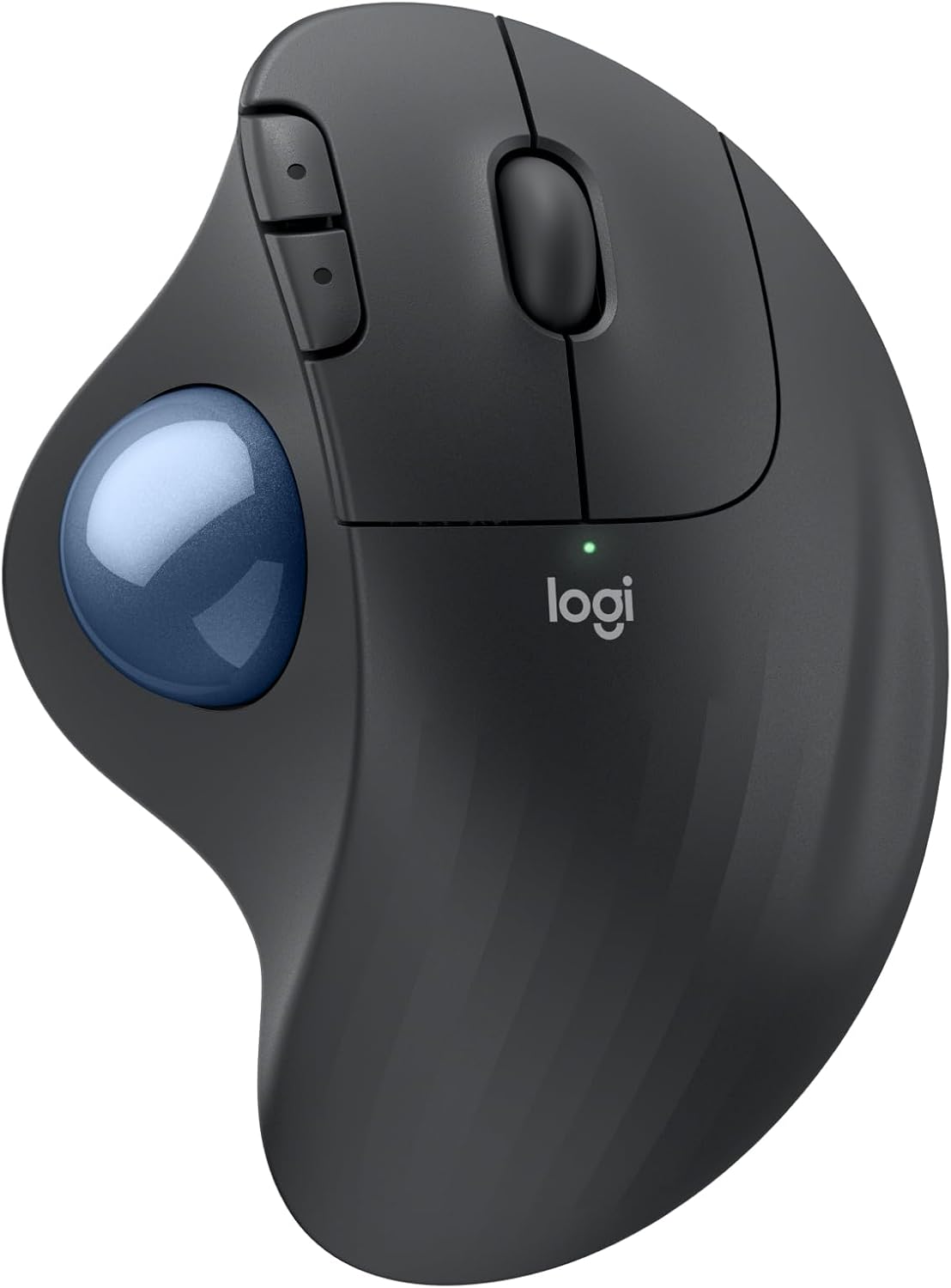
The Logitech Ergo M575S takes a very different approach from a conventional mouse because the body stays in one place while your thumb controls the cursor using the trackball. For Mac users working on compact desks, that immediately makes it interesting because you do not need extra movement space beside the keyboard.

The large blue trackball sits directly beneath the thumb on the right side of the mouse. Instead of sliding your entire arm repeatedly across a mouse pad, you rotate the ball with your thumb while your hand remains supported by the sculpted body.

That fixed position can be especially useful with a MacBook setup. If the laptop is sitting beside an external keyboard, monitor, notebook and phone, there may be very little horizontal space left for a conventional mouse to move comfortably.

The M575S only needs enough room for the mouse itself. That is one of the main reasons we consider it such a strong candidate for the best trackball mouse for Mac, particularly for home offices and compact workstations.

Bluetooth connectivity also fits naturally into a Mac setup. You can connect wirelessly without permanently occupying a USB port, which is useful on newer MacBooks where available ports may already be needed for displays, storage or other accessories.

The ergonomic shape becomes more important after several hours

The M575S has a sculpted right handed shape designed to support the palm while keeping the hand in a more relaxed position. The important part is that the mouse itself does not need to travel across the desk, so most cursor movement happens through the thumb.

There is an adjustment period if you have spent years using a normal mouse. During the first few days, precise cursor positioning can feel slower because your thumb is learning movements that your entire hand and arm previously handled.

That tends to matter most when selecting small interface elements or making detailed adjustments. Increasing or reducing the pointer speed in macOS can help, and it is worth spending some time finding a sensitivity that matches how much thumb movement feels natural.

Once the trackball becomes familiar, the fixed design starts making more sense. Your hand can remain in one position while moving the pointer across a large monitor or even a multi display workspace.

This is particularly useful when working with spreadsheets, long documents and web browsers where the cursor is constantly moving between controls. You are not repeatedly reaching across the desk just to move from one side of the screen to another.

Quiet clicking is another practical improvement on the M575S. Reduced click noise matters in shared offices, libraries and home workspaces where another person may be working or participating in a meeting nearby.

The scroll wheel handles conventional vertical navigation, while additional buttons provide more control than a basic two button mouse. Depending on your software setup, customizable controls can reduce the amount of cursor travel required for frequently repeated commands.

Trackball maintenance is worth understanding too. Dust and skin oils can gradually collect around the ball and internal contact points, so occasional trackball cleaning keeps movement smooth and prevents the cursor from beginning to feel less consistent over time.

Why the Ergo M575S deserves our number one position

The M575S gets the fundamentals right without turning the trackball concept into something overly complicated. You get a comfortable sculpted body, thumb operated cursor control, wireless connectivity and a compact stationary footprint that works particularly well around modern Mac setups.

Bluetooth is a significant part of that appeal. MacBook users can keep their limited physical ports available for other equipment rather than dedicating one permanently to a mouse receiver.

The fixed body is arguably an even bigger advantage. A traditional mouse needs clear space for repeated movement, while the M575S can remain in exactly the same location whether you are moving the cursor one centimetre or across a large external display.

There are limitations. The right handed ergonomic shape makes this a poor choice for left handed users, and people who have never used a thumb trackball should expect some learning time before cursor movement feels completely natural.

It is also not necessarily the first choice for every gaming or precision graphics workflow. Some users prefer a conventional high DPI mouse or a finger controlled trackball when extremely rapid or detailed pointer movements are the priority.

For normal Mac productivity, though, those limitations are relatively minor. The combination of ergonomics and compact control works extremely well for browsing, documents, spreadsheets, creative applications and general everyday computer use.

The quiet clicks and long battery focused wireless design make it even easier to leave the mouse permanently on a workstation. There is little setup required once it is paired, and the stationary format keeps the surrounding desk considerably less demanding in terms of usable movement space.

That is why we believe the Logitech Ergo M575S deserves the number one position in our Best Trackball Mouse For Mac ranking. Its comfortable thumb control and Bluetooth connectivity, combined with quiet clicks, a compact stationary footprint and a shape designed for longer working sessions, make it one of the most practical ways to bring trackball control into a Mac desktop or MacBook workspace.


2
M2W Trackball Mouse for Mac with Adjustable DPI
Brand: MicroPack
Features / Highlights
  • Thumb operated trackball reduces the need for desk movement.
  • Adjustable DPI settings provide more flexible cursor sensitivity control.
  • Wireless connectivity keeps Mac workspaces cleaner and cable free.
  • Ergonomic shape supports the hand during longer computer sessions.
  • - Multi platform compatibility works across Mac and other computers.
Our Score
9.61
CHECK PRICE

This gives Mac users a lot of control without needing much desk space

The MicroPack M2W is built around the main reason people move from a conventional mouse to a trackball in the first place. The mouse body stays stationary while your thumb rotates the ball, so cursor movement does not require repeatedly sliding the entire device across the desk.

That immediately makes it relevant when searching for the best trackball mouse for Mac, especially if your MacBook or desktop setup already occupies most of the available workspace. An external keyboard, monitor stand, notebook, phone and charging equipment can leave surprisingly little room for conventional mouse movement.

A trackball does not have that problem. Once the M2W is positioned comfortably beside the keyboard, it can remain in essentially the same place whether you are moving the cursor a few pixels or sending it from one side of a large monitor to the other.

The ball is operated with the thumb, while the fingers remain positioned over the normal mouse controls. This layout will feel unfamiliar if you have spent years using a traditional optical mouse, but the adjustment is mostly about teaching the thumb to handle movements that were previously controlled by the wrist and arm.

There is a learning period. Trackball accuracy improves with regular use, so it is worth giving yourself several days before deciding whether the different cursor control method feels natural.

The adjustable DPI is more useful than it first appears

One of the more useful features on the MicroPack is adjustable DPI. Changing pointer sensitivity lets you control how far the cursor travels in response to a particular amount of trackball movement.

That matters because Mac setups vary enormously. Someone using a MacBook display may prefer slower cursor movement for precision, while another person working across a large external monitor or multi monitor setup may want the pointer to travel much farther with a small thumb movement.

Getting that sensitivity right can make the transition to a trackball considerably easier. If the pointer feels too fast, selecting small buttons becomes frustrating, while a setting that is too slow requires excessive thumb movement to cross a large display.

You can also adjust pointer tracking inside macOS. Combining the operating system settings with the mouse's own sensitivity control gives you more flexibility over cursor response than simply accepting one fixed tracking speed.

The ergonomic body is another important part of the design. Because the mouse itself remains stationary, your hand can stay supported in one location rather than repeatedly pushing the device forward, backward and sideways during normal computer work.

This can be especially convenient in tight spaces. Imagine using a MacBook on a small home office desk where a notebook is sitting immediately beside the mouse, or working from a temporary setup where there simply is not enough clear surface for broad mouse movements.

The trackball only needs its own footprint. That also makes it useful on surfaces where a conventional optical mouse may not track consistently, because cursor movement comes from the ball rather than from an optical sensor reading the desk beneath the device.

Maintenance does matter, though. Dust and oils can gradually collect around the ball and internal support points, so regular cleaning helps maintain smooth tracking and prevents the ball from beginning to feel rough or inconsistent.

Why the MicroPack earns our number two position

The MicroPack M2W gets several important things right for Mac users. Its stationary design requires very little movement space, thumb operated tracking works well on compact desks, and adjustable DPI provides useful control over pointer sensitivity.

Wireless operation also fits nicely into a Mac workspace. Nobody buys a trackball to reduce desk movement and then wants another unnecessary cable running across the same working area.

Its broad computer compatibility is another advantage if your desk contains more than one system. Someone who uses a Mac for everyday work but occasionally switches to another computer can potentially keep the same style of pointing device rather than maintaining completely different peripherals.

The reason it takes number two instead of number one is refinement. Our top ranked Logitech Ergo M575S has a particularly established ergonomic design, strong macOS suitability and a polished combination of Bluetooth connectivity, quiet clicking and long battery focused wireless operation.

Brand ecosystem matters a little here too. Logitech provides established configuration software and a mature peripheral platform, which can become valuable when you want to customize buttons or integrate the mouse more deeply into a productivity workflow.

The MicroPack still has an advantage for users who prioritize straightforward sensitivity adjustment. Adjustable DPI is valuable on large displays, especially when switching between detailed cursor work and rapid movement across a wider desktop.

There is also no need to dismiss it simply because it ranks second. For someone who wants a wireless thumb trackball with adjustable cursor sensitivity and does not require the exact software ecosystem of our first choice, the feature set makes plenty of sense.

That is why we believe the MicroPack M2W deserves the number two position in our Best Trackball Mouse For Mac ranking. It falls slightly behind our first choice in overall refinement and ecosystem support, but its stationary ergonomic design and adjustable DPI make it a strong alternative for Mac users who want accurate cursor control without constantly moving a conventional mouse across valuable desk space.


3
EM01 Rechargeable Trackball Mouse for Mac with Adjustable DPI
Brand: ProtoArc
Features / Highlights
  • Rechargeable battery eliminates regular disposable battery replacements.
  • Thumb controlled trackball requires minimal movement across desk surfaces.
  • Adjustable DPI settings provide flexible cursor sensitivity control.
  • Multiple wireless connections support switching between several devices.
  • - Ergonomic angled design supports a more natural hand position.
Our Score
9.40
CHECK PRICE

This one makes a lot of sense if your Mac shares a desk with other devices

The ProtoArc EM01 is a rechargeable wireless trackball mouse designed around a stationary body and thumb operated rollerball. That immediately makes it relevant when looking for the best trackball mouse for Mac, especially if your workspace is already crowded with a keyboard, monitor, MacBook stand and other equipment.

Unlike a conventional mouse, the EM01 does not need to travel across the desk to move the pointer. Your hand stays on the mouse while the thumb rotates the trackball, so the amount of free surface required for cursor control is basically limited to the footprint of the device itself.

That can solve a surprisingly ordinary desk problem. Put a notebook or coffee mug beside a normal mouse and suddenly you have reduced the area available for movement, while a stationary trackball can continue working in exactly the same position.

The EM01 also uses an angled ergonomic shape. The idea is to support the hand in a more natural position while reducing the repeated side to side movement associated with moving a conventional mouse across the desk.

There is still a learning curve. Thumb trackball control takes some practice, particularly when you first start selecting small buttons, editing spreadsheets or trying to position the pointer precisely between individual characters.

The multi device connection is genuinely useful with a Mac setup

One of the strongest features of the EM01 is its wireless flexibility. The mouse can connect with multiple devices, which is useful if your desk has a MacBook alongside another computer or tablet.

Instead of keeping separate mice for each system, you can switch the trackball between compatible devices. That makes more sense in a multi computer workspace where peripherals can otherwise begin occupying as much desk space as the computers themselves.

Wireless connectivity is also useful on newer MacBooks because physical ports are limited. Using Bluetooth means you can keep valuable Mac ports available for external displays, storage devices, card readers and other equipment.

Adjustable DPI gives you more control over cursor sensitivity. This matters with a trackball because the relationship between thumb movement and pointer distance can dramatically change how accurate the mouse feels.

A lower sensitivity can help when selecting small interface elements or doing more precise work. Increase the DPI and a relatively small movement of the trackball can send the pointer across a large monitor much more quickly.

This becomes particularly useful with an external ultrawide or multi monitor Mac setup. Repeatedly rotating the trackball just to move between opposite sides of the desktop gets tiring, so increasing pointer sensitivity can reduce how much physical movement is required.

The rechargeable battery is another useful difference compared with trackballs that rely on disposable batteries. You can recharge the mouse rather than keeping replacement cells around, which makes sense for a peripheral that may remain on the same workstation for years.

Trackball maintenance should not be ignored, though. Dust and skin oils gradually collect around the ball and support points, and occasional cleaning helps preserve smooth tracking when the mouse is used every day.

Why the ProtoArc EM01 takes our number three position

The EM01 has a strong feature set for modern Mac users. It combines a stationary thumb trackball, adjustable DPI, rechargeable power and multi device wireless connectivity in an ergonomic body designed for extended computer use.

The multi device support is probably its biggest practical advantage. Someone using a Mac for primary work and another computer for secondary tasks can keep one pointing device in the same physical position and switch connections rather than reorganizing the desk.

Rechargeable operation is another reason it ranks highly. No regular battery replacement is required, which removes one of the small ongoing expenses associated with many wireless mice.

There are reasons it sits at number three rather than taking our top position. Logitech's Ergo M575S has a particularly mature ergonomic design and software ecosystem, while our number two choice offers a straightforward combination of adjustable tracking and Mac friendly wireless functionality.

The EM01's rechargeable battery can also be viewed differently depending on preference. Rechargeable power is convenient, but when the internal battery eventually runs low you need to connect the mouse for charging, whereas a mouse using replaceable batteries can be restored immediately with a fresh cell.

The ergonomic shape is also strongly oriented toward right handed use. Left handed Mac users should therefore look carefully at alternative trackball layouts rather than assuming every stationary mouse provides the same ergonomic benefits.

Still, the EM01 offers something particularly useful for people with several devices on one desk. The combination of multiple wireless connections and adjustable cursor sensitivity makes it easy to adapt the same trackball to different computers and display sizes.

That is why we believe the ProtoArc EM01 deserves the number three position in our Best Trackball Mouse For Mac ranking. It falls slightly behind our first two choices in overall refinement, but its rechargeable design and multi device connectivity, combined with adjustable DPI and a compact stationary footprint, make it a strong option for Mac users who want one ergonomic trackball to handle a busy multi device workspace.


4
ErgoTrack Wireless Trackball Mouse for Mac with Rechargeable Battery
Brand: SABLUTE
Features / Highlights
  • Thumb operated trackball minimizes movement across crowded desk surfaces.
  • Rechargeable battery removes the need for disposable replacements.
  • Ergonomic right handed shape supports longer computer work sessions.
  • Wireless connectivity keeps Mac workspaces cleaner and less cluttered.
  • - Adjustable tracking sensitivity supports different cursor control preferences.
Our Score
8.97
CHECK PRICE

This is built for a desk where mouse space is already limited

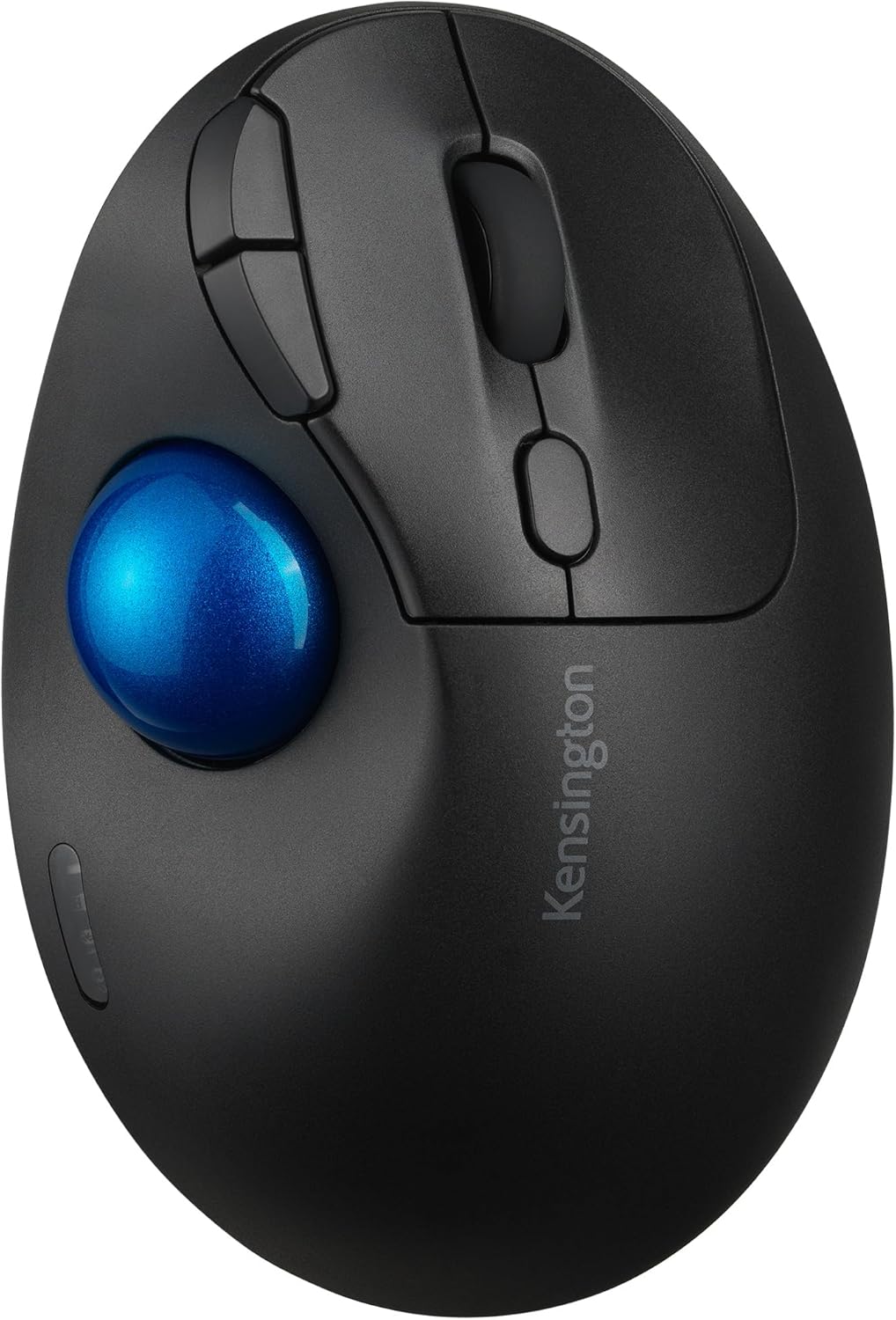
The SABLUTE ErgoTrack is a wireless ergonomic trackball mouse designed around a stationary body and thumb controlled rollerball. That makes it immediately relevant when searching for the best trackball mouse for Mac, especially when your keyboard, MacBook, monitor and other equipment already occupy most of the usable desk.

Instead of moving the entire mouse across the surface, you rotate the trackball with your thumb. The body stays where you put it, which means cursor movement does not require a large empty area beside the keyboard.

That sounds like a small difference until you use a conventional mouse on a crowded workstation. A notebook, phone or coffee mug can reduce your movement area enough that you are constantly lifting and repositioning the mouse just to move the pointer across the screen.

The SABLUTE avoids that problem because the mouse itself remains stationary. Whether you are moving the cursor across a MacBook display or a much larger external monitor, the physical footprint on the desk remains basically the same.

The sculpted ergonomic shape is intended for right handed use. Your palm rests across the body while the thumb controls the ball, allowing the fingers to remain close to the normal click and scroll controls.

Rechargeable wireless operation fits nicely into a Mac setup

The rechargeable battery is one of the more practical features for everyday use. Instead of keeping disposable batteries nearby, you can recharge the mouse when needed and continue using the same internal power system.

That can make sense for a trackball that stays permanently beside a desktop Mac or MacBook dock. There is no reason to keep moving the mouse around the desk, so it becomes the kind of peripheral that can simply remain in its normal working position every day.

Wireless connectivity also helps keep the workspace cleaner. MacBook users in particular may prefer wireless peripherals that preserve available ports, since those connections can be more valuable for monitors, storage drives, card readers and other accessories.

Adjustable tracking sensitivity provides another useful layer of control. A trackball that feels comfortable on a small laptop display can feel frustratingly slow when the same pointer needs to cross a large external monitor.

Increasing sensitivity allows a smaller thumb movement to cover more screen distance. Reducing it can provide finer control when selecting small interface elements, working with detailed documents or making precise adjustments.

This is something worth experimenting with during the first few days. New trackball users sometimes assume the device is difficult to control when the actual problem is simply that the pointer speed does not match their natural thumb movement.

There is a learning curve regardless. Thumb control feels different from normal mousing, and precise selection can initially take longer because years of conventional mouse habits do not transfer perfectly to a stationary rollerball.

Maintenance is another small but important part of ownership. Dust and skin oils can gradually collect around the ball and its internal support points, so removing and cleaning the trackball periodically helps maintain consistent, smooth movement.

Why the SABLUTE takes our number four position

The SABLUTE gets the fundamental trackball concept right. It provides a stationary ergonomic body, thumb operated cursor control, wireless connectivity, rechargeable power and adjustable sensitivity in a format that works particularly well when desk space is limited.

Its rechargeable design is one of the strongest reasons to consider it. There are no disposable batteries to replace, which is convenient for somebody who uses the same mouse at the same Mac workstation every day.

The compact movement requirements also make it useful in unconventional workspaces. A MacBook being used on a narrow desk, shared table or temporary workstation does not necessarily leave enough room for broad conventional mouse movement.

The reason we place this model fourth is mainly refinement and competition. Our higher ranked Logitech, MicroPack and ProtoArc options offer stronger combinations of established ergonomics, multi device functionality, software support or proven control systems.

The right handed design is another limitation. A sculpted thumb trackball is highly dependent on hand orientation, so left handed Mac users should look for a symmetrical trackball or a model specifically designed around left hand control.

Rechargeable power also comes with one tradeoff. When the internal battery becomes depleted, it needs charging, whereas a trackball powered by a replaceable battery can return to full operation immediately after inserting a fresh cell.

For many users, though, those limitations will not outweigh the convenience. The SABLUTE offers the main benefits people want from this category without requiring a large amount of desk space or a cable permanently connected to the computer.

That is why we believe the SABLUTE ErgoTrack deserves the number four position in our Best Trackball Mouse For Mac ranking. It does not quite match the overall refinement of our first three selections, but its rechargeable wireless design and thumb control make it a practical option for Mac users who want ergonomic cursor control, adjustable sensitivity and a stationary mouse that works comfortably on smaller desks.


5
M501 Wireless Trackball Mouse for Mac with Adjustable DPI
Brand: Nulea
Features / Highlights
  • Thumb controlled trackball requires minimal movement across desk surfaces.
  • Wireless connectivity supports a cleaner cable free Mac workspace.
  • Adjustable DPI settings provide flexible cursor speed and precision.
  • Ergonomic sculpted body supports longer everyday computer work sessions.
  • - Multi device connectivity makes switching between computers more convenient.
Our Score
8.87
CHECK PRICE

This is a sensible trackball when your Mac desk is already crowded

The Nulea M501 is a wireless thumb trackball designed around one very practical idea: the mouse stays in place while the cursor moves. That makes it relevant when searching for the best trackball mouse for Mac, particularly if your desk already contains a MacBook, external keyboard, monitor and other equipment.

A conventional mouse needs clear surface area around it because the entire device moves during normal use. The M501 only needs enough room for its own body because your thumb rotates the trackball to control the pointer.

That can make a real difference on smaller desks. Put a notebook, phone or external drive beside a traditional mouse and your usable movement area disappears quickly, while the trackball continues working without needing any additional horizontal space.

The right handed body is sculpted to support the palm while keeping the thumb positioned beside the trackball. Your fingers remain over the normal mouse controls, so most cursor movement comes from the thumb rather than repeated movement of the entire hand across the desk.

There is an adjustment period if you have never used this type of mouse. Precise selections can initially feel slower, especially when working with small interface controls or trying to position the cursor between individual characters.

The adjustable DPI helps when you move between different screens

The M501 provides adjustable DPI, allowing you to change how much cursor movement results from rotating the trackball. That is useful because a sensitivity level that feels right on a MacBook screen may feel much too slow when the same computer is connected to a large external display.

Higher sensitivity allows a small thumb movement to move the pointer farther across the desktop. Lower sensitivity provides finer control when you need to select smaller objects or perform more detailed cursor work.

This becomes especially useful with a dual monitor Mac setup. Instead of repeatedly rolling the ball to move the cursor from one display to another, a higher DPI setting can reduce the amount of thumb movement required.

You can also adjust pointer tracking within macOS. Combining those settings with the mouse's own sensitivity controls gives you more control over how tracking feels rather than forcing you to adapt to one fixed cursor speed.

Wireless operation is another obvious advantage around a Mac workspace. It removes another cable from the desk and gives you more freedom over where the trackball sits relative to the keyboard.

Multi device connectivity can also be useful if your workstation contains more than one computer. Someone might use a MacBook for everyday work and keep another system beside it for testing, administration or a different workflow.

Instead of maintaining a separate mouse for every machine, switching the same trackball between compatible devices can reduce clutter. This is particularly helpful because the stationary design means the M501 can remain in one comfortable physical position regardless of which computer is currently active.

Cleaning should be part of normal trackball maintenance. Dust and skin oils eventually collect around the ball and internal support points, and regular cleaning helps maintain smooth movement rather than waiting until cursor control begins to feel rough.

Why the Nulea M501 takes our number five position

The M501 provides most of the core features we want from a modern Mac trackball. It combines a stationary thumb controlled design, adjustable DPI, wireless operation, multi device functionality and a sculpted right handed body.

The space saving aspect remains one of its biggest strengths. Whether the cursor is moving across a small laptop display or a large monitor, the mouse itself does not need to travel around the desk.

Its adjustable sensitivity is useful too. DPI control matters more with trackballs because finding the right balance between precision and cursor travel can dramatically change how natural the device feels during long working sessions.

The reason we have placed it at number five comes down to the strength of the options above it. Logitech provides a more mature peripheral ecosystem, while some of our other higher ranked choices combine rechargeable operation, established ergonomics or particularly flexible connection options.

The right handed shape is another limitation. A thumb trackball built around this kind of sculpted body is not a practical choice for most left handed users, who should instead look for a symmetrical finger controlled design or a dedicated left handed trackball.

There is also the normal learning curve. Someone switching directly from a conventional mouse should expect a few days of slower movement before the thumb begins handling cursor positioning naturally.

Once that adjustment is made, though, the stationary layout becomes very practical. It requires little surface area, works well beside compact Mac keyboards and can remain in exactly the same comfortable position throughout the day.

That is why we believe the Nulea M501 deserves the number five position in our Best Trackball Mouse For Mac ranking. It does not quite match the overall refinement of our highest ranked options, but its adjustable tracking and wireless connectivity make it a useful choice for Mac users who want ergonomic thumb control, multi device flexibility and much less dependence on empty desk space.


6
EM04 Wireless Trackball Mouse for Mac with Adjustable DPI
Brand: ProtoArc
Features / Highlights
  • Thumb controlled trackball requires very little desk movement.
  • Wireless connectivity supports cleaner and more flexible Mac workspaces.
  • Adjustable DPI provides multiple levels of cursor sensitivity control.
  • Ergonomic right handed shape supports longer computer work sessions.
  • - Multi device connectivity allows easier switching between compatible computers.
Our Score
8.40
CHECK PRICE

This one is particularly useful when your mouse has nowhere to move

The ProtoArc EM04 is a wireless thumb trackball designed around a stationary mouse body, so you move the cursor by rotating the ball instead of sliding the entire mouse around the desk. That immediately makes it relevant when searching for the best trackball mouse for Mac, especially for compact MacBook and home office setups.

A normal optical mouse needs a reasonable amount of clear surface area to work comfortably. The EM04 stays in one position, which means a notebook, external drive or coffee mug sitting nearby does not suddenly reduce the amount of space available for cursor movement.

The trackball sits beneath the thumb while the rest of the hand remains supported by the mouse body. This arrangement allows the pointer to travel across the screen while your wrist and arm stay largely in the same physical location.

That becomes particularly useful with larger displays. Moving a conventional mouse across an ultrawide monitor can involve repeated physical repositioning, whereas the trackball controls everything from one spot.

There is still an adjustment period if you are moving from a conventional mouse. Thumb movement initially feels different, and precise cursor positioning can take some practice before it becomes automatic.

The adjustable DPI helps you find the right tracking speed

One of the useful features of the EM04 is adjustable DPI. This changes the relationship between how far you rotate the trackball and how far the pointer moves across the screen.

A lower sensitivity can be useful when you need more deliberate control. Selecting small interface buttons, working through a detailed spreadsheet or positioning a cursor accurately inside creative software can become easier when pointer movement is less aggressive.

Higher sensitivity works better when screen distance becomes the problem. If your Mac is connected to a large external monitor, increasing the DPI lets the cursor travel much farther from a relatively small thumb movement.

It is worth experimenting instead of simply choosing the fastest setting. The right sensitivity makes trackball control easier, and many people who initially struggle with a trackball are actually using a cursor speed that does not suit their hand movement.

Wireless connectivity also works well with a Mac workstation. Keeping another cable away from the keyboard area reduces clutter and gives you more freedom over exactly where the trackball sits.

Multi device functionality adds another practical use case. If you work with a MacBook and another compatible computer on the same desk, the mouse can reduce the need to maintain separate pointing devices for each system.

This becomes useful in a hybrid setup where one computer handles everyday work and another is used for testing, administration or a separate project. The trackball can stay in the same comfortable physical position while the active connection changes.

There is some maintenance involved with any rollerball design. Dust and skin oils gradually collect around the ball and support points, so periodic cleaning helps preserve smooth tracking rather than waiting until the cursor starts feeling inconsistent.

Why the ProtoArc EM04 takes our number six position

The EM04 handles the basic trackball requirements well. You get a stationary thumb controlled design, adjustable DPI, wireless connectivity and multi device flexibility in a form that needs very little movement space around it.

That makes it particularly practical for small Mac desks. A conventional mouse can become frustrating when there is only a narrow strip of free surface beside the keyboard, while the EM04 needs little more than enough room for its own footprint.

Adjustable sensitivity is another useful feature. DPI adjustment helps with larger Mac displays, especially if you regularly move between a MacBook screen and a larger desktop monitor.

The reason we have placed it at number six comes down to refinement and the strength of the products above it. Our higher ranked options provide stronger combinations of ergonomic design, rechargeable operation, software support or more established peripheral ecosystems.

The right handed thumb layout is another limitation. It works naturally for the hand position it was designed around, but left handed Mac users will need to look toward a symmetrical trackball or a device specifically built for left hand control.

There is also the normal thumb trackball learning curve. Someone who expects the EM04 to feel identical to a conventional mouse immediately may find the first few working sessions slower, particularly when doing precision tasks.

Once the movement becomes familiar, though, the stationary design is genuinely useful. It keeps the desk organized, eliminates the need for repeated mouse repositioning and allows the same small area to handle cursor movement across much larger displays.

That is why we believe the ProtoArc EM04 deserves the number six position in our Best Trackball Mouse For Mac ranking. It does not offer quite the same level of refinement as our leading choices, but its wireless design and adjustable trackball control still make it a practical option for Mac users who want a space efficient pointing device for compact desks, large displays and multi device workstations.


7
ErgoTrack Rechargeable Trackball Mouse for Mac with Adjustable DPI
Brand: TECKNET
Features / Highlights
  • Rechargeable design eliminates routine disposable battery replacements.
  • Thumb operated trackball requires minimal movement across desk surfaces.
  • Adjustable DPI provides several levels of cursor sensitivity control.
  • Multiple wireless connections support switching between compatible devices.
  • - Ergonomic right handed shape supports longer computer work sessions.
Our Score
8.11
CHECK PRICE

This gives you the main trackball benefits without needing much desk space

The TECKNET ErgoTrack is a rechargeable wireless trackball mouse designed around a stationary body and thumb controlled ball. That makes it a useful candidate for the best trackball mouse for Mac if your main problem is simply not having enough clear desk space for a conventional mouse.

Instead of moving the whole device every time the pointer needs to travel, your thumb rotates the trackball while the mouse stays in one place. The result is a much smaller physical working area, which can be useful beside a MacBook, compact keyboard or crowded desktop setup.

Imagine working at a narrow desk with a notebook on one side and a MacBook stand on the other. A normal mouse may require you to repeatedly lift and reposition it, while the TECKNET can remain in the same spot regardless of how far the cursor travels across the screen.

The sculpted shape is designed around right handed use. Your palm remains supported by the body while the thumb handles most cursor movement, leaving the fingers positioned around the normal clicking and scrolling controls.

That different control method does take some adjustment. New trackball users should expect precision work to feel slower initially because the thumb is learning movements that the wrist and arm previously handled.

Rechargeable power and adjustable DPI are useful everyday features

The rechargeable design means you do not need to keep replacing disposable batteries. For a mouse that spends most of its life beside the same Mac workstation, plugging it in occasionally can be more convenient than keeping spare batteries in a drawer.

Adjustable DPI gives you control over pointer sensitivity as well. This is particularly important with a trackball because small changes in tracking speed can make a noticeable difference to how much thumb movement is required.

Lower sensitivity is useful when precision matters. If you are selecting small interface elements, editing a spreadsheet or positioning objects carefully, slower pointer movement can make the trackball easier to control.

Higher sensitivity becomes useful on a larger external display. A small thumb movement can cover more screen, reducing the amount of trackball rotation needed to move between distant areas of the macOS desktop.

This becomes even more noticeable in multi monitor setups. Someone using a MacBook alongside a large external display may need the cursor to travel a substantial distance, and higher sensitivity can make that movement considerably faster.

The wireless connection system also helps keep a Mac desk cleaner. Fewer cables around the keyboard and pointing device area means there is less clutter competing for the same limited surface space.

Multiple connection options can also be useful when more than one computer shares the workstation. Instead of keeping separate pointing devices beside a Mac and another compatible machine, the TECKNET can provide a more consolidated setup.

Like any trackball, it does require occasional cleaning. Dust and skin oils gradually accumulate around the ball and internal contact points, so regular cleaning helps maintain smooth tracking and prevents cursor movement from starting to feel rough.

Why the TECKNET finishes our list at number seven

The TECKNET covers most of the features we expect from a modern wireless trackball. It gives you a stationary thumb controlled layout, rechargeable power, adjustable cursor sensitivity and wireless connectivity in a compact ergonomic body.

Its rechargeable battery is a definite positive. There is no recurring need to purchase disposable batteries, and the mouse can simply be recharged as part of the normal routine around a permanent workstation.

The stationary design is another strong point. Very little desk movement is required, making the mouse practical for compact MacBook setups, crowded office desks and other situations where conventional mouse space is limited.

The reason it takes seventh place is mainly the strength of the products above it. Logitech provides a more established peripheral ecosystem, while several of our other selections offer particularly strong combinations of multi device functionality, ergonomics and trackball control.

Long term software support and customization can matter too. Users who want detailed button assignments or application specific controls may prefer a trackball backed by a more developed configuration platform.

The right handed ergonomic design is another limitation. A thumb trackball shaped around the right hand does not translate well to left handed use, so left handed Mac users should consider a symmetrical finger controlled model instead.

There is also the normal learning period associated with this category. The first few days can feel less precise than using a conventional mouse, but adjusting the DPI and spending time with the trackball usually makes cursor movement much more predictable.

That is why we believe the TECKNET ErgoTrack deserves the number seven position in our Best Trackball Mouse For Mac ranking. It cannot quite match the refinement and ecosystem of our higher ranked choices, but its rechargeable design and adjustable DPI control still provide a practical entry into trackball use for Mac owners who want wireless operation, reduced desk movement and a more compact everyday pointing setup.

Choosing a trackball for the Mac you actually use

A trackball moves the pointer while its base stays in place, but that simple difference does not tell you whether a particular model suits your Mac. Start with your actual setup: the macOS version, available ports, preferred hand, daily applications and any workplace restrictions on installing utilities. Separate basic pointing from extra functionality. A device may move the cursor and click successfully while its additional buttons, scrolling modes or application profiles still require supported software.

Write down the tasks that matter most before comparing shapes. Selecting spreadsheet cells, dragging files, navigating a long document and adjusting a photo are different exercises. Decide which actions deserve a dedicated control and which are already comfortable from the keyboard. More buttons are useful only when you can reach and remember them without accidentally triggering neighboring commands. A simpler model that matches your hand and operating environment can be more practical than a feature-rich model whose utility you cannot install.

Use the ranked cards above as a shortlist, then check the exact model's current manufacturer documentation. Look for a named macOS support range, connection method, software download and button-mapping instructions. Compatibility wording can refer to basic operation rather than every advertised feature. Keep the seller's return conditions handy so you can test the actual combination rather than relying on a broad Mac-compatible label.

Connection choices: Bluetooth, receiver or cable

Bluetooth avoids a dedicated receiver, but pairing, device switching and reconnection behavior need testing on your own computer. Check whether the trackball supports Bluetooth at all and how it enters pairing mode. Do not assume a model with wireless in its name uses Bluetooth; some wireless devices require their supplied USB receiver. Also distinguish a charging cable from a data connection. A USB socket on a rechargeable device does not necessarily mean it works as a wired pointer.

A receiver can be a practical option when you want a dedicated connection, provided you have the correct port or a suitable adapter. Many receivers use USB-A, while your Mac or docking arrangement may offer USB-C. Check the physical connector and whether the adapter or hub passes USB data. Avoid choosing an adapter by charging capability alone. If you connect through a dock, test both the dock and a direct port when diagnosing dropouts; this helps isolate the connection path without assuming the trackball itself is defective.

For wired models, consider cable length, routing and the location of the connector. Leave enough slack that moving the laptop does not pull the base sideways. With wireless models, check battery replacement or charging requirements and whether the receiver has a storage compartment for travel. Test sleep and wake, restart, and switching between work locations. These ordinary transitions matter as much as initial pairing because a successful first connection does not establish dependable reconnection in every setup.

Generic thumb trackball beside a laptop, separate USB receiver and adapter on a cream desk
Conceptual editorial illustration; not a photograph or test of a ranked product.

macOS software and permissions deserve a separate check

Before installing a configuration utility, verify that its current release supports your macOS version and, where relevant, your Mac's processor architecture. Use the manufacturer's official download route, not an unsolicited driver site. Basic input may work without that utility, but advanced mappings, application-specific profiles or sensitivity controls can depend on it. Treat the hardware and its companion software as two related compatibility checks rather than assuming one guarantees the other.

Some utilities request Accessibility or Input Monitoring permission in macOS Privacy & Security settings to handle shortcuts or input events. Follow the exact vendor's instructions and understand the reason for each request. Permission names and settings locations can vary between macOS versions. Grant only the permissions needed for features you intend to use, and do not disable broad operating-system protections to make a peripheral work. On a managed Mac, ask your administrator whether installation and those permissions are allowed before buying for software-dependent features.

After setup, try the mapped controls in the applications you actually use. A shortcut that works in a browser may behave differently in a creative application, remote desktop or virtual machine. Check what happens after signing out, restarting and updating the utility. Avoid running several overlapping mouse or input-remapping tools while troubleshooting: temporarily simplify the setup so you can identify which tool owns a button. Record your working settings so an operating-system update does not force you to rediscover every choice.

Thumb versus finger control: fit is personal

A thumb-operated trackball places the ball to one side, leaving the other fingers available for mouse-like buttons. A finger-operated design usually puts the ball nearer the center, where one or more fingers can roll it. Those layouts redistribute the movement, but neither is automatically more comfortable or more precise for everyone. Ball position, shell height, button reach and the angle of your forearm all influence how a particular shape feels during actual work.

Check handedness explicitly. A centrally positioned ball does not make every surrounding button arrangement equally convenient for both hands, and a thumb model may be molded for one side. Rest your hand lightly and see whether you can click without stretching, squeezing the shell or lifting your shoulder. Compare dragging as well as pointing: holding a button while rolling the ball can reveal awkward reaches that are not obvious during a quick cursor test. Do not buy by ball size or appearance alone.

Introduce the device in short sessions and pay attention to discomfort rather than trying to push through it. A trackball changes how you perform input; it is not a treatment or a guarantee against repetitive strain. Alternate tasks and keep another input option available while learning. Persistent pain, tingling or weakness calls for appropriate professional advice, not a higher sensitivity setting. If a conventional pointer remains useful alongside the trackball, our wireless mouse guide offers a separate set of options to consider.

Side-ball thumb trackball and central-ball finger trackball shown side by side on a cream desk
Conceptual editorial illustration; not a photograph or test of a ranked product.

Map a small, useful control set first

Start with reliable primary click, secondary click and scrolling before adding shortcuts. Verify whether scrolling uses a wheel, a ring, a button-and-ball combination or another mechanism on the exact model. Test vertical scrolling in a long document, horizontal movement in a spreadsheet if supported, and zoom behavior separately. A wheel-shaped control does not establish every scrolling direction or gesture. Choose a predictable baseline so accidental commands are easy to trace to a specific change.

Add one or two mappings that remove frequent interruptions, such as a supported back action or an application shortcut you already understand. Check the actual key combination for your Mac application instead of copying a Windows-oriented example. Keep destructive commands away from easily bumped buttons. If the utility offers separate application profiles, make their differences deliberate and modest; radically different layouts can be confusing when switching windows. Save or export profiles only if the software supports it, and retain a note of your default mapping.

Accessibility needs deserve a practical trial rather than assumptions based on the number of controls. Explore the pointer and accessibility settings available in your macOS version, then test whether the physical layout supports the actions you need. If holding a button for dragging is difficult, investigate supported drag alternatives in the operating system or utility without assuming every device has a drag-lock feature. Keep keyboard navigation available as a complementary tool. Our wireless keyboard guide can help when planning the rest of that input setup.

Arrange the workspace around a stationary base

A trackball does not need the same sweeping area as a moving mouse, but its base, your hand and button access still need room. Position it close enough that you are not reaching outward for routine clicks. Keep the base on a stable surface and allow space around the ball so nearby objects do not restrict movement. Check the keyboard and trackball together: a large keyboard can push the pointer farther away even when the trackball itself is compact.

Desk height and chair position still matter. Aim for a relaxed working position instead of bending the wrist to match an inconvenient shelf. A wrist support is not automatically beneficial if it forces the hand into an awkward angle or presses on a sensitive area. Adjust one part of the workstation at a time and compare how ordinary tasks feel. A desk pad can help organize the surface, but its thickness and texture may change base stability; our desk-pad guide is relevant when choosing that surrounding surface.

For multiple displays, test pointer travel across the whole arrangement, including small targets near the edges. Screen layout and scaling can affect your sense of movement, so do not judge sensitivity using only one window. Keep essential controls within easy reach and leave a clear cable route. In a shared workspace, note how you will restore your settings or switch devices without changing someone else's preferred configuration. The benefit of a stationary pointer is most useful when the rest of the desk supports it.

Learn gradually and compare repeatable tasks

Expect a familiar mouse habit to take time to transfer. Begin with a moderate pointer setting and a small set of repeatable tasks: open a menu, select text, drag a file, resize a window and scroll through a page. Choose a setting that lets you stop on a small target without making full-screen travel unnecessarily laborious. Change one setting at a time, then repeat the same tasks rather than adjusting speed after every missed click.

If available, distinguish hardware sensitivity from the operating system's tracking settings and any utility acceleration option. Their combined effect matters more than a headline resolution specification. A higher setting is not inherently more accurate. Test fine adjustments in your actual application, particularly when selecting cells or editing images. Keep keyboard shortcuts in the workflow when they are already faster and more dependable; using a trackball need not mean replacing every existing interaction.

Use the return window to evaluate a normal working day, not just a few minutes of cursor movement. Check connection recovery, scrolling, button reach, accidental clicks and whether your preferred mappings survive a restart. Record specific problems so you can distinguish unfamiliarity from a feature limitation. Keep the packaging and follow the seller's conditions. The right choice is the device whose behavior remains manageable during your work, not the one that promises the shortest learning curve for every user.

Cleaning, maintenance and a final buying checklist

Dust and skin residue can affect how smoothly a ball rolls, so consult the exact model's care instructions before cleaning. Disconnect or switch off the device as directed. Some balls are designed to be removed through a release opening, while others use a different procedure; do not force the ball or pry the housing based on another model's tutorial. Use only the cleaning tools and methods the manufacturer permits, and keep liquid away from electronics.

If ball removal is approved, keep track of the ball and clean the designated contact points gently. Do not add oil or lubricant unless the manufacturer explicitly instructs it. Reassemble according to the manual and test movement before returning to a demanding task. For wireless models, check battery condition or charging status when behavior changes. A low-power warning, dirty mechanism and connection interruption can feel similar at first, so diagnose them separately instead of changing all your pointer settings.

Before committing, confirm five things: the connection fits your Mac's ports; the current software supports your operating system; your hand reaches the controls comfortably; scrolling and mappings work in your real applications; and the device can be maintained as instructed. Save the manual and your working settings. Recheck support before a major macOS upgrade when you depend on advanced software features. This measured approach leaves room for personal preference without turning Mac compatibility, comfort or precision into a universal promise.

Generic trackball beside a dry cloth, soft brush and disconnected USB plug
Conceptual editorial illustration; not a photograph or test of a ranked product.

Mac trackball FAQs

Will every trackball work fully with every Mac?

No. Check the exact model’s supported macOS versions, connection method and configuration utility. Basic cursor movement and clicking do not establish support for extra buttons, profiles or advanced scrolling.

Is Bluetooth better than a USB receiver for a Mac?

Neither is universally better. Bluetooth avoids a receiver, while a receiver needs the correct data-capable port or adapter. Test pairing, sleep and wake, and reconnection with your own Mac and dock.

Should I choose a thumb-operated or finger-operated trackball?

Choose by hand fit, handedness, button reach and the tasks you perform. The two layouts redistribute movement differently; neither guarantees comfort or precision for every user.

Why might a trackball utility request macOS permissions?

Some utilities need Accessibility or Input Monitoring permissions for shortcuts or input handling. Follow the current manufacturer instructions, grant only needed permissions, and consult your administrator on a managed Mac.

Can a trackball prevent or cure wrist pain?

A trackball changes the way you control the pointer, but it is not a treatment or a guarantee against injury. Adjust the workspace, introduce it gradually and seek appropriate professional advice for persistent symptoms.

How should I clean the ball and its housing?

Follow the exact model’s instructions, disconnect or switch off as directed, and remove the ball only if the manufacturer permits it. Do not force parts, introduce liquid into electronics or add unapproved lubricant.


Back to blog